
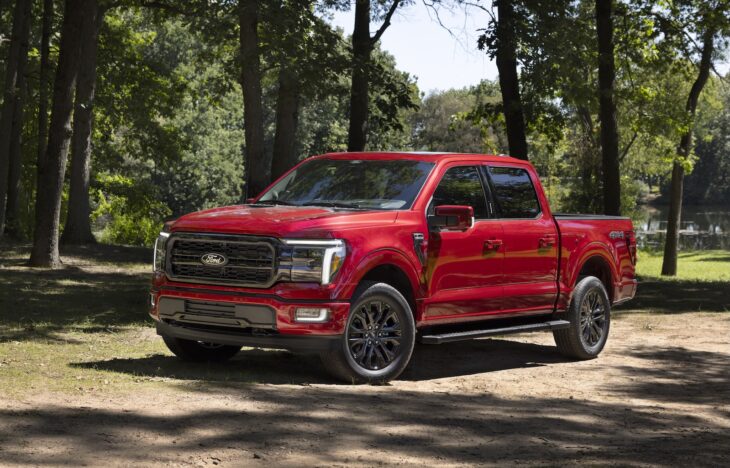
For several decades, automotive aluminum use experienced a surge of growth, with the introduction of all-aluminum architectures for certain models — most notably the aluminum-bodied Ford F-150. As trends have shifted, however, automakers have moved away from the single material approach, focusing instead on multi-material construction with the right material for the right part.
Electric vehicles (EVs) experienced a surge of growth in the 2010s, with nearly every automaker announcing significant investment in new battery electric (BEV), plug-in hybrid (PHEV), and hybrid models. Aluminum benefited from this trend, as the need for lightweighting in EVs is significant and it provides rigid, lightweight support for the construction of battery housings and other structures. However, with government regulations on fuel economy and lightweighting in the U.S. being pulled back since 2025, the EV sector has flattened out. Internal combustion engine (ICE) vehicles remain a strong technology across the industry.
Ducker Carlisle is a global consultancy that has performed in-depth independent research on North American automotive aluminum use, tracking these shifting trends in demand. Much of this research has been presented in reports, which were published in collaboration with the Aluminum Association’s Aluminum Transportation Group (with the last report published in 2023). In this interview with Ducker Carlisle, Bertrand Rakoto, director, Abey K. Abraham, managing principal of Automotive and Materials, and Leonard Ling, automotive knowledge manager, jointly discuss the current North American automotive aluminum market, which remains stable amidst recent trends and challenges.



The North American automotive aluminum market is continuing to evolve. What are the major trends Ducker is currently seeing? What trends are expected to impact the market in the future?
Aluminum has a stable and important role in North American vehicles. We would describe the outlook as selective and application-driven, rather than broadly bullish as the headwinds with tariff and trade related cost pressures are part of the decision equation that OEMs have to evaluate.
Across all its product forms, aluminum is a natural ally of efficiency, addressing consumer-stated desire for fuel economy and safety. It remains attractive because it supports not only weight reduction, but also corrosion resistance, manufacturability, and crash/energy absorption performance.
Aluminum is still very relevant in both ICE and electric vehicles, but the growth story is becoming more uneven by product form and by application. OEMs are becoming more disciplined where they use aluminum and are more focused on total system value (right material vs. light material), not just mass reduction, while balancing affordability. We at Ducker Carlisle call this the R.E.A.L. (right weight, efficient, affordable, and lightweight) materials balancing act. In other words, aluminum is important, but future gains will likely come from the right applications, not from a blanket increase across the whole vehicle, as we’ve seen in the past decade or more.
The biggest change versus a few years ago is that BEV demand is no longer a strong “across the board” growth driver, which was identified as a key growth lever for aluminum in North America. The U.S. Environmental Protection Agency (EPA) and National Highway Traffic Safety Administration (NHTSA) regulations and mandates are no longer being enforced. As a result, the key driver for utilizing lightweighting must shift from meeting mandates to avoid fines to meeting the consumer needs and desires for fuel efficiency and safety — both of which are core strengths of aluminum.
Some of the key headwinds to monitor include:
- Slow and uncertain BEV growth in North America (particularly in the U.S.)
- Continued progress, innovations, and investments in advanced high strength steels (AHSS) and ultra-high strength steels (UHSS)
- Affordability at the showroom translating to smaller and lower priced vehicles, which historically haven’t been heavy users of aluminum
- Near term aluminum price volatility, potentially moving into the longer term
What is the current usage of aluminum within vehicles and how is it expected to continue to grow in the future? What is the relative outlook for certain types of material (die castings, sheet, extrusions, forgings, etc.)?
The last Ducker Carlisle aluminum content report for the Aluminum Association’s Aluminum Transportation Group was concluded in Q1 2023. All in all, our expectations are that aluminum demand and utilization has been fairly stable since then; however, we don’t have an official content per vehicle estimate by product form for aluminum.
Castings remain one of the most important aluminum forms. They are supported by both legacy ICE powertrain demand, newer electrified applications, and selected structural castings (e.g., rear and front underbodies, like what we’ve seen or heard from Tesla and Ford). Castings are probably the most resilient aluminum product form, even if growth is not dramatic. On BEVs, castings can benefit from structural consolidation trends, such as mega-casting, but adoption is still selective in North America.
Sheet has a relatively steady outlook because it is tied to closures and body panels, where aluminum continues to make sense in pickups, SUVs, and selected premium vehicles, in which vehicle mass directly correlates to fuel costs at the pump. Sheet will likely see a steady to modest improvement, which is more dependent on vehicle mix and platform strategy than on EV hype. Aluminum-intensive body or closure strategies, like we see in the F-150, may not be common in the future, but selected parts (e.g. hood, doors, fenders) are still being widely used on both premium and volume models.
Extrusions were one of the clearest beneficiaries of the BEV push, especially in battery enclosures, side sills, cross members, and crash structures. That also means they are most exposed to a slower BEV ramp up in North America. We don’t expect extrusions to experience market erosion; the growth outlook is more or less stable.
One important point is that extrusions are not only about lightweighting. They also provide strong energy absorption in parts like bumper beams, crash-management systems, and rocker/door sill reinforcements. Given these benefits, we still see meaningful growth opportunities in structural applications. They are critical in the thermal management of all vehicle types within HVAC and heat exchangers (radiators, condenser, coolers, etc.)
Forgings remain a smaller (in content per vehicle) yet important category in automotive. They are used where strength, durability, and safety matter, such as wheels, suspension, and certain high-load parts. The outlook on forgings is that they will remain more of a stable niche than a major volume-growth story.
Automakers seem to be showing a growing interest in sustainability along the value chain for the materials they use in their vehicles, such as increased use of recycled aluminum. What is driving this interest?
Recycling is attractive because it helps OEMs reduce embedded carbon and support their sustainability targets. It can also improve cost, especially when scrap streams are well managed. In particular, closed-loop recycling is important because it helps with both economics and supply stability. But OEMs are looking beyond just “recycled vs. primary.” Other major considerations now include low-carbon aluminum, traceability, responsible sourcing, regional supply security, and availability and consistency of recycled feedstock. So the conversation is shifting toward the full aluminum value chain, not just scrap content.
With the current conflict in the Middle East, several aluminum companies have had to curtail production, which could significantly increase aluminum prices. Could this price increase impact the amount of aluminum usage in vehicles? In what way?
OEMs are generally unlikely to change material strategy mid-program just because of a temporary raw material cost spike. Material substitution takes time and adds cost to an existing vehicle program (re-testing, re-certification, etc.). It also usually requires a number of steps, such as redesigning the part; evaluating and paying for tooling changes; identifying new suppliers, ensuring they have capacity, and qualifying the new suppliers; and testing and validation. The more likely impact will be on future platform decisions (2028+), not current production.
Another important point is that raw aluminum cost is only a small portion of the total component cost, and an even smaller part of total vehicle bill of materials cost. Conversion costs, fabrication, tooling, overhead, logistics, and assembly also factor into the calculations. Also, aluminum is not the only material facing cost pressure. Other materials, including steel, can also rise in price, even if the magnitude may differ. The other factor to consider is that there may not be an alternative material to “switch to” for certain parts, including engine heads, transmission cases, wheels, heat-exchangers, and many others.
The previously booming EV market has slowed in recent years. What is the current status of the EV and hybrid vehicle sector? Will the current increase in oil prices bring consumer interest back to EVs? And how will these shifting trends likely impact aluminum use in vehicles?
The EV market in North America has clearly become more measured in non-CARB compliant states, while hybrids and perhaps PHEVs are currently a more practical growth area for many OEMs serving the U.S. auto market. Higher oil prices may help EV interest somewhat, but they are not the only long-term drivers of EV adoption. Consumers still care about the vehicle price, charging convenience and infrastructure, overall range, ability and need to tow and haul, and resale value, insurance costs, and ownership experience. So, OEMs are likely to pivot to a more balanced portfolio of powertrains versus an all EV product line. They may also shift towards the production of smaller vehicles, and in some instances, we may see a re-introduction of passenger cars that were previously removed from the model lineup.
From an aluminum standpoint, BEV softness stunts the growth of aluminum, because battery enclosures and large EV structures were a major driver. PHEVs help aluminum growth, but usually in a more selective way than BEVs. ICE and hybrid vehicles still support aluminum demand in castings, closures, wheels, bumper beams, and many structural and/or crash-related parts.
Automakers continue to show an interest in aluminum giga-castings (or mega-castings). Is this a potential area of growth for aluminum?
Giga-castings are a real opportunity, but they’re not a universal solution that fits all automotive OEMs the same. One of the greatest indicators of use consideration is the expected plant location (whether it is new or existing). Giga-castings are most attractive as a replacement for clean-sheet BEV platforms, especially where OEMs want part consolidation and assembly simplification.
China has moved faster because newer EV brands can build around the technology from the beginning, since they do not have any legacy manufacturing footprint to work around. In North America, adoption is still more selective, with Tesla remaining the clearest mass-production example, while other OEMs are at different stages of evaluation or rollout. Ford, Volvo, Volkswagen, and several Chinese OEMs have announced or planned activity around giga-castings, but adoption remains uneven across regions and OEM types.
How will competing materials, such as steel, plastics, composites, and magnesium, fare compared to aluminum in the coming years? Which material presents the biggest challenge to aluminum?
As we’ve learned over the last decade, OEMs don’t look at materials as “competition.” The selection of materials is foundationally built on “where can I use the best material that closest meets my objectives.” OEMs that have strong communication and collaboration between the various engineering and design teams, which routinely favor a multi-material solution.
In the lightweighting world, advanced high strength steels, magnesium, and composites all have their own unique value proposition, including strength, stiffness, elongation, density, supply chain resilience, ease of joining, corrosion protection, and, of course, cost. Steel and iron content has historically accounted for the majority share of the average vehicle material mix, and this share still likely holds today. In particular, AHSS grade steel is growing at a fast rate, mostly at the expense of mild steel grades.
Magnesium has historically been challenged with production, trade, and tariff policy. Although unlikely to shrink, magnesium still holds a smaller spot in the materials mix. Meanwhile, composites have demonstrated some above average growth, particularly in rear lift-gates for SUVs.
Editor’s Note: This article first appeared in the June 2026 issue of Light Metal Age. To receive the current issue, please subscribe.