
By Kevin Widlic, Editor.
Hydro Extrusions just inaugurated a new 12 inch, 60 MN press at its aluminum extrusion plant in Tønder, Denmark. The official opening was held in September 2025, serving as the centerpiece of the plant’s 50th anniversary celebrations. The event included weekend ceremonies together with customers and suppliers and with past and current employees.
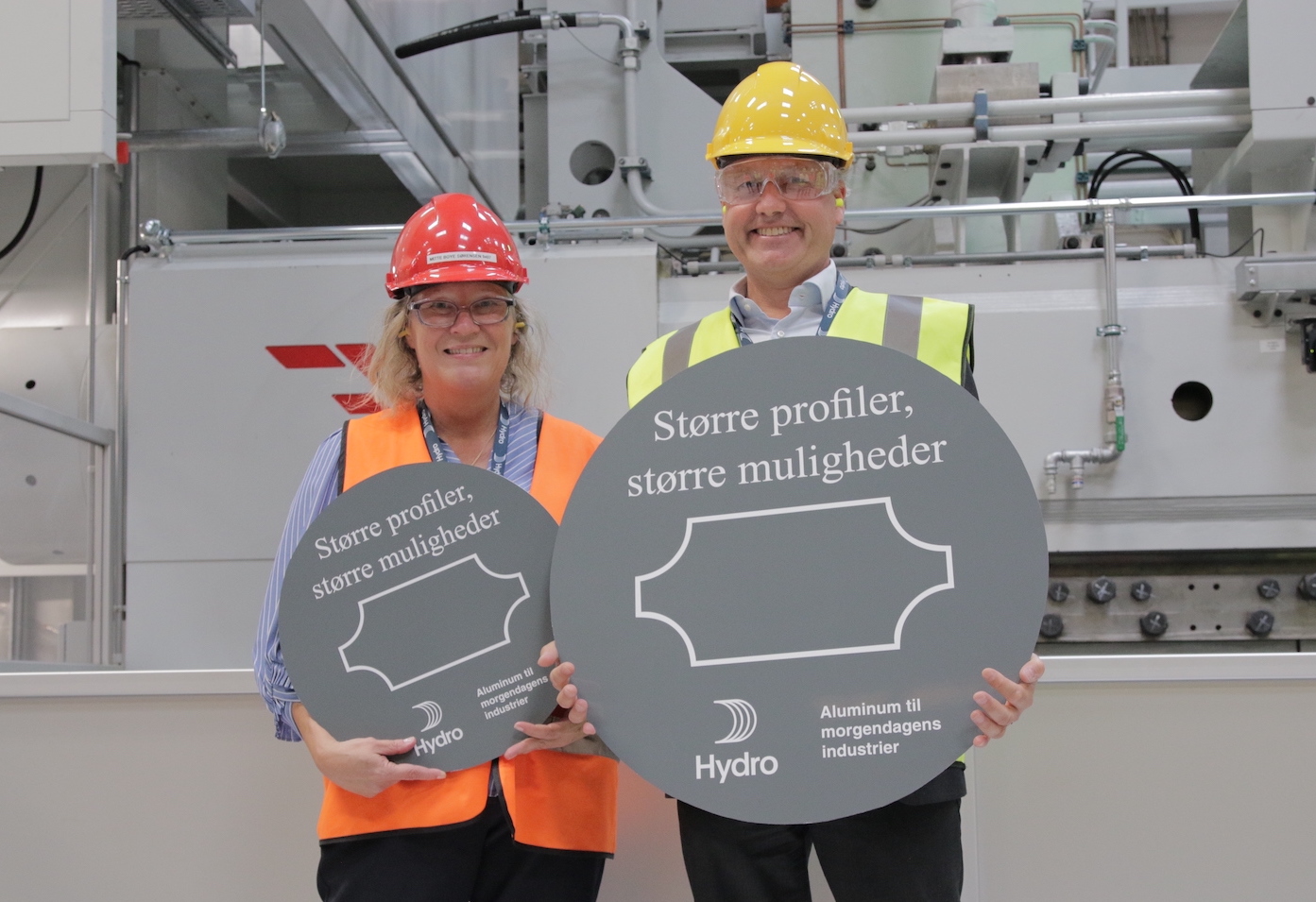
“This press gives us more capacity to serve the automotive industry, mainly electric vehicles, and helps secure our future,” said Mette Boye Sørensen (Figure 1), the extrusion plant’s managing director. “We’ve used light colors around the new area to signify that we have a bright future.”
50 Years of Extrusion
Dating back to the 13th century, Tønder is a city of about 8,000 residents located in the far south of Denmark, just three miles from the German border. Its proximity to the progressive German market was one of the main reasons why Hydro built the extrusion plant in Tønder, because the market in Denmark was not going to be enough to support the plant’s production on its own. In 1975, when the company began its extrusion operation, the rural town was far more dependent on agriculture than industry.
Edvin List Clausen (Figure 2) was one of the first persons hired for the site, having been selected for the role in May 1975. At the time, he was a 25-year-old electrician. “On May 5, 1975, I came to Tønder and went into this gray building,” said Clausen.1 “The only thing on the floor was an induction heater. The press came the next week, and was the 12th and last press that Lindemann supplied to the Hydro system. I remember when I saw the panel and opened it, I had never seen so many relays in my whole life. And when we pushed the first billet, then [we were able to] see it going to the press, being pushed through.”
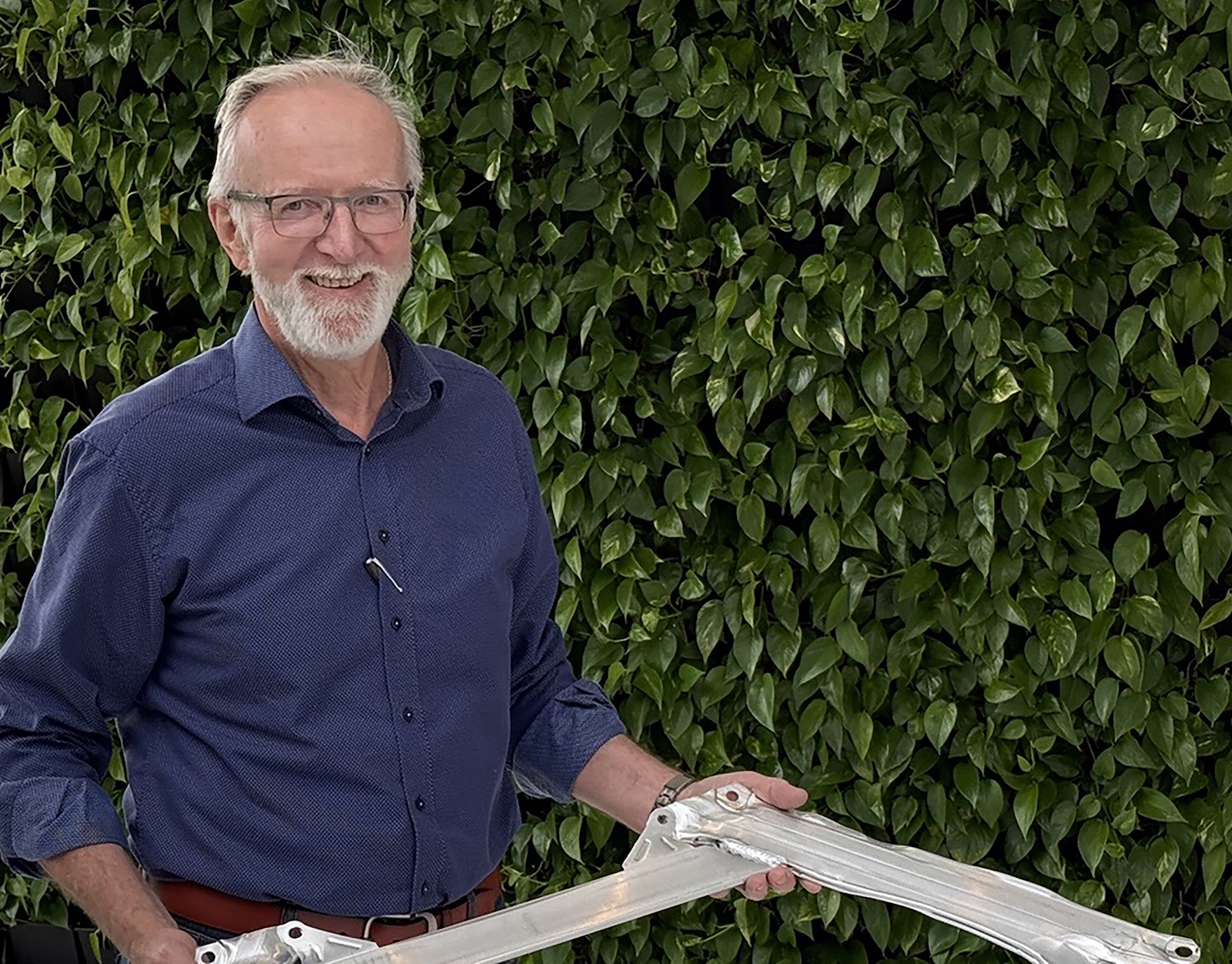
Since that time, Clausen has worked for each of the various aluminum-related operations that Hydro has had in Tønder, with most of his work dedicated to automotive applications. In this regard, he has his name on around 50 patents, many together with carmakers, including BMW. He has personally witnessed the site build a reputation over the last five decades as a dependable partner in the extrusion business and as a pioneer in the automotive industry within structural and heat exchange applications.
Today, the Tønder plant operates three extrusion lines, including a 7-inch, 16 MN press, an 8-inch, 22 MN press, and the new 12-inch, 60 MN press. The site serves mostly the automotive and industrial segments. In addition, the plant has an impressive list of certifications—ISO 9001, 14001, 45001, and 5001; IATF 16949; EN 15088; and the ASI Chain of Custody and Performance Standards.
Hydro has about 700 employees in Tønder, with most of the staff split between the extrusion plant and the aluminum tubing operation located just across the street on the aptly named Hydrovej. The company also has several satellite locations, an extrusions sales office, an aluminum building systems sales office, and hundreds of suppliers and customers across Denmark.
New Press Line
Hydro announced the Tønder expansion in July 2022, with the €29 million project representing the largest investment at the plant in years. In addition to the new press, the investment included new buildings, a fully automated fabrication line and a semi-automatic packaging line. Construction on the project was completed in 2025, after some 225 contractors had put in more than 60,000 man-hours of work. No injuries were reported.
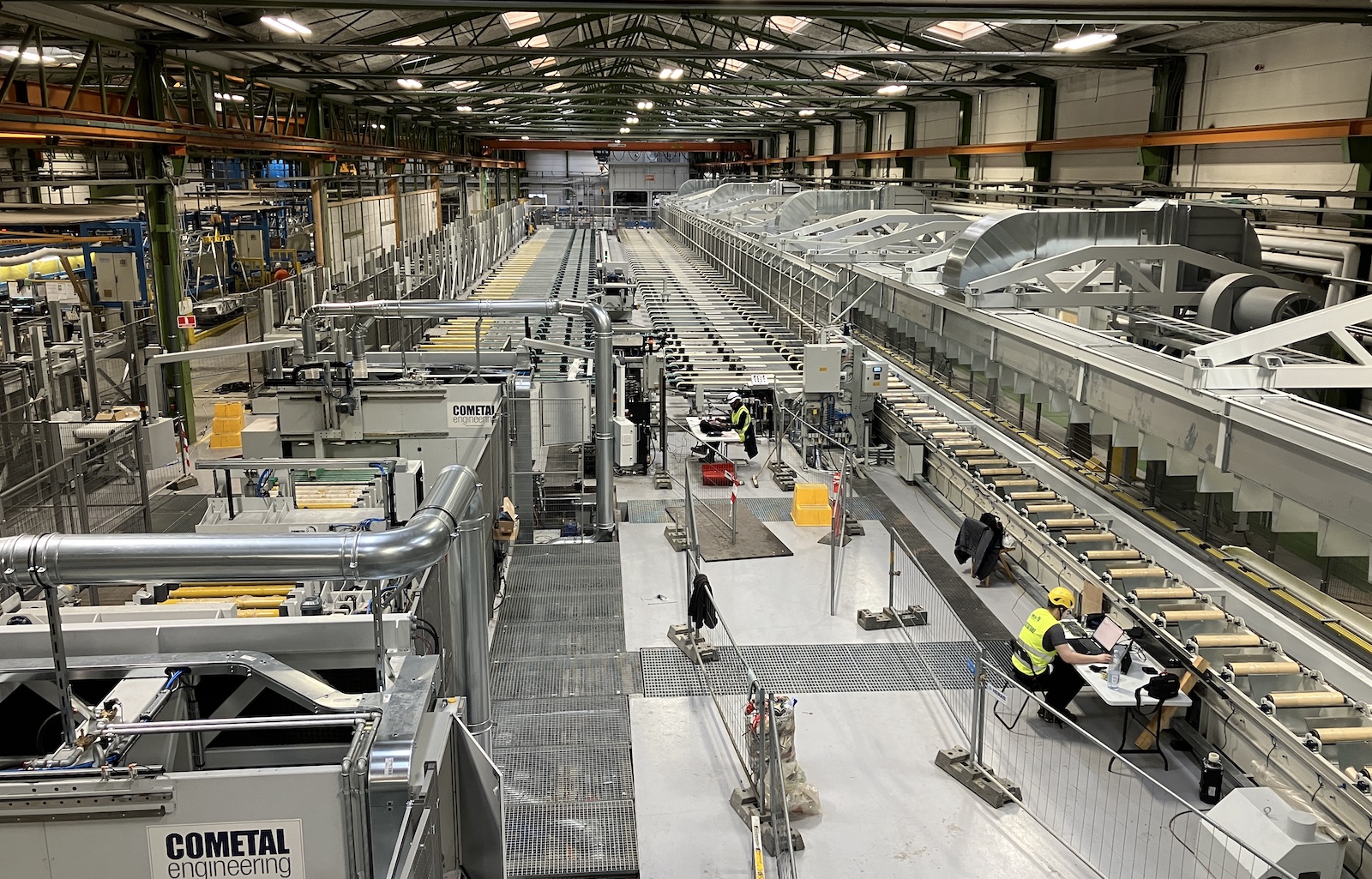
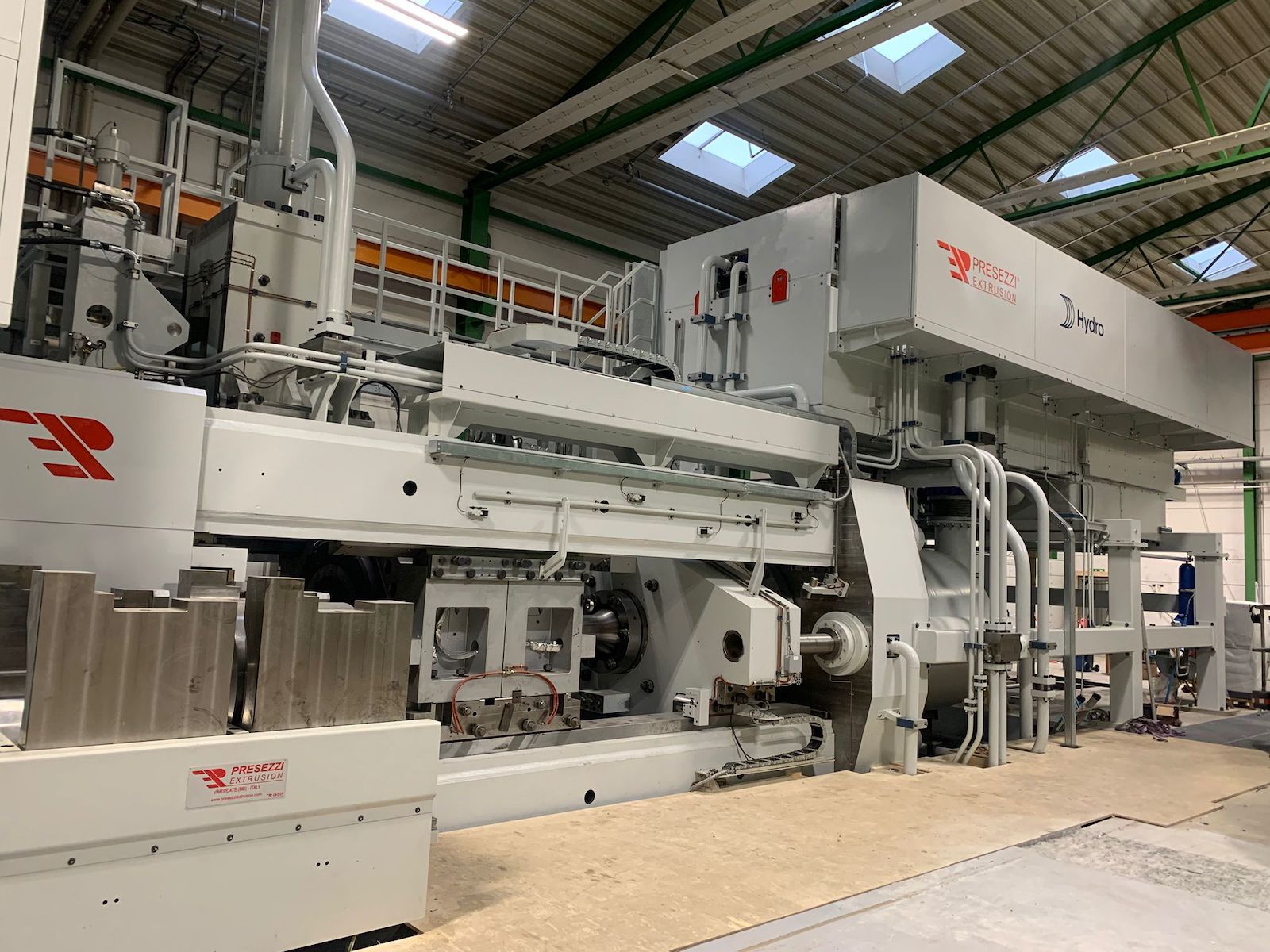
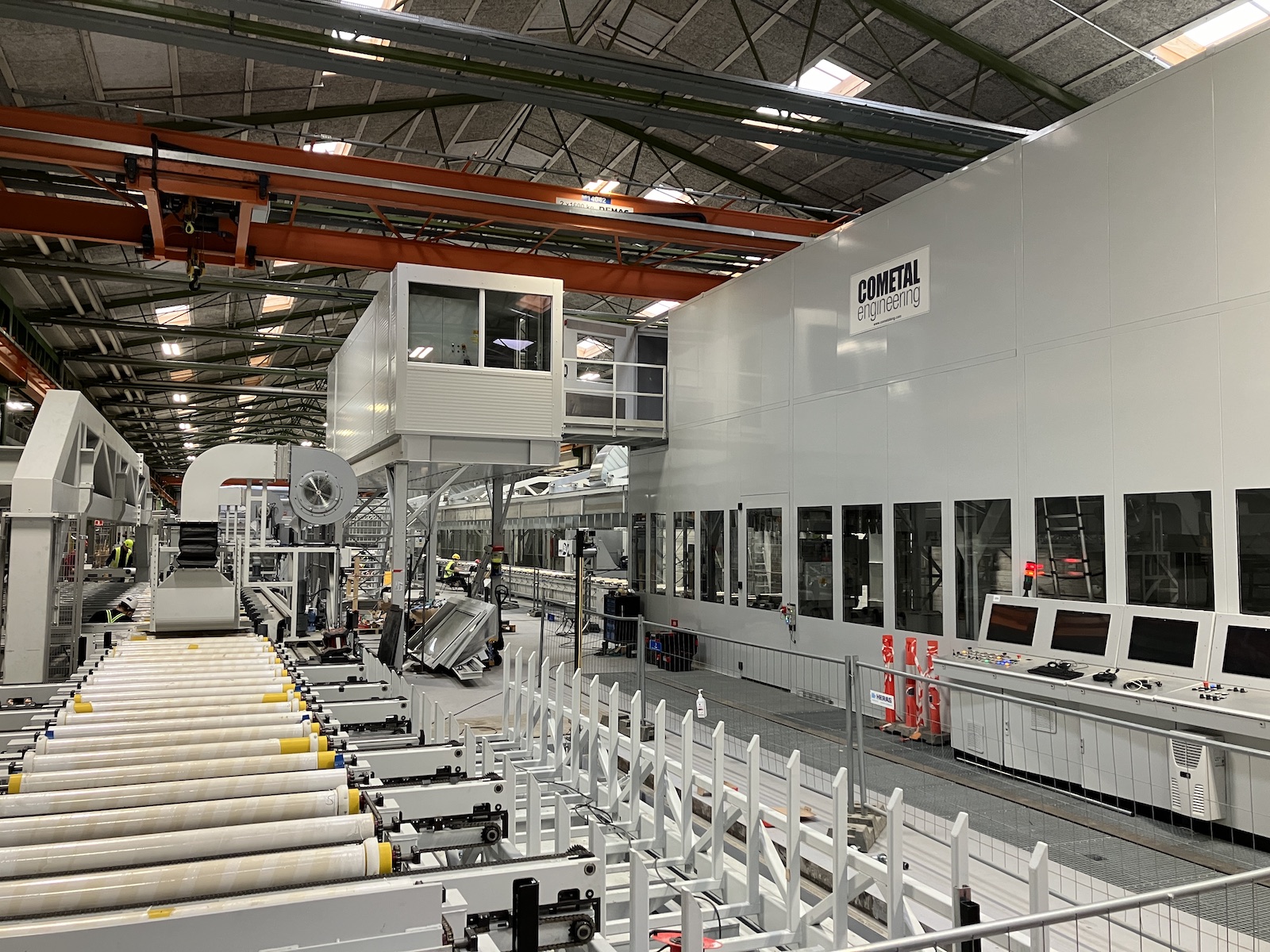
The new 12 inch, 60 MN Presezzi press (Figure 3) features a complete handling system from the Italian company Cometal Engineering, including a 62 m long runout table and an advanced quenching for automotive applications (Figure 4). The handling systems also include log storage and handling for 120 logs and 36 billet up to 1,600 mm in length.
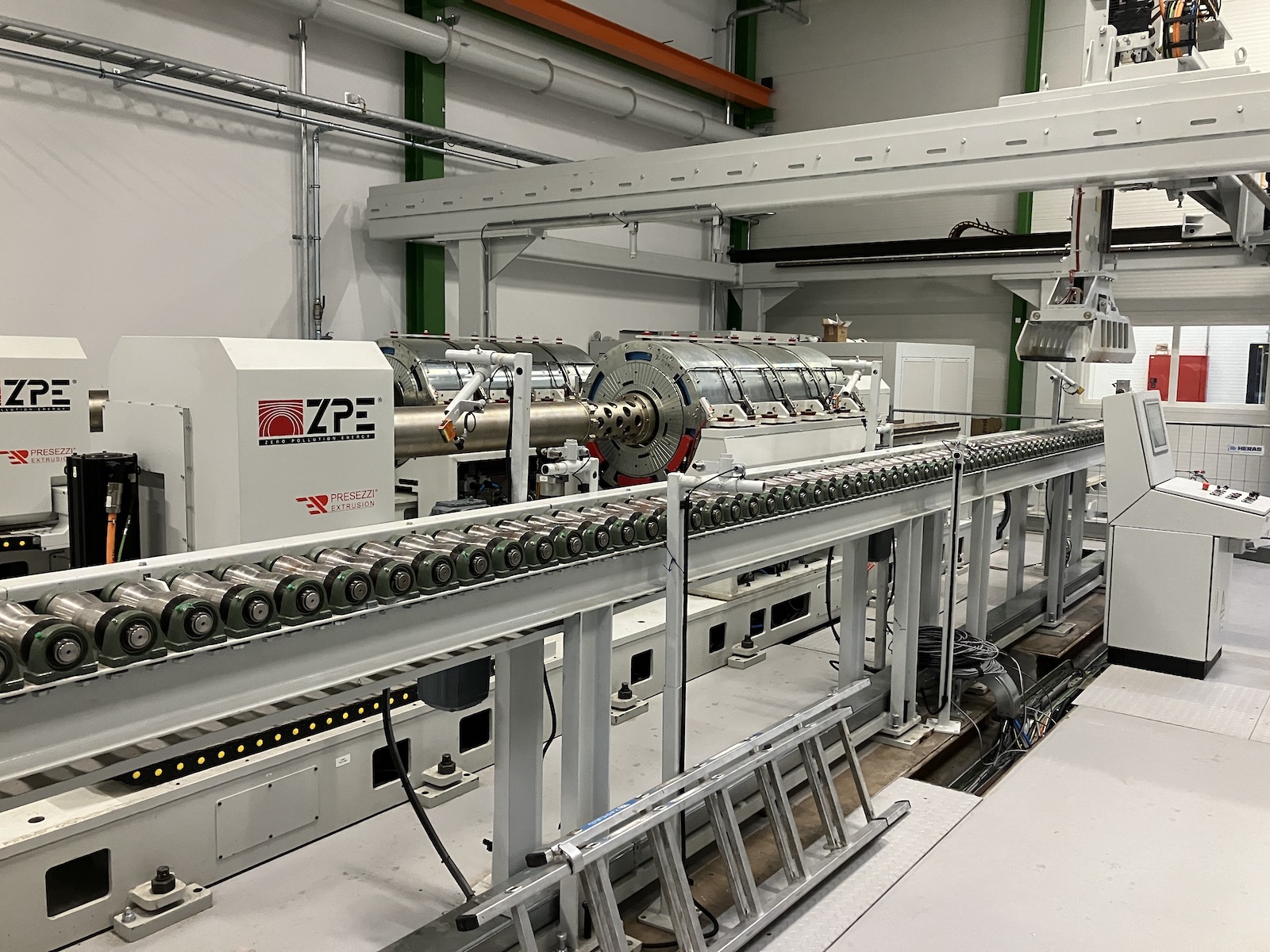
In addition, the press line features two magnetic induction heaters (8,500 kg/h) based on Presezzi’s Zero Pollution Energy (ZPE) heater technology (Figure 5), which provide low energy consumption compared to conventional systems like gas-fired furnaces. When the billet is loaded into the furnace it is blocked between a mechanical support—the reference point—and a movable stop, which adapts its position according to its length. Once the billet is locked, the furnace moves to cover the length of the billet before it begins the heating process.2 The billet is then heated by a magnetic field created during the rotation of the permanent magnets, which are assembled inside the rotor of a coaxial motor. The ZPE ovens automatically calculate and control the heating process, taking into account the alloy and the starting temperature to determine the exact processing time and speed to obtain the desired temperature.
The new press will mainly produce extruded components for electrical systems and hybrid cars. At the adjacent fabrication center, the profiles from the 12 inch press will be fabricated into advanced components that meet the requirements of automotive customers, such as BMW, Mercedes-Benz, Porsche, and Volvo. These components will include profiles for battery frame applications, side sill inserts, side beams, longitudinal beams, and crash management systems, such as bumper beams and crash boxes.
Sustainable Production
Aluminum’s favorable strength-to-weight ratio and energy absorption qualities have helped make it the material of choice for extruded automotive components, such as structural and safety-critical parts. With the growth in electric vehicles, OEMs are not only looking to remove carbon emissions from the use phase of their cars, but also from the materials used in the production of the cars, which remains a challenge.
Extrusions are well suited to meet this demand, since their carbon footprint is inherently low, especially if the aluminum used was produced from recycled post-consumer scrap. The carbon footprint can be further reduced by using renewable energy to power the extrusion process and machining operations.
The Tønder plant meets both of these criteria. The site sources low-carbon and recycled aluminum from Hydro’s metal production and casthouse network, including aluminum produced at the Sjunnen recycling operation in Sweden.3 In addition, the entire production process at Tønder, including extrusion and fabrication, utilizes renewable hydropower from Sweden. The new press is using the newest technology on the market, which ensures energy efficient production. Increased automation will also be coming, according to Sørensen.
Community Focus
In addition to increasing capacity of low-carbon aluminum, the expansion of the Tønder extrusion plant is a positive development for the surrounding community. Sørensen pointed out that local support has been part of Hydro’s DNA in the Jutland region, which is expected to continue in the years to come.
Hydro in Tønder has been assisting young people in the region for years. The company supported the development of the Alu Science Center at Tønder Gymnasium, which supports junior high and high school-age students with classes educating them about aluminum and recycling; the Mind Factory by ECCO, a creative learning space for children and young people; and the Højer Designefterskole, a former carpet factory that was renovated and reopened in May 2022 as a boarding school for junior high and high school-aged students from Denmark and abroad who wish to develop their skills in design and technology.
“We support these projects because we want to try to get more young people living in and around Tønder interested and inspired. They are our future,” says Jens Sandahl Sørensen, Innovation & Technology director for Hydro Precision Tubing Europe.4 “Giving back to the community is part of our heritage here in Tønder.”
References
- “A pioneer in automotive aluminium joins Hydro’s 50 year anniversary in Tønder,” Hydro, October 3, 2025.
- “Z.P.E. Zero Pollution Energy,” Presezzi Extrusion.
- “Hydro investing in new automotive extrusion press in Denmark,” Hydro, July 7, 2022.
- “Investeringer i nyt udstyr og nye medarbejdere – Hydro styrker sin tilstedeværelse i Danmark,” Hydro, September 19, 2025.
Kevin Widlic has more than 30 years of experience in the aluminum industry, having worked for Norsk Hydro and the former extrusion company Sapa. In addition to extrusion, he has worked as a communications officer for Hydro’s upstream primary and secondary aluminum operations, as well as its rolled products business, which was later spun off. Widlic also authored the book, Our Way: From Karmøy to Kalamazoo, on the history of Hydro Extrusion and edited technical works such as the company’s Extrusion Design Manual and Adhesive Bonding of Aluminium handbook.
Editor’s Note: This article first appeared in the February 2026 issue of Light Metal Age. To receive the current issue, please subscribe.