
By John Peterman, Gillespie & Powers, Inc.
In March, my marketing team made a simple post on the Gillespie & Powers, Inc. LinkedIn page celebrating aluminum recycling for Global Recycling Day. After all recycling is one of our core markets. Then, a mining and metallurgical advisor from Brazil responded to that post, pointing out that the U.S. recycles only 45% of its scrap aluminum, compared to the world average of 67%, stating that there was nothing to celebrate. I intended to reply to his rather snarky comment, but then realized I did not know enough details to make the case I wanted.
For Gillespie & Powers, the secondary aluminum recycling market is not a side business. Our rotary kiln decoating systems are the number one used beverage can (UBC) decoating system in the world. Our installations process more UBCs than all our competitors combined. We literally sit at the front end of the secondary aluminum recycling market. We have spent decades engineering equipment that makes recycled aluminum possible. If anyone should have these recycling numbers at their fingertips, it should be me, and I didn’t.
But to be honest, I think many can relate to not having enough time to research the market and investigate the data as they’d like. Work gets in the way and priorities drive my daily focus. However, that LinkedIn conversation inspired me to dive into research and read Aluminum Association reports and trade magazines regarding the question of recycling rates in the U.S. What I discovered is that the original commenter did have a point, but it was not the whole story.
The U.S. does have a problem collecting post-consumer aluminum. But the bigger issue is deeper than just what ends up in landfills. There is a growing gap between the aluminum industry’s public commitments and the actual supply of scrap needed to meet them. Beverage companies and automakers are promising 70%, 80%, even 90% recycled content. The processing infrastructure is there and growing. But not enough people are asking where the raw material will actually come from.
Where did the scrap go? And more to the point, where is it going to come from?
The Industrial vs. Post-Consumer Divide
The U.S. recycling story is very complex. The most recent industry data puts the U.S. consumer recycling rate of aluminum UBCs at 43%, the lowest in decades and way below the 20-year average of 52%. The global average is now at 75%. That is a 32-point gap! What does the U.S. need to do to close that gap? How can we understand its cause and what changes are needed to fix it?
U.S. industrial manufacturing and aluminum recycling is the best in the world. They achieve recovery rates of 85–95% or higher. Automotive stamping scrap, extrusion trim, aerospace fabrication scrap, and die cast returns almost never end up in landfills. This material is bought, sorted, and remelted because it’s easy, and the economics make sense, without needing government intervention. I truly believe that the U.S. leads the world in secondary aluminum melting capacity and in engineering the systems that process this material.
The 43% rate is almost entirely a post-consumer packaging problem, specifically UBCs and mixed household aluminum. This is a collection failure, not a manufacturing one. The reason is behavioral, not cultural. People do not return containers when there is no financial reason to do so. Deposits work because they introduce a direct financial incentive at the moment of decision, and behavioral science consistently shows that mechanism is more effective than environmental appeals.
The Anatomy of a Policy Failure
Oregon enacted the nation’s first bottle bill in 1971. Michigan followed in 1976 with a 10-cent deposit on cans and bottles. I know that one personally. We used to do family vacations in Michigan when I was a kid, and my grandmother was not leaving a single dime on the table. She had no interest in supply chain optimization or landfill diversion rates. She wanted her 10 cents back, and she got it every time.
The idea is simple. The consumer pays a deposit at point of sale and has a direct financial incentive to return the container. When they do, the material goes straight back into the supply chain rather than into a landfill or a curbside bin, where it may or may not be properly sorted. My grandmother would have found all of that context completely beside the point. But it turns out her 10 cents, multiplied by millions of people making the same rational decision, is exactly how you build a functioning collection system.
The best recent example is Connecticut. In January 2024, the state doubled its deposit from 5 cents to 10 cents and expanded the types of beverages covered. UBC recovery jumped 21 percentage points in a single year, hitting 77% by Q4 2024. That is not a gradual trend. That is grandmothers all over Connecticut wanting their dime back, multiplied by millions of transactions, producing exactly the result the policy was designed to produce. Scale that across all 50 states and the numbers would move fast.
Right now, only ten states have any kind of deposit-return law (Figure 1). The other 40 depend on voluntary curbside programs, run by more than 30,000 municipalities, each with its own rules, accepted materials, contamination thresholds, and downstream contracts. If you have ever gotten a notice that your recycling hauler changed or that the program no longer accepts a material it used to take, you have experienced this system firsthand. I once watched a local news segment investigating a municipal recycling program only to find out the material was going straight to the dump. That story is more common than anyone in government wants to admit. Shaky and shady have always occupied the same zip code when it comes to U.S. curbside recycling.
This system was already fragile before 2018. When China’s National Sword policy banned imports of mixed recyclables, programs that had been economically viable only because China was absorbing contaminated bales became unworkable overnight. Recycling centers closed. More material went to landfill. Costs to municipalities jumped sharply. The post-consumer aluminum supply chain still has not fully recovered from that disruption, and curbside programs have not become meaningfully better in the years since.
Every time a federal deposit-return law has come before Congress for consideration it is killed off in committee. It’s blocked at almost every turn by the beverage industry lobby, state-rights debates, and a lack of political support from recycling groups. Meanwhile, billions of dollars in recoverable aluminum end up in landfills each year, not because we lack the equipment to process it, but because the collection system was never built.
The Urban Mine Is Already in the Ground
Urban mining is getting more attention in the secondary metals industry. The idea? Recover the metals already in the waste streams, landfills, and stockpiles of consumer and industrial waste. For aluminum, this is not a new idea. The urban mine is already loaded and has been for decades.
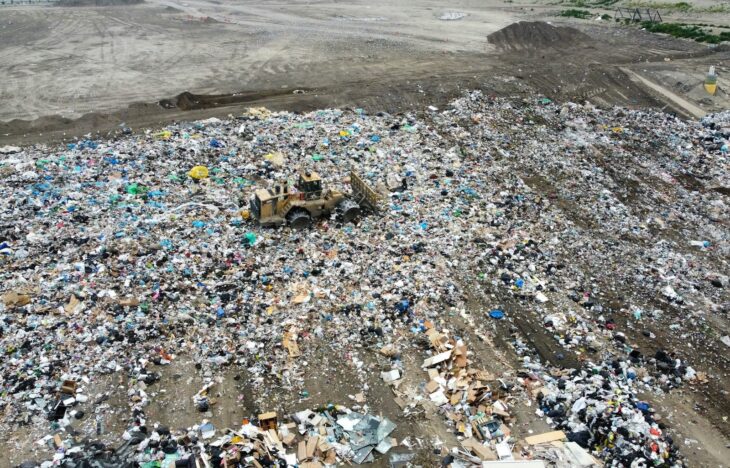
According to experts, when an aluminum can ends up in a landfill today, it will stay intact for 80 to 200 years, depending on conditions. It does not break down, react, or disappear. It keeps its full recoverable value, slowly compressing into the ground. The total amount of aluminum in U.S. landfills is a major future feedstock reserve. The real question is not whether it can be recovered, but when it will make economic and regulatory sense to do so.
Some of this material is already being targeted. Landfill mining projects are being tested in the U.S. and Europe, though they are still in early-stages and not yet profitable on their own. The more urgent priority is to stop new material from entering landfills. Redirecting the annual flow of uncollected post-consumer aluminum into the secondary processing stream would directly increase feedstock for U.S. secondary melters. The decoating and melting infrastructure is ready. The real bottleneck is at the collection stage.
What the Rest of the World Got Right (and Did Not)
What is driving the global recycling numbers? Countries with the highest post-consumer aluminum recovery rates almost always have deposit-return or extended producer responsibility systems. Germany, Norway, Finland, and the Netherlands regularly achieve 90–97% recovery. These results are not due to better recycling habits or more educated consumers. It is policy that makes returning a container the economically rational choice. Grannies in Germany and Connecticut alike know what a dime looks like.
The 75% global average used to compare with the U.S. includes countries with very different industries. Some countries with high recycling rates have small manufacturing sectors, so their numbers are mostly from post-consumer packaging. Their strong results reflect collection policies, not industrial performance. When you include industrial scrap in the full aluminum life cycle, the U.S. actually looks much stronger than the headline numbers suggest.
Some countries achieve high recovery rates through informal waste collection, not formal systems. These approaches have social benefits, but they are not models that developed economies can copy. To support long-term industrial needs, a secondary aluminum supply chain must have formal, well-designed, and sustainable collection infrastructure, not one that relies on low-wage labor.
Why the Supply Gap Is Growing
Demand for post-consumer aluminum scrap is continuing to rise. The auto industry’s move toward lighter vehicles has increased aluminum content from under 100 lbs per vehicle in the 1970s to 400–500 lbs in today’s light-duty trucks. Electric vehicles use even more for batteries, frames, and cooling. Automakers now require specific percentages of recycled content in their supply contracts, and not just any recycled aluminum.
Beverage can makers face similar pressure. The Aluminum Association and its members have set public goals of 70% recycled content by 2030, 80% by 2040, and 90% by 2050. In 2023, the industry recycled 46 billion cans, but sent 61 billion to landfills, about $1.2 billion in aluminum value lost in just one year. The gap between sustainability promises and what the collection system delivers is not about messaging. It is a real materials problem with a very large price tag.
There is another side to the supply problem that is rarely mentioned. The U.S. exports about 2 million tonnes of aluminum scrap each year, material our own industry needs, while also importing used beverage can scrap from Canada and Mexico to cover shortages. The industry sends valuable feedstock abroad, while making recycled content promises at home. Recent trade policies add to this irony. Under Section 232, new tariffs on aluminum are between 25 to 50%, making it more expensive to import the scrap we need, but there are no such limits on exporting the scrap we should keep.
On the processing side, the industry is investing in advanced UBC decoating systems, better alloy sorting technology, and upgraded melt shop equipment. The ability to process more post-consumer material is already here or coming soon. The real limit is feedstock. You cannot melt cans that never leave the landfill.
A Supply Chain Divided
Here is where it gets interesting… The companies that make the aluminum can and those that fill them are at odds with one another on the industry’s biggest policy debate. The Can Manufacturers Institute (CMI), which represents Ball Corporation, Crown Holdings, Ardagh Metal Packaging, and rolling mill suppliers like Novelis and Constellium, lobbies for deposit-return laws. CMI’s president spoke in favor of the Rhode Island bottle bill in May 2025. Ball Corporation even funded research showing that states with deposits recycle twice as many aluminum cans as non-deposit states. Novelis is building a $2.5 billion plant in Alabama that will need 17 billion UBCs a year to run at full capacity. These companies need the material. They have said so publicly and are investing billions based on the hope that supply will improve.
At the hearing for the Rhode Island bottle bill in May 2025, a representative from Coca-Cola Beverages Northeast spoke against the bottle bill. The American Beverage Association, mainly funded by Coca-Cola and PepsiCo, spent about $8–9 million to defeat a Massachusetts bottle bill expansion in 2014, outspending supporters 55 to 1. Their preferred option is a voluntary recycling program called Every Bottle Back. This shifts the financial burden onto the local municipalities and taxpayers and not the producers. The National Advertising Review Board later found that this program made unsupported claims about recycling results.
When I look outside the U.S. at what is actually working, this is what convinces me. In every country with deposit-return laws, like Ireland, Germany, Norway, the U.K., and Australia, producers are required by law to participate, with criminal penalties and heavy taxes for non-compliance. Coca-Cola calls this mandatory compliance a key milestone for the industry. But in the U.S., where participation would be voluntary, the company funds efforts to block these laws. The recycled content goals Coca-Cola lists in its sustainability reports depend on a collection system its trade groups spend millions to oppose. That is not a real circular economy strategy. It is just compliance presented as leadership.
What Actually Moves the Needle
The solutions are not technically complicated. They are blocked by politics and money. That difference matters because it shows where we need to focus our efforts.
Implementing a national deposit-return system is by far the most effective policy option. Connecticut doubled its deposit to ten cents in 2024 and saw recovery jump by 21 points in a year. Oregon stays above 90% with its BottleDrop system. Data from Germany, Norway, and other countries show the same, returns reach over 90%. Deposit systems mostly pay for themselves because the deposit covers costs, and material comes back clean at the point of sale instead of mixed in curbside bins. Every year without Congress passing a federal law means another 61 billion cans in landfills and $1.2 billion in lost aluminum value. That is nothing to celebrate.
Extended producer responsibility (EPR) laws, which make packaging companies pay for collection and processing instead of cities, are another good option. Several states are moving this way, and federal EPR bills have been proposed. Progress is happening, but it is slow compared to the growing demand for recycled material.
The industry can invest in scrap sorting and preparation infrastructure right now, without waiting for Congress. Post-consumer aluminum only has value when it is sorted, cleaned, and matched to the right alloy. Optical sorting, x-ray analysis, and better preparation systems expand the types of post-consumer material that processors can use. This is where industry investment and policy changes work together, and real progress is already being made.
Where the Conversation Goes Next
This article began as a back and forth conversation on LinkedIn, which then turned into the kind of discussion our industry needs more often. Not just polite agreement, but honest debate, correction, and a willingness to admit the problem is real no matter where you are. Without knowing it, that initial LinkedIn commenter challenged me to know my numbers, so I went and found them. What I learned is in this article, and none of it makes me feel optimistic about the current situation. And I definitely don’t want to celebrate.
Demand for recycled content is growing faster than the collection system can keep up. The missing link is the policy needed to connect these pieces into a working supply chain. That is a political problem, and political problems get solved when enough people decide not to ignore them. The processing infrastructure is ready. The scrap is out there. Let’s go get it.
John Peterman is president of Gillespie & Powers, Inc., a fifth-generation, family-owned industrial furnace engineering company founded in 1938 and headquartered in St. Louis, MO. The company specializes in aluminum melting and processing equipment, the world’s number one delacquering systems, and primary and secondary aluminum furnace engineering.
Editor’s Note: This article first appeared in the August 2026 issue of Light Metal Age. To receive the current issue, please subscribe.