
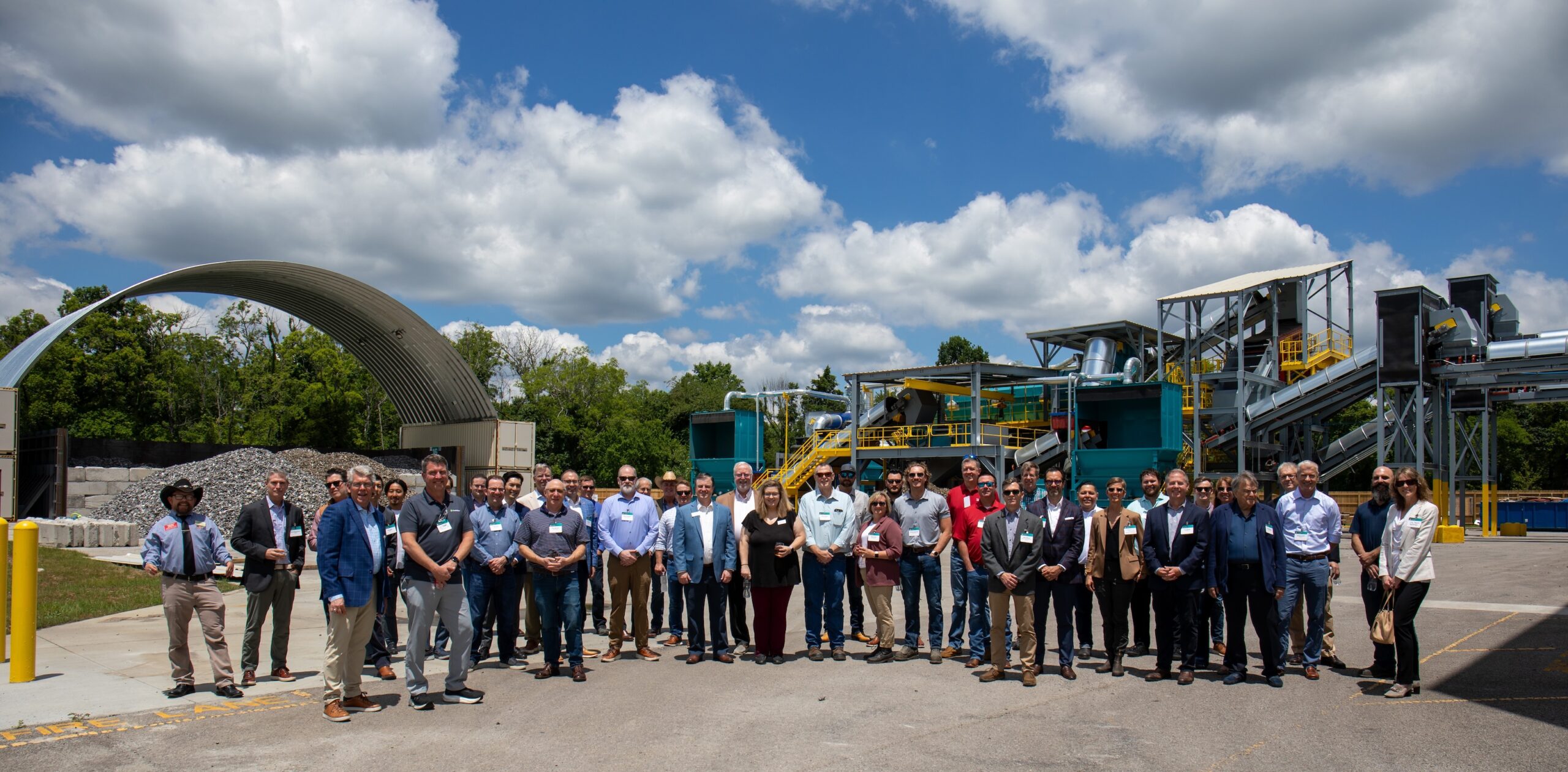
Sortera Technologies, Inc. started up and achieved full operation of its second state-of-the-art scrap processing facility in Lebanon, TN, which is located in the heart of the Southern U.S. automotive manufacturing corridor. Utilizing Sortera’s proprietary AI-driven sorting technology, the facility will transform mixed-alloy scrap into high-value aluminum scrap for the automotive, construction, and aerospace industries.
The new Lebanon facility is designed to meet increasing demand for recycled aluminum, which is being supercharged by the construction of two massive U.S. rolling mills by Aluminum Dynamics and Novelis in 2026 and 2027. At the same time, it keeps critical materials within the U.S. economy, reducing reliance on international imports in a volatile global market.
“From day one, Sortera’s mission has been to up-cycle end-of-life aluminum, funneling it directly back into a true circular economy,” said Ben Pope, COO of Sortera Technologies. “The decision to rapidly scale our footprint was prompted by clear global and domestic market drivers. Globally, macro data shows a structural trend toward an aluminum deficit, and utilizing high-purity recycled scrap is the most cost-effective and competitive method for manufacturers to fill this supply gap. Recycled content inherently improves the overall profitability of the aluminum products industry.”
Technology-Driven Growth
Sortera Technologies was founded in the summer of 2020 by Dr. Nalin Kumar and Manny Garcia in Fort Worth, TX. The company’s foundational, breakthrough sorting technology was originally developed in partnership with the U.S. Department of Energy and through the highly competitive Advanced Research Projects Agency – Energy (ARPA-E) program, which supports the development of cost-effective and energy-efficient processing and recycling technologies that have a high market potential.
During the R&D phase, Sortera collaborated with OmniSource, a processor and distributor of automotive scrap and secondary metals headquartered in Fort Wayne, TX, on the project. The in-house developed technology utilizes AI, machine learning, and data-collection software, which is complemented by x-ray fluorescence and optical sensors to sort mixed scrap into customer-specific alloys.
In the first few years, the company was focused on commercializing its sorting technology for the aluminum industry. “Aluminum is an incredibly energy-intensive raw material, yet it holds massive sustainability value due to its dynamic properties and its ability to be infinitely recycled without losing quality,” explained Pope.
Sortera quickly gained the attention of investors, who saw the potential of this new technology in creating novel recycled aluminum scrap streams that could secure the domestic supply chain while strengthening the circular economy. This outside investment enabled the company to build its first full-scale scrap processing facility in Markle, IN. Commissioned in 2023, the 200,000 sq ft Markle facility has the capacity to sort up to 220 million lbs of mixed metals per year. In 2023, Sortera also established an R&D facility in Austin, TX, where it focuses on continuing to advance its already robust sorting technology.
Raw scrap material is obtained from various regions across the U.S., with the primary source of end-of-life materials being from auto shredders. “These commercial shredders process a wide variety of obsolete items — including retired car bodies, building and construction scrap, appliances (white goods), and other metal-bearing materials — chiefly to collect and aggregate the steel,” explained Pope. “Once the ferrous metals are magnetically separated, the remaining product is a highly valuable, non-ferrous concentrated metal stream known across the industry as ‘zorba.’ Virtually all Sortera’s feedstocks are derived from this zorba stream or its shredded, pre-separated substrates, such as ‘twitch’ and ‘tweak.’ Our technology is purpose-built to take these complex, mixed-metal fractions and sort them into pure, high-value alloy packages.”
The Markle facility successfully demonstrated the value of Sortera’s technology by sorting raw scrap material into specified aluminum scrap by alloy. The site’s core offerings include various cast products (specifically, 380, 356, and 383 alloys), as well as highly precise shredded wrought products (across the 3xxx, 5xxx, and 6xxx series). These products are delivered to manufacturers across the aluminum supply chain, including the die cast, secondary aluminum smelting, flat rolled products, and billet casting markets.
The performance of the Markle plant and the enthusiastic response from customers led to the development of Sortera’s second facility in Lebanon — a move that effectively doubled the company’s capacity. Each of these plants ensures that regional customers have a streamlined, local supply chain. As of summer 2026, Sortera has grown its team to over 100 employees across its operations. And the company is looking to build additional scrap processing sites across the U.S. to further scale up operations.
“Sortera Technologies is currently in an exciting high-growth phase,” said Pope. “Having proven our ability to scale, duplicate our proprietary processes, and consistently deliver premium-quality products across two separate production facilities, we have established ourselves as the premier end-of-life aluminum sortation company in the United States. This operational success has unlocked significant demand and paved the way for our next phase of domestic expansion.”
New Lebanon Facility
Planning for Sortera’s second facility began with site selection and preparation. “Sortera relies on a few critical requirements when evaluating a potential processing facility,” said Pope. “From a site selection and preparation standpoint, we require 25 to 50 acres of land to handle large volumes of inbound and outbound traffic, as well as ample storage for raw materials and finished goods. Other key site criteria include rail access, highway access, a 36-foot ceiling height, and proximity to a talented local workforce.”
After careful consideration, Lebanon was selected for the new plant. The location was able to provide the company with 25 acres of land, along with access to a dual rail spur and is just four miles from the interstate highway, allowing for optimized logistics.
With the site selection completed, the company began pouring concrete and constructing the buildings. “In any major expansion project, you inevitably run into challenges, and for our Lebanon location, the weather was the most impactful obstacle we faced,” noted Pope. “We experienced two weeks of continuous rain that simply did not want to stop, which ultimately delayed our planned concrete pours. Fortunately for Sortera, our buildout partner, Arco Murray, was able to expertly manage the setback, adjust the workflow, and keep the entire project completely on schedule.”
For the engineering and installation of the equipment, Sortera selected Custom Engineering and Fabrication out of Fort Wayne, IN. Recommended to Sortera by its previous collaborator, OmniSource, Custom Engineering and Fabrication is a heavy steel fabricator, with expertise in the scrap industry, providing turnkey solutions, including design, fabrication, installation and project management.
“Typically, our customers provide the proprietary process technology, while we deliver the critical integration components that make it work — such as feeders, trommels, dryers, conveyors, platforms, and catwalks,” explained Ryan Njavro, partner, Custom Engineering and Fabrication. “We collaborated closely with Sortera to optimize their process, relying on weekly meetings, rigorous design reviews, and continuous updates. By maintaining constant communication, our teams ensured that every piece of equipment was tailored precisely to their application and delivered to the highest standards of quality.”
The Lebanon facility came online in April 2026, launching entirely on time and on budget. Demonstrating the maturity of its AI-powered platform, the site successfully produced sellable, high purity aluminum scrap within its first week of operation. It achieved full operation shortly thereafter.
“The process in Lebanon has been fantastic,” said Pope. “The community of Wilson County and the City of Lebanon have proven to be excellent local partners for our second site, and the state of Tennessee is a wonderful, strategic location for managing raw materials and finished products. Ultimately, Sortera’s software-driven technology allows us to turn on a plant at a fully functional level on the very first day of production, which represents the distinct scaling advantage we possess.”
Inside the facility, the Lebanon operation mirrors the advanced capabilities of the Markle facility. The site utilizes a strategic blend of industry-standard pre-processing equipment and advanced proprietary technology. It features a modular design that allows the company to build vertically, which significantly helps optimize the indoor space. The material flow is engineered for high-efficiency upcycling of end-of-life aluminum materials. The sequence of operation includes eddy current separation, polishing, sizing, and multi-sensor sortation (Figure 1). To maximize efficiency and ensure seamless operations, each individual step of this process is built with ample capacity to leverage a 24/7 production environment, allowing the facility to produce 150 million lbs of high-quality material per year.
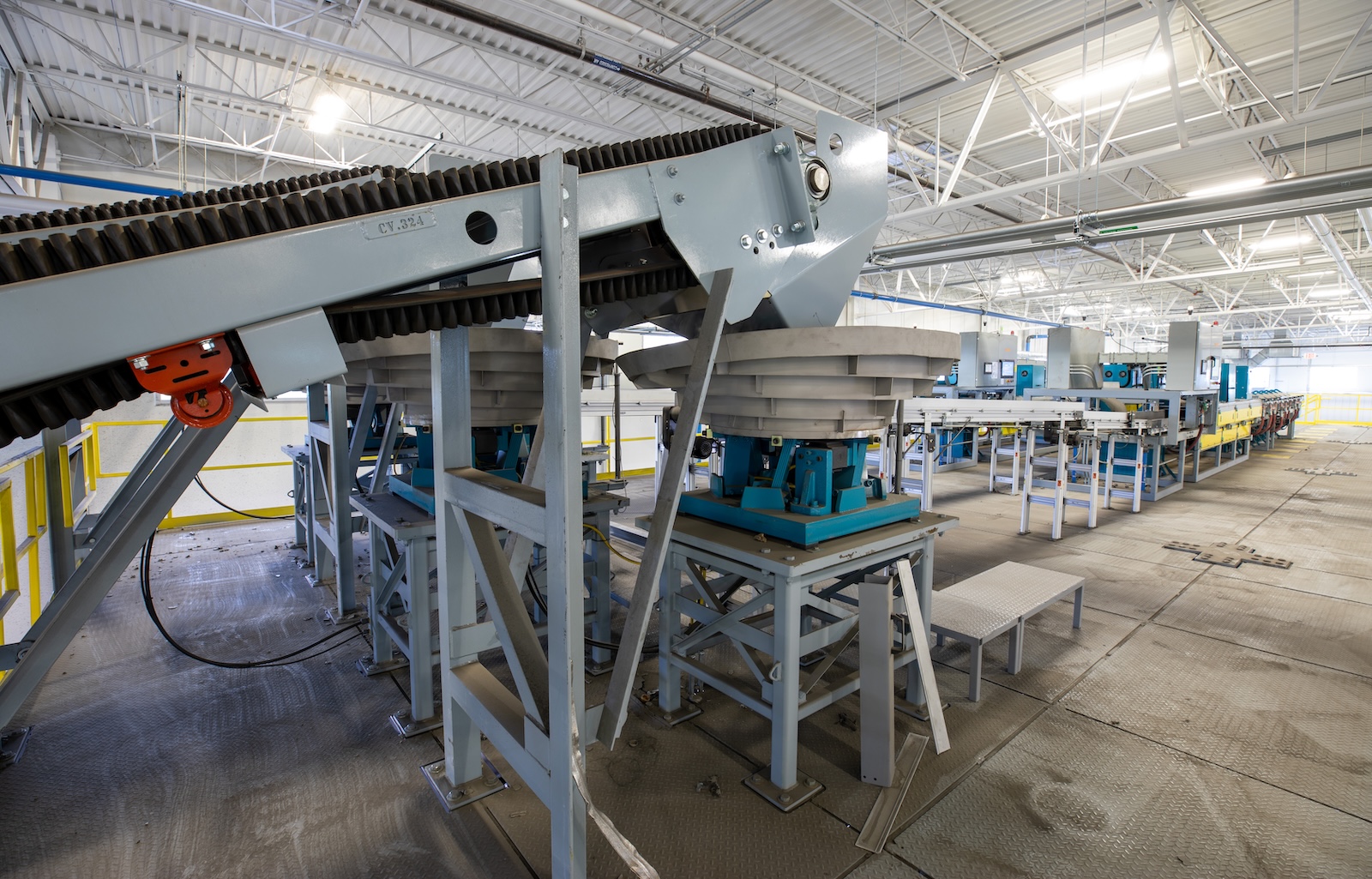
The equipment is paired with our proprietary software stack technology, which features advanced multi-sensor functionality. “While the mechanical pre-processing technology establishes the necessary scale and throughput, our AI-based software stack serves as the intelligent sortation platform that enables highly precise, novel product sortation,” said Pope. “Our technology stack allows for highly customized sortation with exceptional repeatability. By transforming mixed alloy scrap — which was historically downgraded or shipped overseas — into high-purity feedstocks, Sortera is introducing premium, sustainable products that previously were not available to the market.”
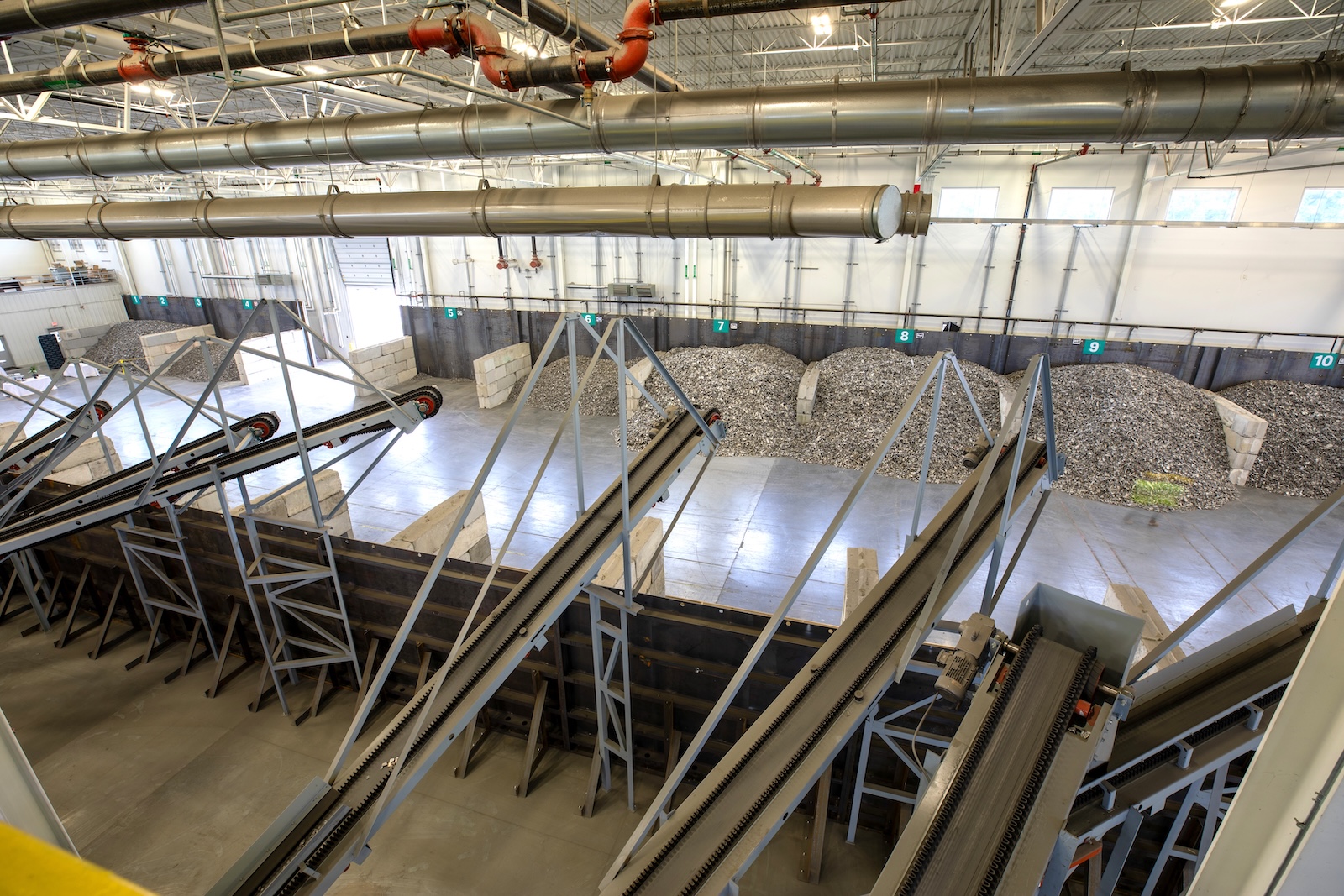
According to Pope, Sortera’s operation is inherently environmental. Not only is the company sorting mixed, end-of-life material into high value scrap segments (Figure 2), but its proprietary process also improves the surface cleanliness of the material it handles and sells. “Furthermore, our innovations allow us to capture the inorganics that are removed during the polishing phase of our system,” said Pope. “Rather than letting these byproducts go to waste, they are collected so they can be repurposed as valuable binding agents for other industrial products. Ultimately, by sorting items into highly precise segments, we ensure that every piece of material is sold to the absolute best end-home for its specific composition, maximizing resource efficiency and supporting a true circular economy.”
Moving Forward
The new Lebanon facility enables Sortera to supply the U.S. aluminum industry with precision-sorted scrap, ensuring customers are able to achieve intrinsic chemical compositions, improved furnace recovery, and maximized furnace utilization. In addition, the company believes the future of materials sortation will rely on advanced data intelligence — specifically, having real-time visibility into what scrap materials are available in the market and knowing exactly how to sort those materials to inject the highest possible value back into the aluminum products sector. Sortera meets this need for data intelligence with its proprietary software stack and plans to use the massive amount of field data it collects to further refine and innovate with its sortation technology.
Sortera’s intense business growth doesn’t stop with the Lebanon plant. The company has plans for installing up to ten new plants in the U.S. Each of these new plants will pair Sortera’s advanced technology with Custom Engineering and Fabrication’s extensive experience in bulk material handling, enabling Sortera to continue to grow quickly and seamlessly as it expands across North America.
“Ultimately, what excites us most at Sortera is the opportunity to modernize a critical, traditional industry,” said Pope. “By deploying artificial intelligence and advanced sensor technology at scale, we are fundamentally transforming how industrial scrap is processed. More importantly, our technology keeps these highly valuable, infinitely recyclable resources right here in the U.S. In doing so, Sortera is actively shoring up domestic supply chains and providing a robust, sustainable foundation for the American manufacturing industries that rely on these vital materials every day.”
Editor’s Note: This article first appeared in the August 2026 issue of Light Metal Age. To receive the current issue, please subscribe.