
By J.P. Weiler, Meridian Lightweight Technologies, Inc.
Introduction
Magnesium has long played a quiet but vital role in modern industry. As a primary alloying element in aluminum, a lightweight structural metal in its own right, and a critical input into titanium production, magnesium is integral to sectors ranging from automotive and aerospace to electronics and defense. Yet despite its importance, magnesium supply has been steadily concentrated in China over the last 20 years, leaving Western manufacturers exposed to supply disruptions, trade actions, and geopolitical risk.
In recognition of this vulnerability, the U.S. and other Western countries have formally designated magnesium as a critical mineral, reflecting both its essential industrial role and the lack of diversified, secure supply. Against this backdrop, interest in new, non-traditional magnesium production methods with a focus on decarbonization and circularity has intensified.
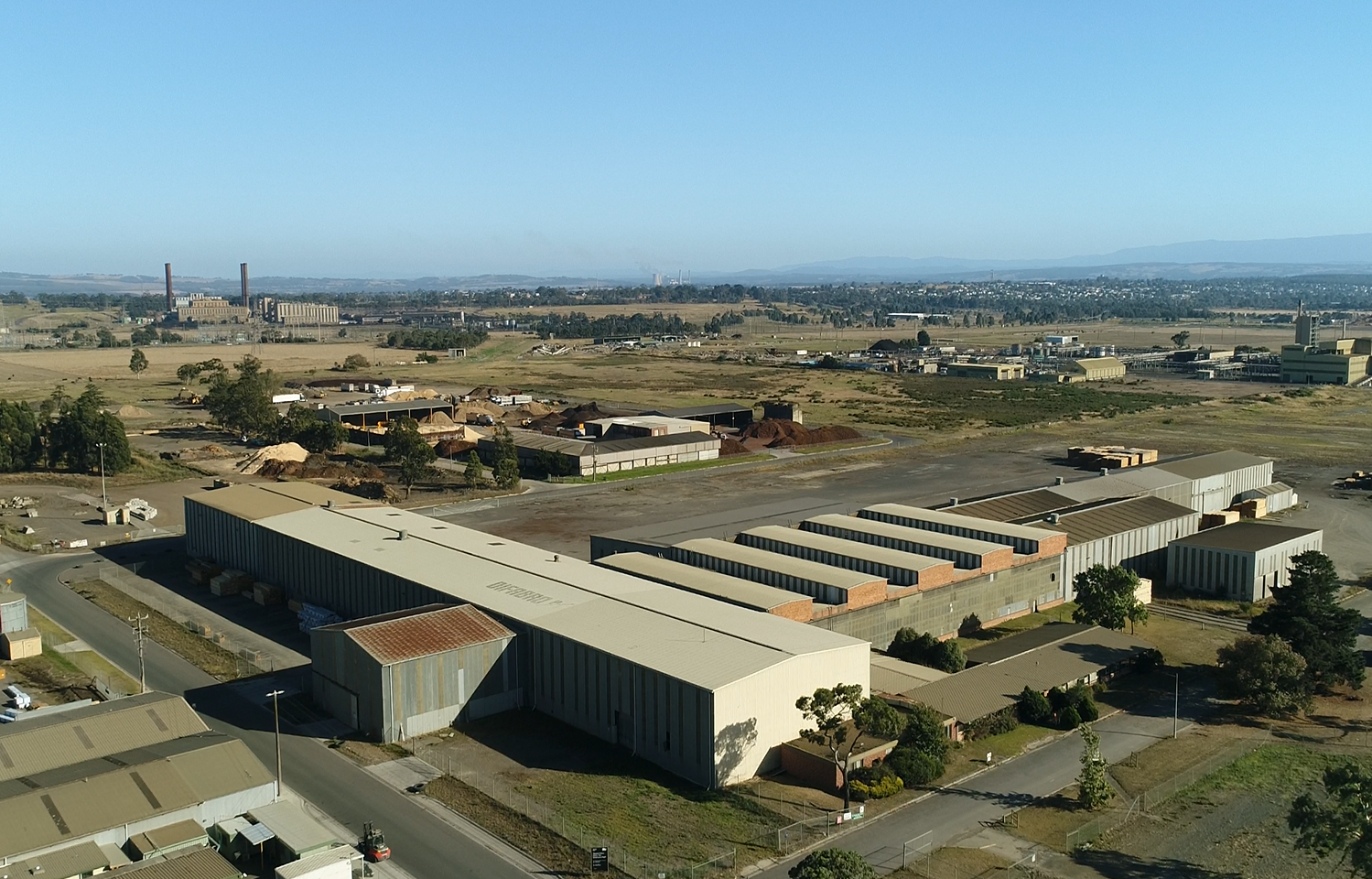
One company now attracting significant attention in this context is Latrobe Magnesium Limited (LMG). Based in Australia’s Latrobe Valley, the company is advancing a novel process to produce magnesium metal from brown-coal fly ash, a legacy waste stream from coal-fired power generation. Over the past year, the company has moved decisively by commissioning its Stage 1 Demonstration Plant in September and shifting toward production (Figure 1), while simultaneously deepening engagement with U.S. industrial, financial, and government stakeholders. Latrobe Magnesium’s commercialization pathway is structured around a staged scale-up, advancing first to a commercial operation producing 10,000 tonnes annually before expanding to a facility with an annual output of 100,000 tonnes of magnesium metal. The strategy has been positively received by financial institutions, with letters of support issued by both the U.S. Export-Import Bank and Export Finance Australia to support financing of the initial commercial plant.
A Critical Mineral of the U.S. Market
The U.S. magnesium market is driven by a combination of aluminum alloying, automotive lightweighting through high-pressure die cast magnesium alloys, aerospace applications, and specialty metallurgical uses. However, domestic production capacity remains limited, and the country relies heavily on imports and the secondary magnesium market. This trade imbalance has sharpened policy focus on magnesium as a strategic vulnerability.
The U.S. Geological Survey’s Critical Minerals List explicitly includes magnesium,1 citing its essential role in manufacturing and national security, coupled with the current concentrated global production. This designation has targeted government and downstream users’ attention toward projects that can provide diversified, allied-nation supply meeting both performance and sustainability criteria. Since Australia is an important ally for the U.S., Latrobe Magnesium could become a strategic supplier of magnesium to the North American market.
Origins and Process Innovation
Latrobe Magnesium’s origins lie in addressing a regional environmental challenge. The Latrobe Valley, located in southeastern Australia, hosts large stockpiles of brown-coal fly ash, a by-product from years of brown coal powered energy production, historically regarded as a disposal liability. Latrobe’s patented technology reframes this waste as a resource, extracting magnesium through a hydrometallurgical process followed by thermal reduction, while also generating commercially valuable by-products, such as supplementary cementitious material (SCM), silica, iron oxide, char, and lime.2
“LMG’s intellectual property is in its hydrometallurgical process, where it removes chemicals from the fly ash and turns them into saleable product,” stated the company. “The magnesium metal step is primarily based on the thermal reduction process which has been around since 1941. The company has simply improved the mechanical aspects of this process for Western world production.”
According to Latrobe, this approach offers two distinct environmental benefits: a circular economy, by converting legacy waste into valuable materials with minimal tailings, and a lower carbon intensity, with emissions reduced from those of conventional magnesium production routes. According to David Paterson, Latrobe’s CEO, “We should be able to achieve CO2 emissions of 4.4 tonnes per tonne of magnesium, as compared to China’s current 21.8 tonnes.”
Latrobe’s vision is to become Australia’s first producer of environmentally sustainable magnesium, while serving global markets seeking secure, low-emissions supply. A defining achievement over the past year has been the successful commissioning and start-up of Latrobe Magnesium’s Stage 1 Demonstration Plant in Hazelwood North, east of Melbourne, in September 2025. The aim of the Demonstration Plant is to reduce the risks associated with exploring and industrializing this new technology.
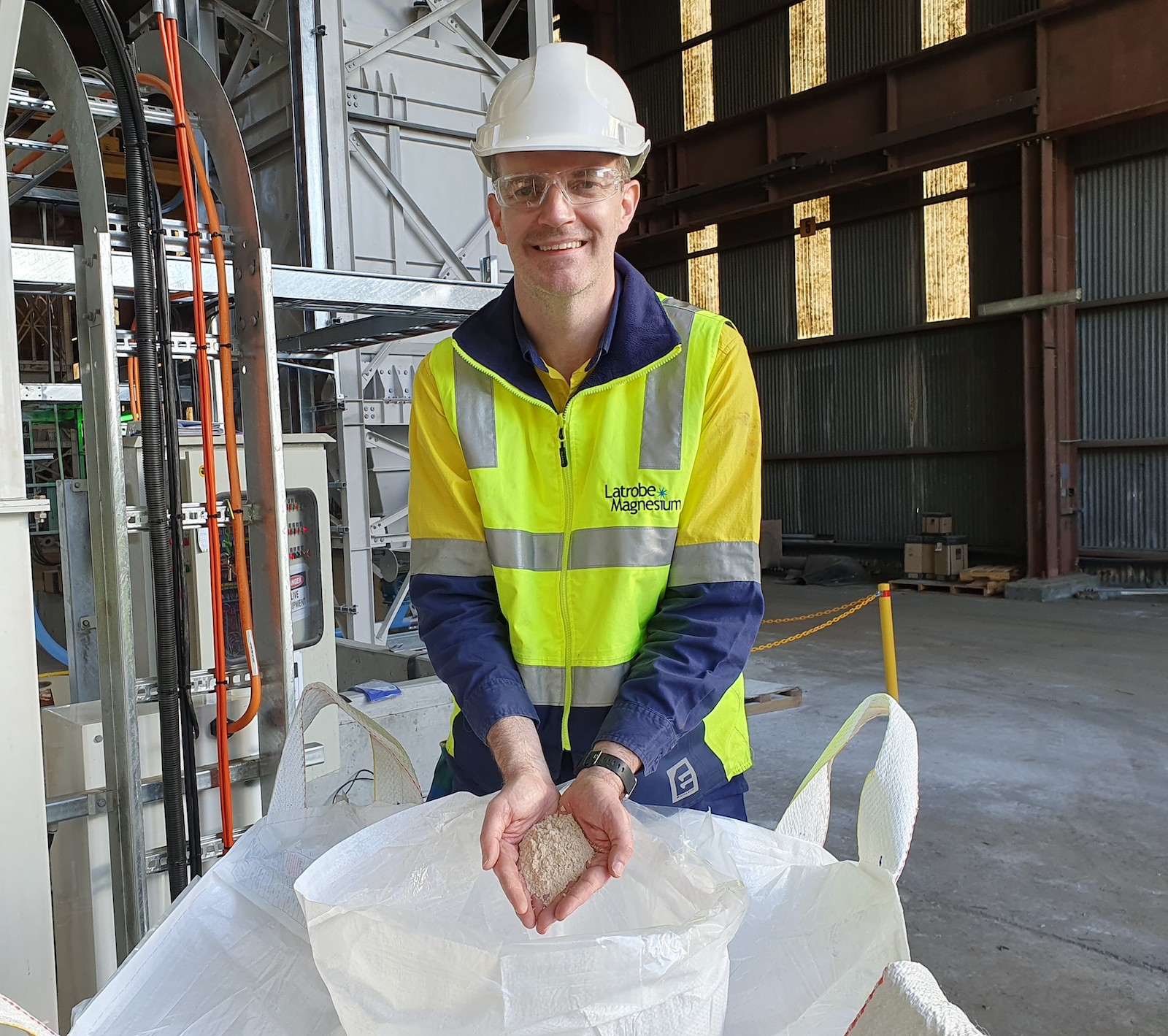
During the year prior to start up of the plant, Latrobe completed operational readiness, received approval from the local environmental authority for operation, completed final feed commissioning, and transitioned toward steady-state operation. Most notably, the company successfully initiated production of magnesium oxide (MgO), representing the first tangible product output from its patented fly-ash-to-magnesium process (Figure 2).
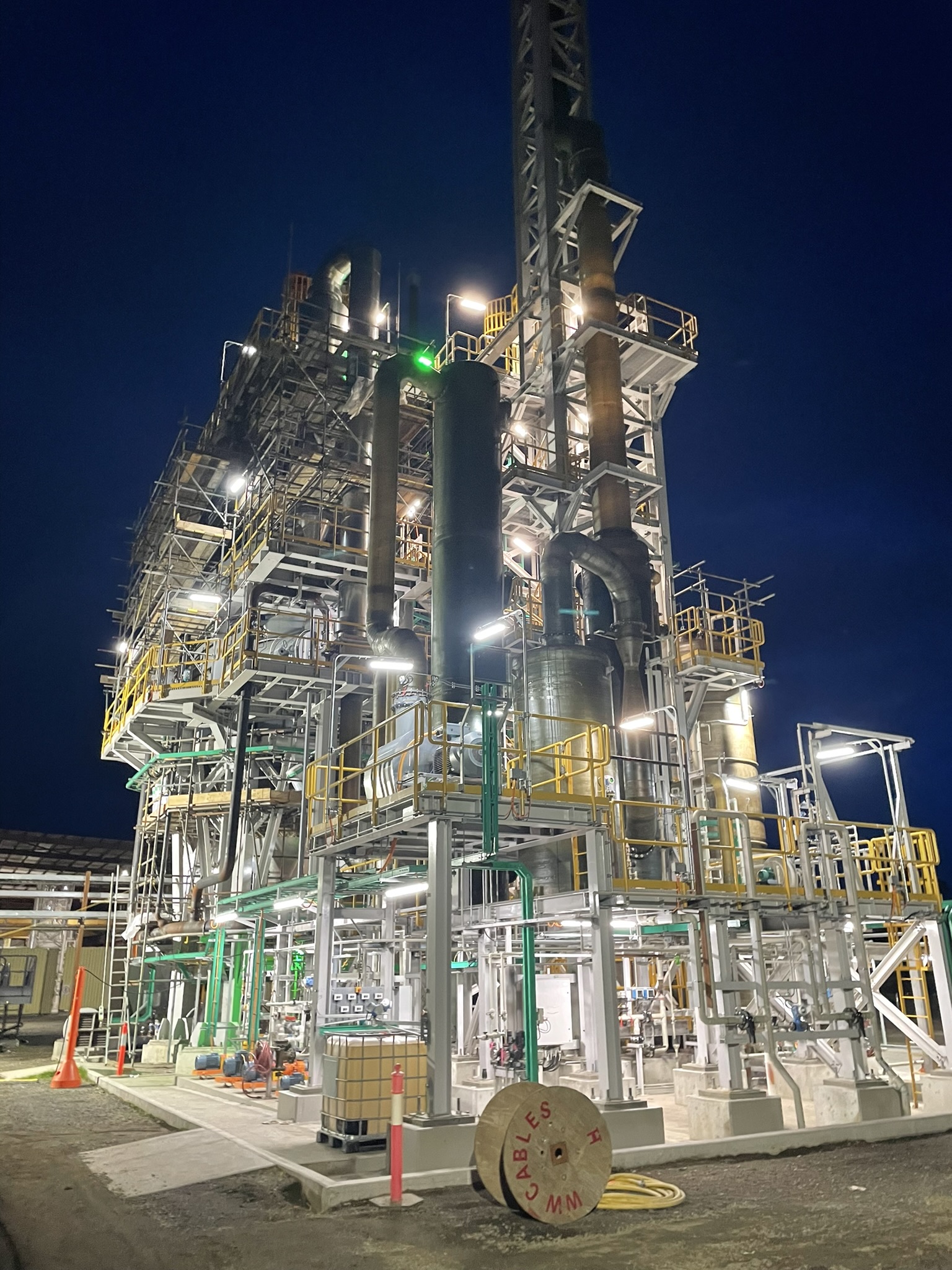
The Stage 1 Demonstration Plant is an integrated, continuous-operation facility. Designed with a nominal capacity of approximately 1,000 tonnes per year, it is intended to validate the fly-ash-to-magnesium process under industrial conditions. The Demonstration Plant now serves as the technical and operational foundation for scale-up, providing data on process stability, material handling, product quality, and environmental performance to help de-risk the process and validate the planned commercial-scale facility.
Regulatory Compliance and Environmental Stewardship
Latrobe has additionally put a strong emphasis on regulatory compliance, transparency, community engagement, and reducing emissions of their process. These are all essential for long-term industrial projects in legacy energy regions, such as the Latrobe Valley. The company has worked closely with the state environmental regulator to monitor emissions, review environmental management plans, and develop community engagement frameworks. Most notably, the Australian Net Zero Economy Authority (NEZA) has used the Latrobe Demonstration Plant as an example of clean technology transformation of a former coal-dependent region utilizing advanced manufacturing and skilled employment.3
“LMG did not receive any objections to its demonstration plant approvals from either the Latrobe City Council or the Victorian Environmental Protection Authority. The demonstration plant emissions to date are well within the guideline levels set in these approvals,” noted David Paterson. For downstream customers, with a focus on net-zero emission targets or Scope 3 greenhouse gas emissions, this regulatory and environmental foundation may prove as important as cost or volume.
Global Partnerships
Perhaps the most visible signal of Latrobe Magnesium’s rising profile has been progress on financing and government engagement, particularly with the U.S. Latrobe recently received a non-binding letter of interest (LOI) from the U.S. Export-Import Bank (EXIM), outlining potential financing of up to nearly US$150 million to support development of the company’s future operations.4 Notably, only a small number of global projects received similar EXIM support.
Latrobe anticipates that 100% of its magnesium metal production would be supplied to the U.S. under long-term offtake arrangements—directly aligning the project with U.S. critical-minerals priorities. “LMG was on a recent delegation representing Australian critical minerals companies,” explained Latrobe. “On October 20, 2025, the Australian Government signed an agreement to work together in supporting and presenting Australian companies to the U.S. markets. These companies are treated like U.S. suppliers.”
Latrobe has also significantly expanded its commercial and strategic engagement beyond Australia, reflecting growing international interest in diversified magnesium supply. The company recently hosted Volkswagen Group procurement representatives at its Demonstration Plant to explore potential automotive supply opportunities. In addition, the company participated in a CEO-level Australian Critical Minerals delegation to Washington, D.C., facilitated by the Australian Embassy. In parallel, Latrobe has engaged with U.S. government agencies, defense stakeholders, investment funds, and downstream manufacturers focused on strengthening supply-chain resilience. These efforts have been complemented by continued collaboration with Metal Exchange Corporation, the company’s appointed U.S. distributor, further reinforcing Latrobe’s positioning within North American magnesium and light-metals markets.
Near Term Plans and Beyond
With the Stage 1 Demonstration Plant operational (Figure 3), Latrobe Magnesium is turning its attention to scaling production and expanding its international footprint. In the near term, the company’s primary focus is the construction of its Stage 2 Commercial Plant in Victoria, targeting an annual output of 10,000 tonnes of magnesium. A feasibility study, to be led by Bechtel Australia, will address site selection, process optimization, and development of a transparent public reporting for the Yallourn Power Station’s brown-coal ash landfill. The outputs of this study will form the technical and commercial basis for plant design, permitting, financing, and long-term offtake agreements. Concurrently, the Demonstration Plant will continue producing magnesium oxide while remaining commissioning works are completed to enable magnesium metal and supplementary cementitious material (SCM) production, ensuring operational readiness for Stage 2 scale-up.
Latrobe is also progressing its Stage 3 proposal for an international “mega-plant” with an annual output of 100,000 tonnes of magnesium metal in Sarawak, Malaysia. Several key enabling milestones have already been achieved, including approval of 250 MW of hydropower, which will support low- or zero-carbon electricity supply. In addition, the company has confirmed that ferro-nickel slag, the project’s primary feedstock, can be imported under current environmental frameworks. These approvals pave the way for joint-venture discussions, early site works, and power-purchase agreements, laying the foundation for large-scale magnesium and SCM production with minimal carbon impact.
Looking further ahead, Latrobe aims to transition from demonstration and validation to full-scale, bankable operations. By early 2028 and beyond, the company plans to integrate operational, technical, and environmental learnings from Stage 1 into Stage 2 commissioning, while advancing Stage 3 planning and international partnerships. If successfully executed, these initiatives will establish Latrobe as a secure, low-carbon supplier of magnesium aligned with both industrial demand and strategic critical-minerals objectives.
Conclusion
Magnesium’s designation as a critical mineral has reshaped how supply is evaluated. As global demand for lightweight, low-emission materials accelerates, the question is no longer whether new magnesium supply will be needed—but who will deliver it, where, and under what environmental and strategic conditions. Price remains important, but resilience, environmental performance, and geopolitical alignment now carry equal weight.
Latrobe Magnesium sits squarely at this intersection. The company’s progress to date suggests a credible pathway from innovation to commercial relevance—though execution risk remains, as it does for any capital-intensive metallurgical project. For downstream users, including OEMs, magnesium alloy high-pressure die casters, aluminum producers, and defense-related supply chains, Latrobe is a project worthy of close attention.
References
- “Interior Department releases final 2025 List of Critical Minerals,” USGS, November 14, 2025.
- Short, Stephen A., “Process for magnesium production,” U.S. Patent US9139892B2, Granted to Ecoengineers Pty. Ltd. and Magnesium Investments Pty. Ltd. on September 22, 2015.
- “Latrobe Magnesium: creating jobs, driving innovation and paving a path for reduced emissions,” Australian Net Zero Economy Authority, October 10, 2025.
- “EXIM Powers America First with $2.2 Billion in Critical Minerals Commitments to Secure U.S. Supply Chains with Australia,” Export-Import Bank of the United States (EXIM), October 20, 2025.
Editor’s Note: This article first appeared in the February 2026 issue of Light Metal Age. To receive the current issue, please subscribe.