
By Alton Tabereaux, Contributing Editor.
The global energy transition, electrification of vehicles, and increased demand for computing power in the wake of artificial intelligence (AI) have led to increased demand for batteries, advanced semiconductors, secure communications, next-generation aerospace platforms, and other components. In turn, this has resulted in increased demand for rare earth elements (REEs), also known as rare earth minerals, as well as rare metals (such as lithium and gallium), which are required to manufacture these components.1 Currently, the U.S. is fully import-dependent for REEs, gallium, and other critical materials. In order to meet increased demand and ensure stable North American supply, aluminum and waste management companies are working to expand capacity. This includes exploring alternative methods of extraction, such as producing REEs and critical rare metals from red mud.
REEs and Critical Rare Metals
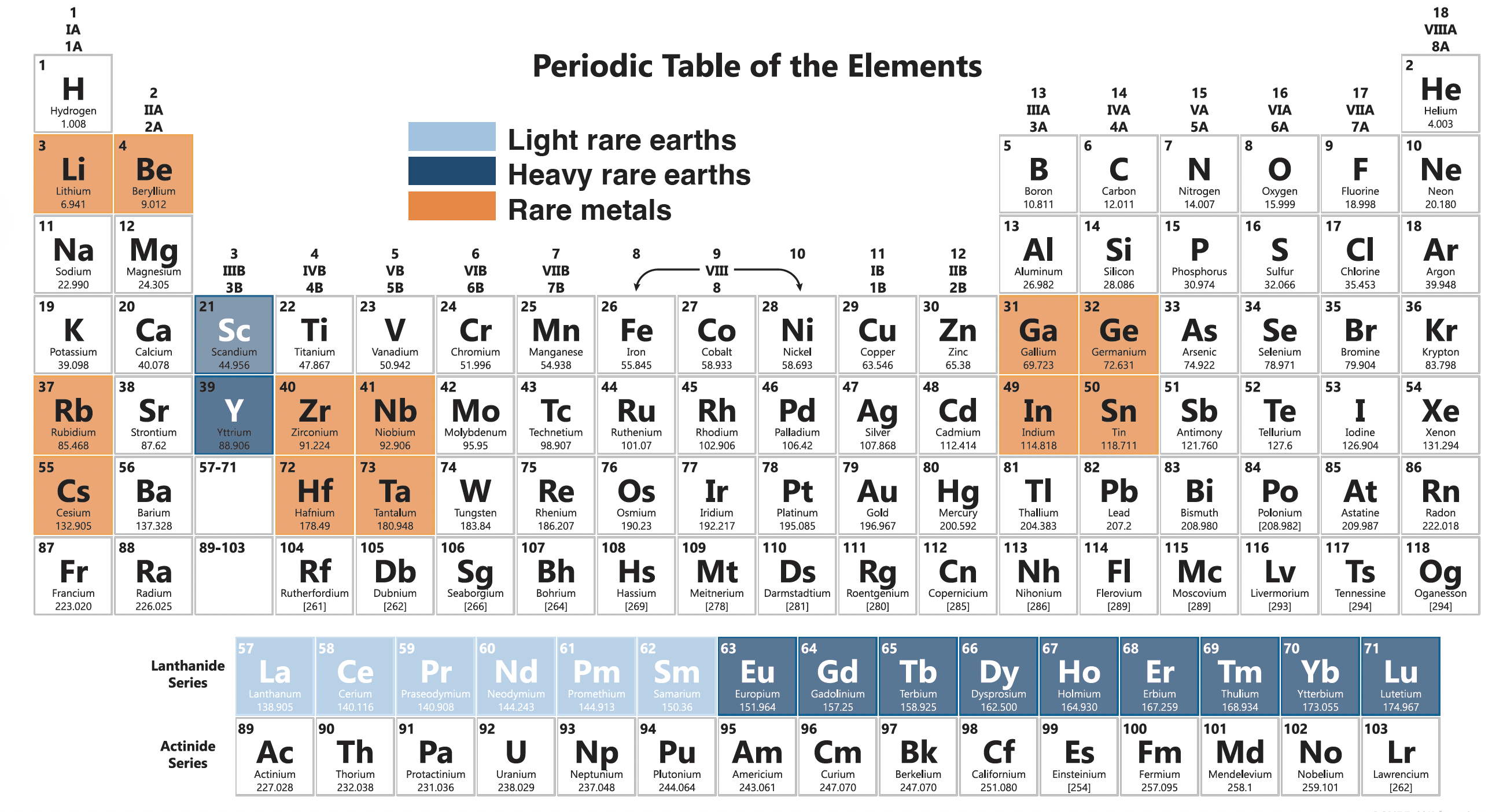
REEs are a set of 17 soft heavy metals, including 15 lanthanides (elements with atomic numbers between 57 and 71) as well as scandium and yttrium. These are typically divided into two categories: light REEs with low atomic numbers and heavy REEs with high atomic numbers (Figure 1).
For the aluminum industry, scandium is one of the most notable REEs, because it is used in aluminum alloys to manufacture various aerospace components, including airframes, engine parts, and spacecraft structures. Aerospace components benefit from the enhanced strength and reduced weight provided by these alloys, leading to improved overall performance of the aircraft or spacecraft. The fuel efficiency of aircraft is also significantly improved with the use of aluminum-scandium alloys. This is due to the reduced weight of the components, which lowers fuel consumption and emissions, contributing to more sustainable aerospace operations. The addition of scandium to aluminum alloys increases their resistance to corrosion and fatigue, extending the lifespan of aerospace components. This improved durability is crucial for the safety and reliability of aerospace vehicles.
Researchers have also explored the use of REEs in alloying and grain refining. Wu, et al., explored the effect of REEs on grain refinement, precipitation strengthening, and stable formation of intermetallic compounds in aluminum alloys.2 According to the authors, these elements “can reduce grain size by up to 50%, enhance tensile strength, and improve high-temperature stability.”
However, REEs are primarily used in a variety of specialized industries. Yttrium has a particularly diverse set of applications, as it is used in the production of lasers, high-temperature superconductors, jewelry, energy-efficient light bulbs, camera and telescope lenses, and as an additive to aluminum, magnesium, and steel alloys, as well as cancer treatments. The 15 lanthanides are often used to produce magnets, lasers, specialized glass, and x-ray machines, among other specialized uses.
In addition to REEs, there are critical rare metals, which are physically and chemically distinct from REEs. How critical rare metals are classified varies depending on what organization defines them. However, twelve elements are generally classified as rare metals due to their distinctive properties, including lithium, beryllium, gallium, germanium, rubidium, zirconium, niobium, indium, tin, cesium, hafnium. For the purposes of this article, the focus will be on lithium and gallium.
Lithium is primarily used in energy-dense lithium-ion batteries, which are utilized in electronics, electric vehicles (EVs), and energy grid storage. Battery usage represented 87% of total lithium demand in 2024.3 However, lithium is also used as an alloying element in aluminum aerospace alloys. Constellium markets its series of aluminum-lithium alloys under its Airware® brand, which is said to provide enhanced properties, such as lower density, higher stiffness, thermal stability, corrosion resistance, and superior damage tolerance.4 With surging demand for lithium-ion batteries, lithium is seeing increased interest and investment in extraction projects around the world. The three main producers of lithium include Australia, Chile, and China.
Gallium has grown to have a strategic importance due to its use in compound semiconductors and integrated circuits. The metal is said to outperform traditional silicon semiconductors in regards to “speed, power efficiency, and thermal stability.”5 Gallium is only rarely used in aluminum alloys, because it tends to make the aluminum weak and brittle and, therefore, only useful for very specialized purposes. However, the growing interest in gallium as a semiconductor is enough for it to be a key area of investment. Currently, China mines and produces 98% of the world’s primary supply of gallium.
Mining and Sourcing
The term “rare earth” is misleading, because many REEs are as common in the Earth’s crust as metals like chromium or copper. Rather the term refers to the challenge of extracting the element, since REEs rarely form concentrated deposits and are instead found as part of compound elements. As a result, extraction requires advanced refining techniques involving multiple processing steps, as follows:
- Comminution – breaking REE ore into smaller pieces using jaw, cone, or gyratory crushers.
- Pulverization – separating fine and coarse materials, with the coarse materials then recirculated.
- Froth Flotation – the ground ore is mixed with water, chemicals, and air, so that the REE minerals will attach to bubbles for collection. Hot flotation helps separate heavy and light minerals.
- Leaching – strong acids or alkalis dissolve concentrates (e.g., 60% rare earth oxides treated with HCl to dissolve calcite).
- Solvent Extraction – uses acidic or organophosphate solvents in chloride/nitrate systems to separate individual REEs based on solubility, pH, and extractant properties. Multiple solvent passes improve purity (95–99.9%). It does not extract whole minerals.
- Roasting – heating bastnasite removes CO2 forms oxide-fluoride and oxidizes cerium. Roasting, leaching, and precipitation prepare REEs for further separation.
- Oxide Purity – an ion exchange achieves purities >99.99999%. High-purity grades require both solvent extraction and ion exchange.
- Electrolysis (Metal Reduction) – molten salt electrolysis produces commercial-grade rare earth metals (95–99.5% purity), especially for light REEs (La, Ce, Pr, and Nd) using fluoride-oxide molten salts.
China provides over 90% of REE processing and refining, creating global dependency and supply concerns, particularly for defense applications, such as magnets and targeting systems. While REEs are found on all continents (Table I), high-grade deposits are uncommon and largely confined to China, the U.S., Australia, Russia, India, and Brazil.
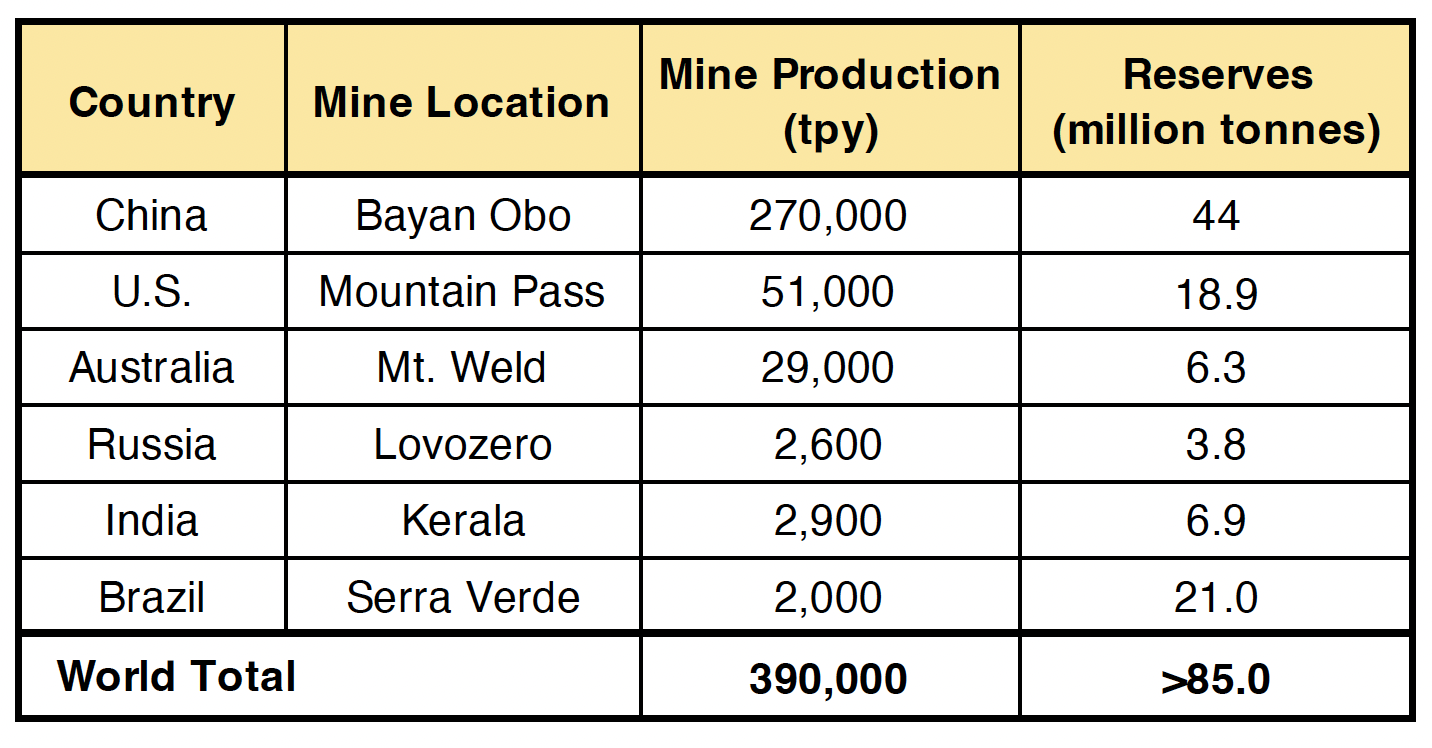
China’s rare earth resources are mainly located in Bayan Obo (Inner Mongolia) and Mianning (Sichuan), as well as the ion-adsorption mines in Yichun (Jiangxi). Bayan Obo is the world’s largest deposit and accounts for over 80% of the country’s total reserves. The mine is a massive open-pit polymetallic deposit that primarily produces iron ore alongside light REEs. China’s currently proven rare earth reserves consist primarily of light REEs, rather than medium and heavy ones (and the global situation is broadly similar). This is because heavy rare earths are scarcer; however, their fields of application are more critical and their economic and strategic value is also higher. In April 2025, China tightened its export controls on rare-earth elements, adding specific controls on alloys, compounds, metals, and oxides of samarium, gadolinium, terbium, dysprosium, lutetium, scandium, and yttrium.
The U.S. is the second largest producer of REEs, which are primarily mined and processed at the Mountain Pass Rare Earth Mine & Processing Facility in California (Figure 2). Acquired by MP Materials Corp., Mountain Pass began operation in 1952, following the discovery of bastnäsite (a rare earth fluorocarbonate mineral), which is the source of its high-grade rare earth elements. It is the only large-scale open pit REE mine and integrated processing facility in the U.S., measuring about 762 x 914 m across and 183 m deep.
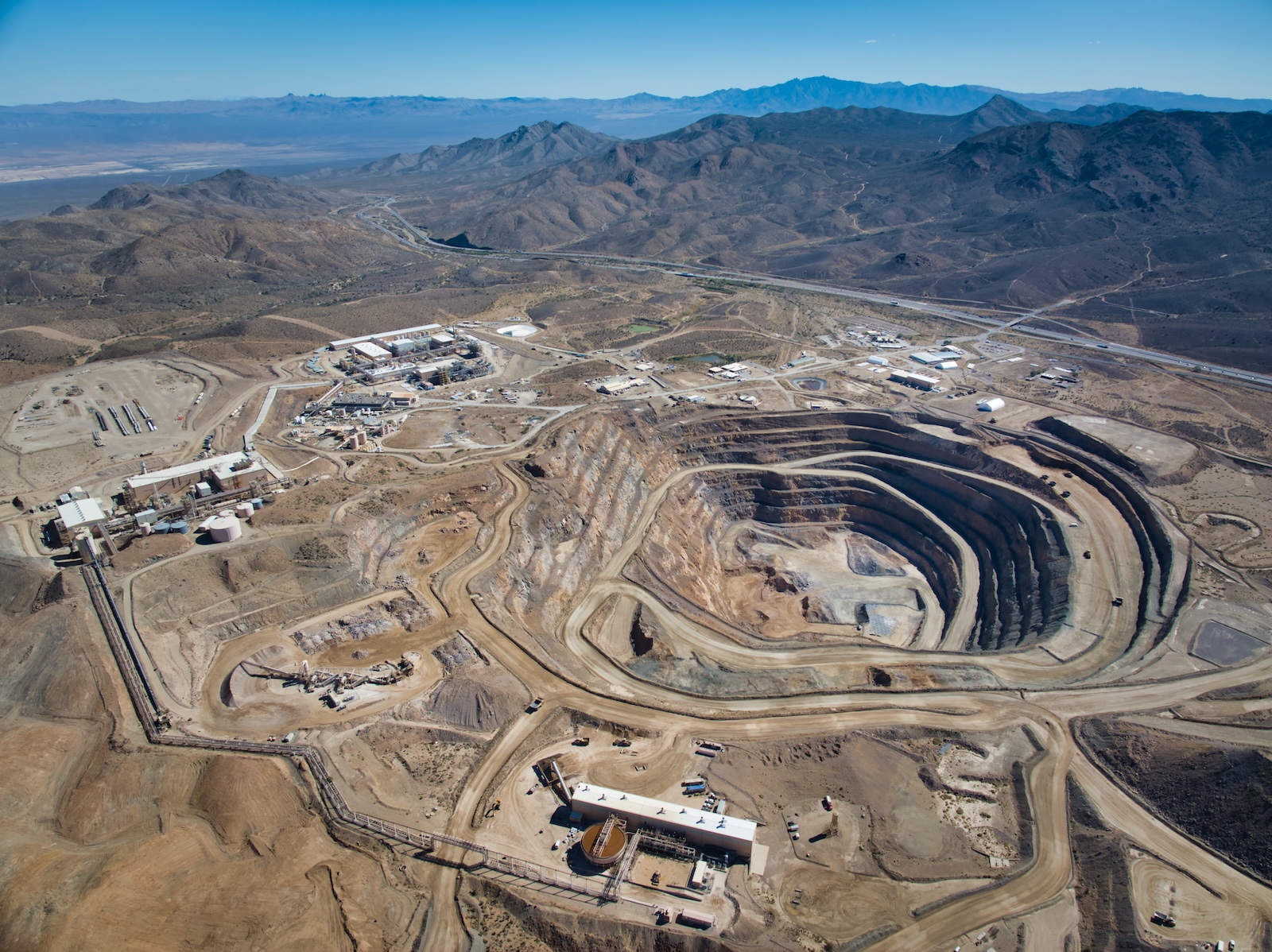
As of 2022, the Mountain Pass mine held proven and probable reserves of 18.9 million tonnes of ore, containing around 1.36 million tonnes of rare earth oxides (refined REE compounds) at an average grade of 7.06%. The facility produces 42,000 to 43,000 tonnes of rare earth concentrate annually, representing over 15% of global production.
The U.S. is actively investing in new REE projects. Texas Mineral Resources, acquired by USA Rare Earth in March 2026, is constructing the Round Top Mountain open-pit mine in Texas, which is expected to extract almost 40,000 tonnes per day of rare earth and critical mineral feedstock by 2030.
Rare Element Resources Ltd. started operation of its rare earth processing and separation demonstration plant in Upton, WY, in March 2026, and announced it was advancing its Bear Lodge Rare Earth Project near Sundance, WY. Bear Lodge has one of the highest-grade rare earth deposits in North America.
Also in March 2026, Terves LLC, a subsidiary of REalloys Inc., received a Defense Logistics Agency contract to develop modular samarium and gadolinium production, targeting 300 tonnes per year. Partnering with the Saskatchewan Research Council (SRC), REalloys is building the largest heavy rare earth metallization plant outside China. The company is currently testing equipment in Saskatoon before moving operations to Ohio, which was selected for its proximity to U.S. defense clients.
Canada opened its first REE mine in June 2021. Owned and operated by Vital Metals, the Nechalacho Mine produced 28,000 tonnes of ore from the North Tardiff pit by September 2021. The Tardiff zone has a measured and indicated resource of 192.7 million tonnes at 1.3% total rare earth oxides (TREO), containing 2.5 million tonnes of TREO. A 2025 scoping study found Tardiff could produce 56,000 tonnes of rare earth concentrate per year at a grade of 26.4% TREO and 3.3% niobium oxide (Nb2O5) over an initial 11-year mine life. According to Natural Resources Canada, there are more than 20 active REE projects nationwide, with combined reserves and resources totaling 15.2 million tonnes of rare earth oxide.
Extraction of REEs and Rare Metals from Red Mud
Bauxite residue, commonly known as red mud, is a highly undissolved solid alkaline underflow byproduct of the Bayer process, which converts mined bauxite into alumina. The liquid slurry mixture (~70% caustic liquid) is a highly alkaline and dense substance, containing substantial concentrations of iron, aluminum, titanium, and sodium oxides, as well as minor quantities of REEs.
Historically, red mud has been stored in tailing ponds. However, containment failures have occasionally led to significant environmental impacts. With global alumina production rising due to increasing industrial demand, the volume of red mud has concurrently escalated, presenting considerable challenges in environmental management.
For every tonne of alumina produced, 1–1.5 tonnes of bauxite residue is generated, with a global average of about 1.23 tonnes. The total volume of bauxite residue depends heavily on the quality of the bauxite ore. Over 170 million tonnes of red mud are generated annually, with over 3-4 billion tonnes already accumulated worldwide.
In 2016, North America had five alumina refineries in operation. The estimated bauxite residue retained from these five refineries ranges between 30 million and 100 million tonnes on-site (Table II). By 2026, only two facilities — Atlantic Alumina Co. (Atalco) in Gramercy, LA, and Vaudreuil Works operated by Rio Tinto in Jonquière, Quebec, Canada — are expected to remain operational, with an ongoing need to address the production of red mud.
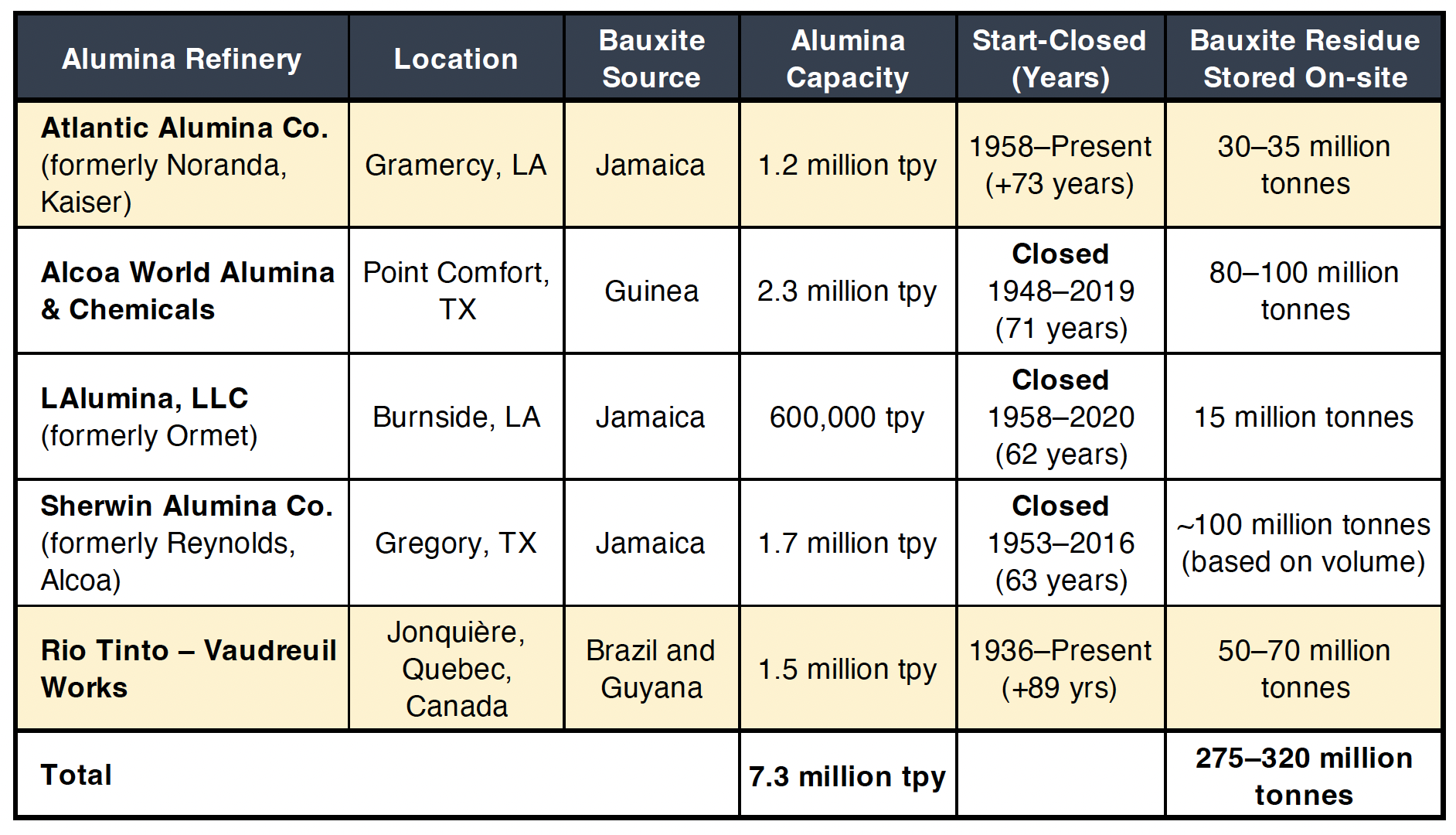
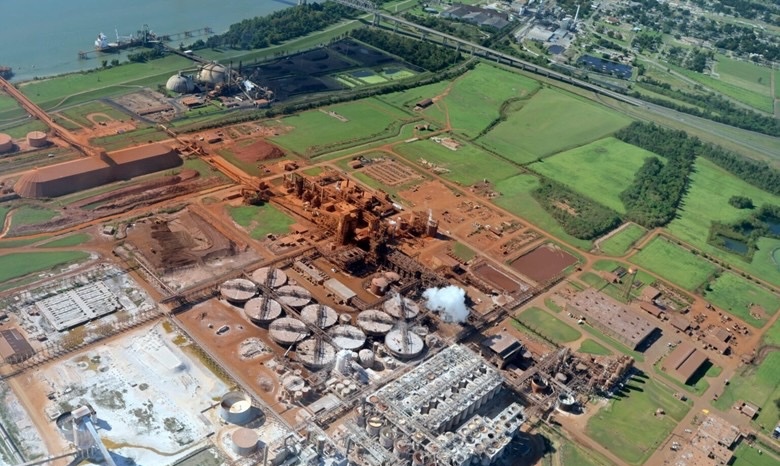
The Atalco alumina refinery in Louisiana (Figure 3), commissioned in 1957, is located on 3,300 acres between New Orleans and Baton Rouge. It has the capacity to produce 100,000 tonnes of alumina a month. The red mud produced at the plant has accumulated over a period of more than 30 years and is stored in six tailings ponds. Facing scrutiny over its red waste management, the company invested $30 million to install Diemme® Filtration GHT2500F filter presses to dewater the highly alkaline residue, achieving over 73% dryness and 60% dry stacking of production as of mid-2025. With environmental risks reduced by more than 35%, Atalco plans to expand this technology to manage 100% of its output, eliminating wet-storage levee risk and transitioning fully to modern dry stacking methods.
The Vaudreuil Works in Quebec, founded in 1936, produces 1.5 million tonnes per year from imported bauxite for Rio Tinto’s Kitimat smelter. The alumina refinery generates about 1 million tonnes of bauxite residue annually, stored at a nearby Bauxite Residue Deposit Area (BRDA) now holding over 40–70 million tonnes. The refinery faced closure by 2022 due to its red mud disposal site reaching capacity. To extend the site’s life to 2030, Rio Tinto raised the site’s height by 30 m and invested C$250 million in a filtration and optimization plant with four 85-ton Diemme dewatering presses. The facility processes about 1 million tonnes of red mud annually, now storing over 40 million tonnes since the 1940s.
Although pressure filtration and dewatering represents a significant improvement in safer, long-term storage of red mud, finding a means of reusing that material in other industries would be an even better option. Companies are considering options for recovering valuable metals and elements from this caustic byproduct, including gallium, scandium, titanium, and REEs. This includes dry digestion7 and leaching,8 among other technologies.
Red mud contains REEs at concentrations of 500–1,700 ppm (0.05–0.17 wt.%), significantly higher (twice) than in the earth’s crust due to enrichment during the Bayer alumina process. When aluminum is extracted, the REEs accumulate in the solid residue, resulting in a two to threefold increase. The main REEs found are cerium (300–700 ppm), lanthanum (80–150 ppm), neodymium (90–130 ppm), scandium (120–390 ppm), and yttrium. Scandium accounts for up to 95% of REE economic value.
U.S. Projects
ElementUSA first announced plans to recover REEs and critical metals from red mud stored at Atalco’s Gramercy refinery in 2021. The company is building an $850 million reclamation, separation, and beneficiation facility near the refinery, with the aim of achieving an annual capacity of 1 million tons of scandium, gallium, and REEs for national security needs. According to the company, the residual red mud residue at Atalco contains high concentrations of 10 of the 17 rare earth elements targeted by the U.S. Defense Logistics Agency, along with titanium, iron and other minerals and metals valuable to U.S. industry.
ElementUSA established a 30,000 sq ft Critical Resource Accelerator in Cedar Park, TX, in September 2025, where it conducts mineral characterization and lab, bench, and pilot testing to extract critical materials from red mud and other feedstocks. The company has achieved extraction rates of 50% for REEs and 30% for scandium at its Accelerator facility, with a target of zero solid waste. Extracting minerals from red mud waste at Atalco will provide faster production timelines, lower costs, and potential environmental benefits. With a 35 million dry-ton reserve, Gramercy’s refinery can sustain REE extraction for around 30 years.
In September 2022, ElementUSA also signed a contract with LAlumina, LLC, a former alumina refinery in Burnside, LA, which closed in 2020. Under the contract, the companies will process up to 15 million tonnes of red mud, extracting REEs, alumina, and iron. The Burnside refinery is part of ElementUSA’s plan to build a critical minerals supply chain in Louisiana, with Gramercy as the primary site. A demonstration plant is expected by mid-2027, with full production by Q3 2028, targeting scandium, gallium, iron, and other REEs.
The U.S. Department of Defense awarded $29.9 million in funding to ElementUSA in November 2025 to establish the extraction of critical minerals from the Gramercy refinery — specifically scandium and gallium to strengthen U.S. semiconductor and defense supply chains. This plant will extract and purify up to 50 tonnes of gallium annually, becoming the nation’s first major primary gallium source. Additional support comes from $150 million in defense funds and $300 million in private investment.
ElementUSA signed a binding letter of intent (LOI) with Metallium in December 2025 to collaborate on the development of this extraction technology. The LOI includes up to US$10.1 million in non-dilutive funding for initial deployment of Metallium’s flash joule heating (FJH) technology and a commercial framework covering license fees, royalties, and revenue share. The FJH technology enables the extraction of high-value materials, including gallium, germanium, antimony, REEs, and gold, from feedstocks such as refinery scrap, e-waste, and monazite. Metallium retains full ownership of FJH intellectual property, including any enhancements or derivative works developed through the collaboration, while ElementUSA retains ownership of its separation and refining technologies. The LOI also contemplates evaluating supplemental work programs that may include recovery of additional materials, such as aluminum, titanium, and sodium, and assessing residual products suitable for sale as clinker substitutes. These items would be considered under separate discussions.
U.S. Critical Materials Corp. (USCM) and Columbia University signed a two-year sponsored research agreement in April 2026 to advance scientific pathways that enable the development of future U.S. production of gallium, scandium, titanium, and REEs from red mud. The program, “Mud To Metal,” will investigate red mud from various locations for characterization and process-development activities, including from locations operated by Alcoa. The program includes mineralogical characterization, ambient-temperature oxidative leaching, selective separations, co-recovery of titanium dioxide and iron oxide, and techno-economic and life cycle modeling.
Canada
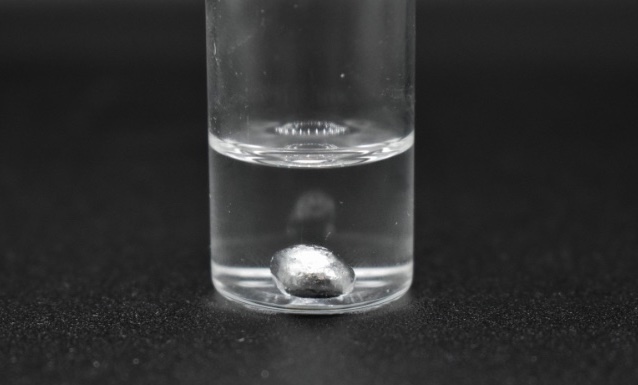
Rio Tinto began a research and development project in December 2024 to assess the potential for extracting and valorizing gallium at its Vaudreuil alumina refinery in Saguenay–Lac-Saint-Jean. In May 2025, Rio Tinto and its partner Indium Corporation successfully extracted the first primary gallium at Indium’s research and development facility located in Rome, NY (Figure 4). The next phase of the project involves the assessment of extraction techniques to enable the production of larger quantities of gallium at pilot-scale at Rio Tinto’s Vaudreuil refinery. If successful, Rio Tinto plans to build the planned demonstration plant at its refinery, financially supported by the government of Quebec (up to C$7 million), with a capacity of up to 3.5 tonnes of gallium per year. The transition to a commercial-scale plant could see production reach 40 tonnes annually, representing 5–10% of current world gallium production.
In March 2026, Rio Tinto started construction of a pilot plant at its Saguenay refinery to validate the technology in an industrial environment, with the pilot to be operational in 2027. Plans are also underway to build a demonstration plant with a capacity of up to 4 tonnes of gallium per year on the same site. The Canadian government has conditionally approved a non-repayable contribution of up to C$18.95 million in the project.
Other Countries
Alcoa Corporation and the U.S. and Australian governments announced plans in October 2025 to advance the development of a gallium plant at Alcoa’s Wagerup alumina refinery in Western Australia. The joint special purpose vehicle (SPV) will enter into a venture with Japan Australia Gallium Associates Pty. Ltd. (a joint venture between the Japanese government and Sojitz Corporation) to construct the gallium plant, which would be operated by Alcoa. The plant will be expected to produce 100 tonnes of gallium annually.
Under the terms of the non-binding agreement, the U.S. and Australian governments and Alcoa would provide capital to the SPV and receive gallium offtake in proportion to their interests. Among other purposes, the capital would be used for preparation of final feasibility studies, and the development and construction of the project. Definitive agreements for the gallium joint venture will be prepared among the governments of the U.S., Australia, and Japan, and Alcoa and Sojitz. Alcoa will continue to work cooperatively with the Western Australian Government to progress the project under the state agreement and approvals framework, targeting 2026 for final investment decision and production.
METLEN Energy & Metals made the final investment decision to proceed with the construction of a large-scale investment in the production of bauxite, alumina, and gallium in January 2025. The €295.5 million project will be implemented within the Aluminium of Greece plant in Agios Nikolaos, Greece. The project aims to achieve a total production capacity of 2 million tonnes of bauxite per year, 1.26 million tonnes of alumina per year (up from the 865,000 tonnes currently), and 50 tonnes of gallium per year (from red mud) for the first time. All three materials are included in the European Union’s list of Critical Raw Materials. In particular, METLEN’s investment will enable Europe to completely substitute gallium imports, significantly bolstering its strategic autonomy and minimizing reliance on external suppliers. Completion of the works and production start-up is scheduled for 2026 for bauxite, with alumina and gallium production beginning gradually from 2027 and full-scale operation by 2028.
References
- “Overview of outlook for key minerals,” Global Critical Minerals Outlook 2025, International Energy Agency (IEA).
- Wu, B., et al., “Rare earth elements in cast aluminum alloys: Microstructural control and performance enhancement,” Journal of Rare Earths, July 26, 2025, https://doi.org/10.1016/j.jre.2025.07.028.
- “Lithium facts,” Government of Canada.
- “Aircraft,” Constellium.
- “Gallium Market Growth and Semiconductors,” Microchip USA, October 30, 2025.
- “Rare Earths Statistics and Information,” National Minerals Information Center, USGS.
- Rivera, R.M., et al., “Extraction of rare earths from bauxite residue (red mud) by dry digestion followed by water leaching,” Minerals Engineering, Vol. 119, April 2018, pp. 82–92.
- Borra, C.R., et al., “Leaching of rare earths from bauxite residue (red mud),” Minerals Engineering, Vol. 76, 2015, pp. 20–27.
Editor’s Note: This article first appeared in the June 2026 issue of Light Metal Age. To receive the current issue, please subscribe.