Rio Tinto and Prysmian are collaborating with Amazon to develop electrical cables made using ELYSIS® aluminum to reduce the total carbon footprint of a new data center being constructed by Amazon in Ohio.
“We aim to reach net-zero emissions across our operations by 2040 through decarbonizing our operations and supply chain, down to the raw materials. Traditionally, making aluminum is carbon-intensive, but this wire was made with technology that emits oxygen instead of carbon dioxide and perfluorocarbons,” said Joern Tinnemeyer, VP of Data Center Engineering at Amazon Web Services (AWS). “Prysmian, Rio Tinto, and Wesco are showing that lower-carbon materials aren’t a future concept – they’re here and going into Amazon data centers today.”
The project builds on the collaboration announced by Prysmian and Rio Tinto in March 2026, which aimed to introduce aluminum building wire produced using ELYSIS aluminum.
ELYSIS inert anode technology produces aluminum with no direct greenhouse gas emissions from the smelting process by replacing traditional carbon anodes with proprietary materials that release pure oxygen instead of greenhouse gases. The company launched its first commercial-size inert anode cell at the end of 2025.
The collaboration between Rio Tinto and Prysmian marks the first known use of inert-anode-smelted aluminum in a data center, demonstrating how innovation in one of the most fundamental materials used in electrical infrastructure can support the rapid expansion of digital infrastructure while reducing its embedded carbon footprint.
“This collaboration with Prysmian and Amazon demonstrates how innovation across the value chain can help deliver practical, lower-carbon solutions for customers,” said Matt Schicke, vice president, Sales and Marketing, Rio Tinto Aluminum. “All of the aluminum supplied by Rio Tinto for these cables was produced in Quebec, Canada, using hydropower, including the aluminum made with ELYSIS inert anode technology. By combining renewable power with a breakthrough smelting process that eliminates direct greenhouse gas emissions and produces oxygen as a by-product, we are helping create a new pathway to support the decarbonization of critical data center infrastructure.”
Prysmian is using the aluminum to manufacture the electrical cables at its facility in Sedalia, Missouri. Prysmian’s partner, Wesco, is supporting the distribution and delivery to the project site.
“The data center industry needs advanced technologies like this: cables that can effectively carry power, meet high-quality standards, and make a positive impact on the sustainability of the entire value chain,” said Srinivas Siripurapu, chief Sustainability, R&D, and Innovation Officer for Prysmian. “We have partnered with organizations that share our mission for sustainability-driven innovation, from Rio Tinto’s supply of low-carbon aluminum to the delivery of product through our partnership with Wesco, and ultimately Amazon’s final product.”
Growing Data Center Demand to Grow Aluminum Cable Industry
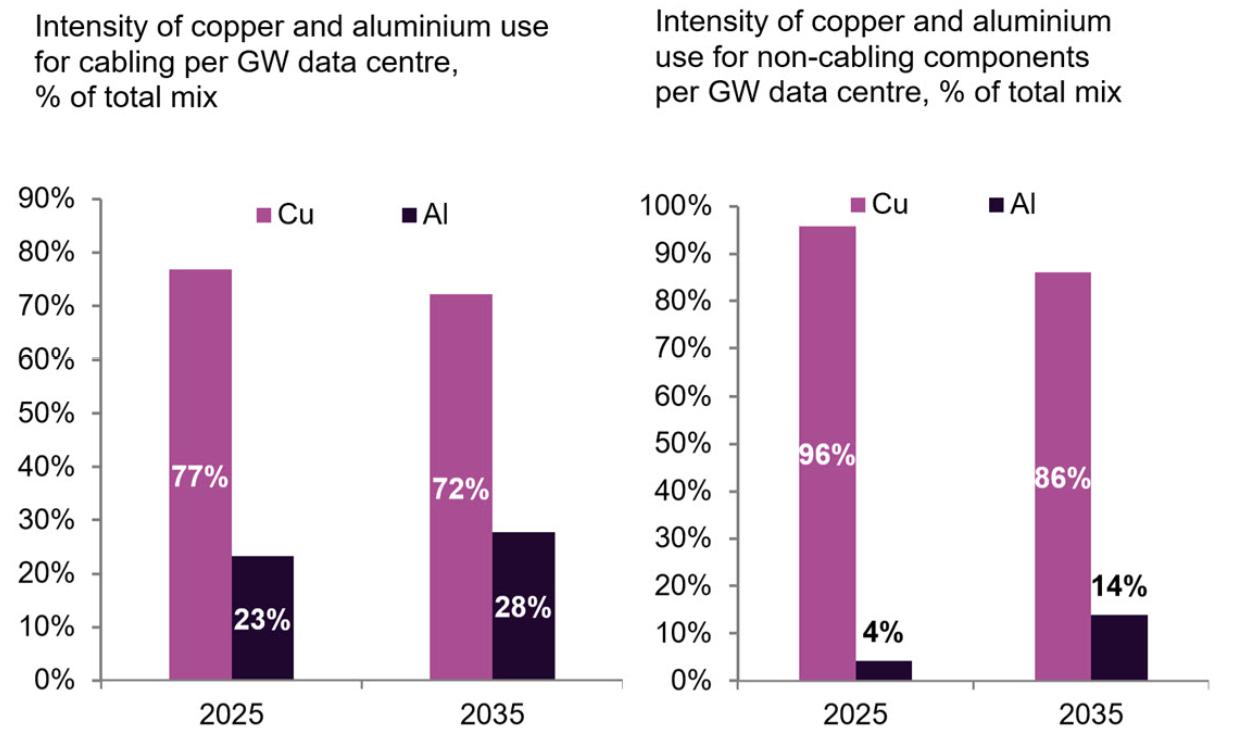
As investment in AI, cloud computing and data centers accelerates, so does the need for electrical infrastructure to power them. With this increased demand along with the need for electrification across a variety of sectors, CRU reported that, although copper is expected to remain the leading conductive material, but aluminum substitution will be an increasingly important long-term demand driver. CRU forecasted that aluminum’s share of cabling demand will likely rise from 23% in 2025 to 28% by 2035, while its share of non-cabling components increases from 4% to 14%. This largely due to aluminum’s lower cost.