
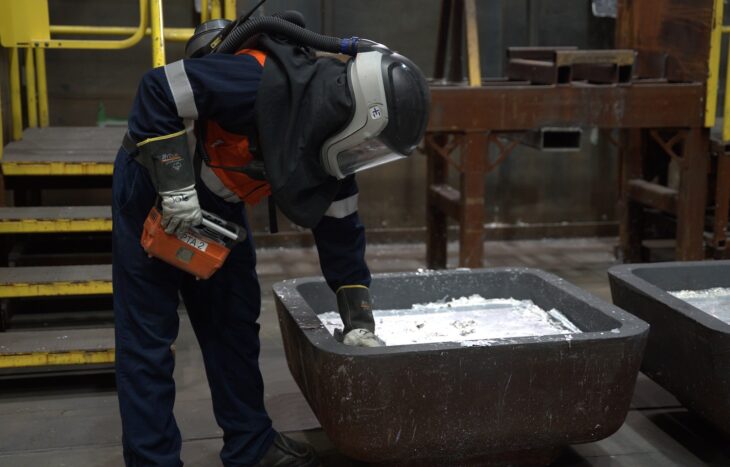
Rio Tinto and Prysmian partnered on an industrial trial to produce low-carbon aluminum cables designed for the rapidly growing data center market. The project will involve leading-edge ELYSIS® smelting technology with advanced cable technologies to help customers reduce the carbon footprint of critical IT infrastructure.
“This partnership with Prysmian demonstrates Rio Tinto’s ability to deliver innovative, low-carbon aluminum solutions tailored to our customers’ needs,” said Matt Schicke, interim vice president, Sales and Marketing, Rio Tinto Aluminium. “By combining our low-carbon aluminum portfolio with breakthrough technologies like ELYSIS, we are aiming to support the decarbonization of key growth markets, including the rapidly expanding data center sector.”
Demand for data center infrastructure continues to grow at pace. According to CRU, the data center sector represented approximately 7% of total North American cable demand in 2025 and is expected to grow at a compound annual growth rate of approximately 17% between 2026 and 2030.
CRU also maintains that aluminum will account for an increasing share of the data center cable product mix, as operators seek more cost-efficient solutions for power distribution across data center campuses and server rooms. By combining low-carbon aluminum production with advanced cable manufacturing,
Rio Tinto and Prysmian aim to support the data center industry’s growth while helping customers meet their sustainability and performance objectives and signed a five-year supply agreement in 2023. As part of the agreement, both companies have brought together their respective technologies and research and development capabilities to accelerate the introduction of lower-carbon aluminum solutions across a range of applications including energy transmission and data centers.
In the recent trial, Rio Tinto manufactured aluminum rod using a blend of low-carbon aluminum from Rio Tinto’s hydropowered Alma smelter in Quebec, Canada, and aluminum produced using the ELYSIS technology. ELYSIS uses inert anodes to eliminates all direct greenhouse gas emissions from the aluminum smelting process, thus producing oxygen instead. The technology represents a major breakthrough in the decarbonization of aluminum production.
“As we work toward our goal of reaching Net Zero by 2035, we recognize that our customers, particularly in the data center sector, share similar pledges,” said Srinivas Siripurapu, chief sustainability, R&D, and innovation officer, Prysmian. “We are proud to provide sustainable solutions to customers who align with those values. Partnering with Rio Tinto allows us to leverage our existing supplier relationship and evolve sustainable innovations that benefit not only Prysmian, but our customers as well.”