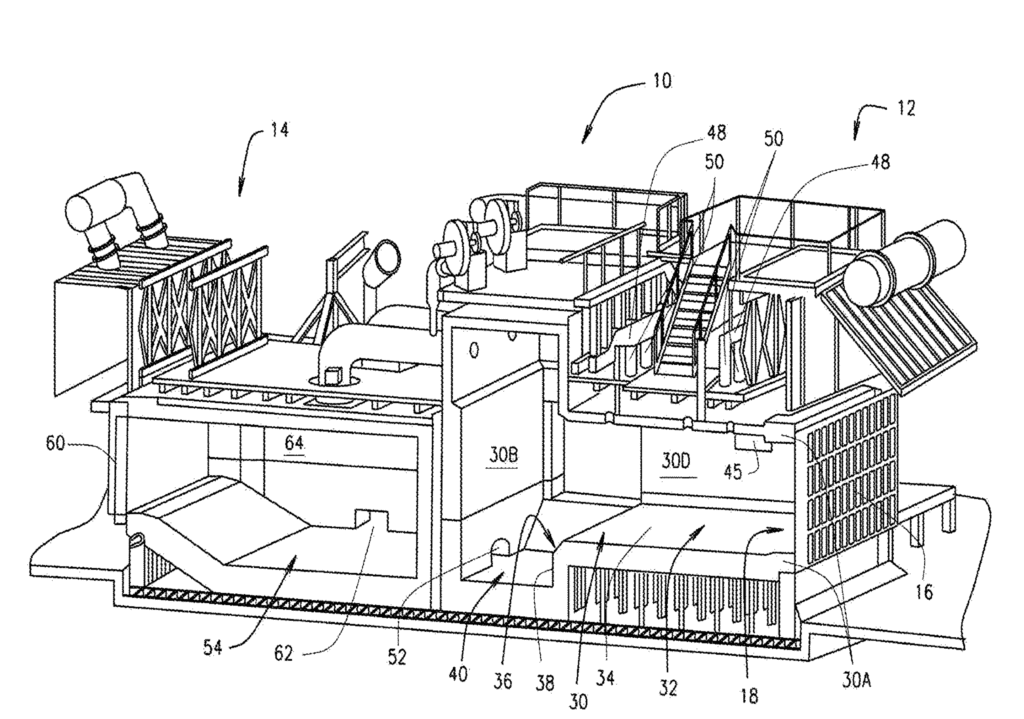
US12663214 — VORTEX METAL INSERTION FURNACE CONTROL SYSTEM — GPRE IP, LLC (USA) — A vortex metal insertion system for a scrap aluminum metal recycling furnace, the system having a molten metal flow cycling through the furnace and through a vortex bowl in the system. The system includes one or more process sensors in the furnace, an automated molten metal flow adjustment device, and a computer controller. The computer controller reads the sensor(s) and adjusts the adjustment device to control the flow of molten metal through the vortex bowl based on the reading(s). The system has an insertion port through which scrap metal and other materials may be controllably inserted into the molten metal flow. For aluminum scrap that is coated with paints and various other surface materials, it is typical to remove such coatings from the scrap aluminum before the aluminum is melted. One embodiment of the invention is a delacquering chamber that provides for in situ control of the conditions of molten metal flow through the furnace and/or controllable insertion of additional metals or other materials into the melt flow based on process conditions.
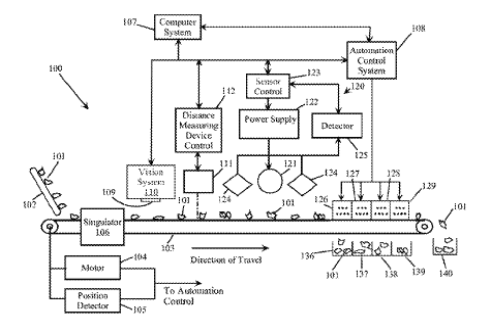
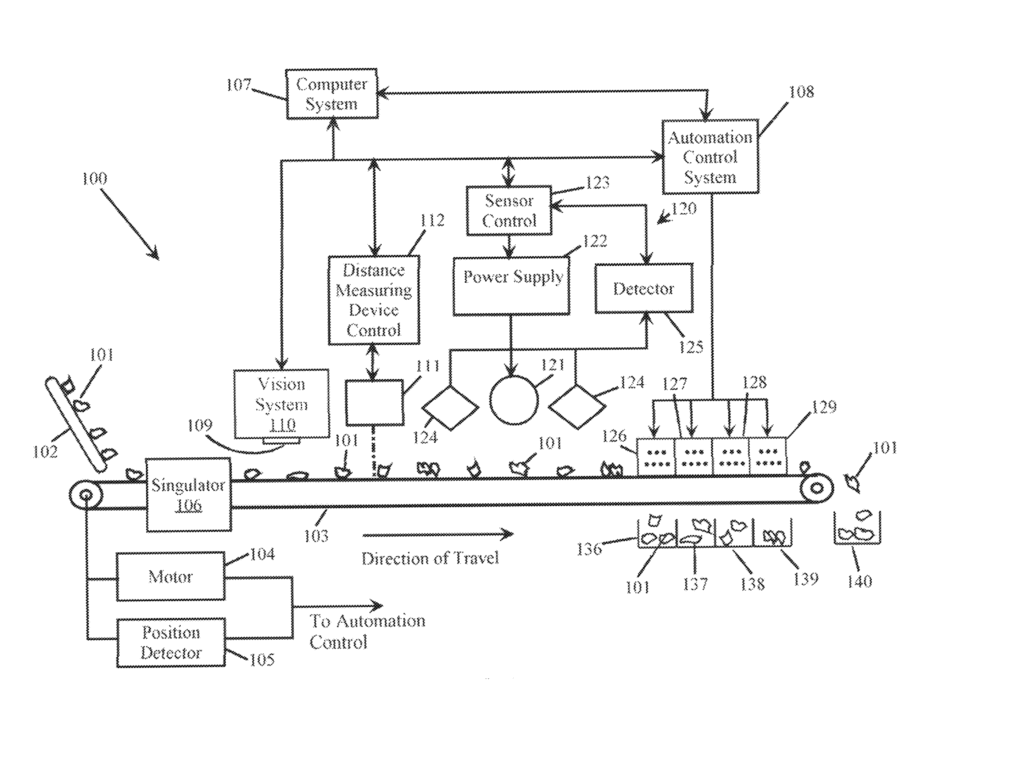
US12599934 — MULTIPLE STAGE SORTING — Sortera Technologies, Inc. (USA) — The recycling of aluminum (Al) scrap is a very attractive proposition in that up to 95% of the energy costs associated with manufacturing can be saved when compared with the laborious extraction of the more costly primary aluminum, and it is particularly desirable to efficiently separate aluminum scrap metals into alloy families, since mixed aluminum scrap of the same alloy family is worth much more than that of indiscriminately mixed alloys. A material sorting system sorts materials utilizing multiple stages of classification and sorting, including a vision system that implements an artificial intelligence system to identify or classify each of the materials, and an x-ray fluorescence (“xrf”) system or laser induced breakdown spectroscopy to perform a subsequent classification and sorting of the remaining materials.
US12590378 — METHOD AND APPARATUS FOR PRODUCING ALUMINUM MATERIAL — UACJ Corporation (Japan) — Demand for aluminum alloy scrap as secondary alloys for die casting which are materials for combustion engines made of aluminum alloys has a high probability of decreasing in the future. The present disclosure is related to providing a method and an apparatus for producing aluminum material which enables aluminum material with a high purity to be easily produced from a raw material containing a large amount of Si. Thus, a method for producing an aluminum material, including: providing an electrolytic cell in which an anode electrode containing 0.01 to 30% by mass Si and Al and a cathode electrode are immersed in an electrolytic solution and depositing aluminum on the cathode electrode by energizing the anode electrode and the cathode electrode in the electrolytic solution. As a material forming the anode electrode used in one embodiment, it is preferable to use aluminum alloy scrap such as a casting material. As an additional step, the aluminum material can be continuously recovered by exfoliating the deposited aluminum material, usually 1-20 µm, from the surface of the cathode electrode and winding the exfoliated aluminum material around a recovery drum. Its thickness may be suitably selected depending on use.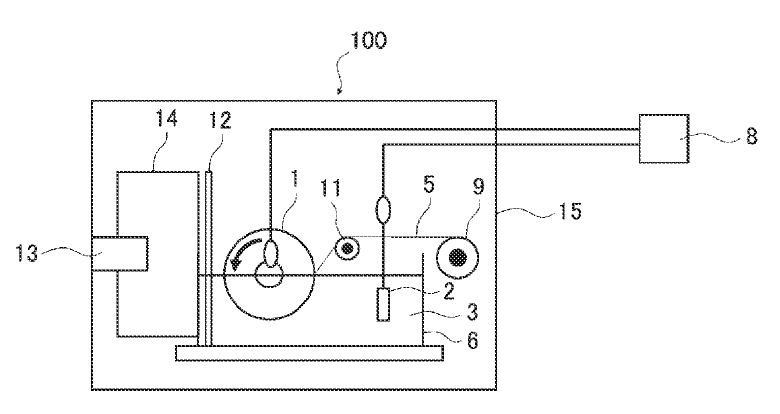
US12583741 — ALUMINUM COMPOSITE FOR HYDROGEN GENERATION AND METHODS OF PREPARATION THEREOF — The Hong Kong University of Science and Technology (China) — Hydrogen is increasingly replacing fossil fuels in the transportation industry as its burning produces only water instead of air polluting gases. Hydrogen can be generated through accelerated corrosion (oxidation) of fine metal aluminum particles in water. A method of generating hydrogen by contacting an aqueous solution with an activated aluminum composite including aluminum, AlN, γ-Al2O3, and optionally a carbonaceous material. In certain embodiments, the activated aluminum composite comprises aluminum composite flakes has a diameter of 10-30 μm and a thickness 10-100 nm; the carbonaceous material is prepared by carbonization of a carbonaceous material precursor selected from the group consisting of a carboxylic acid, a polyvinyl alcohol, and salts thereof; and the activated aluminum composite comprises at least 87% of aluminum by weight. the activated aluminum composite is prepared from aluminum component machining, aluminum cans or aluminum scrap. The activated aluminum composite can safely be stored and can be used for safe on demand hydrogen generation in water.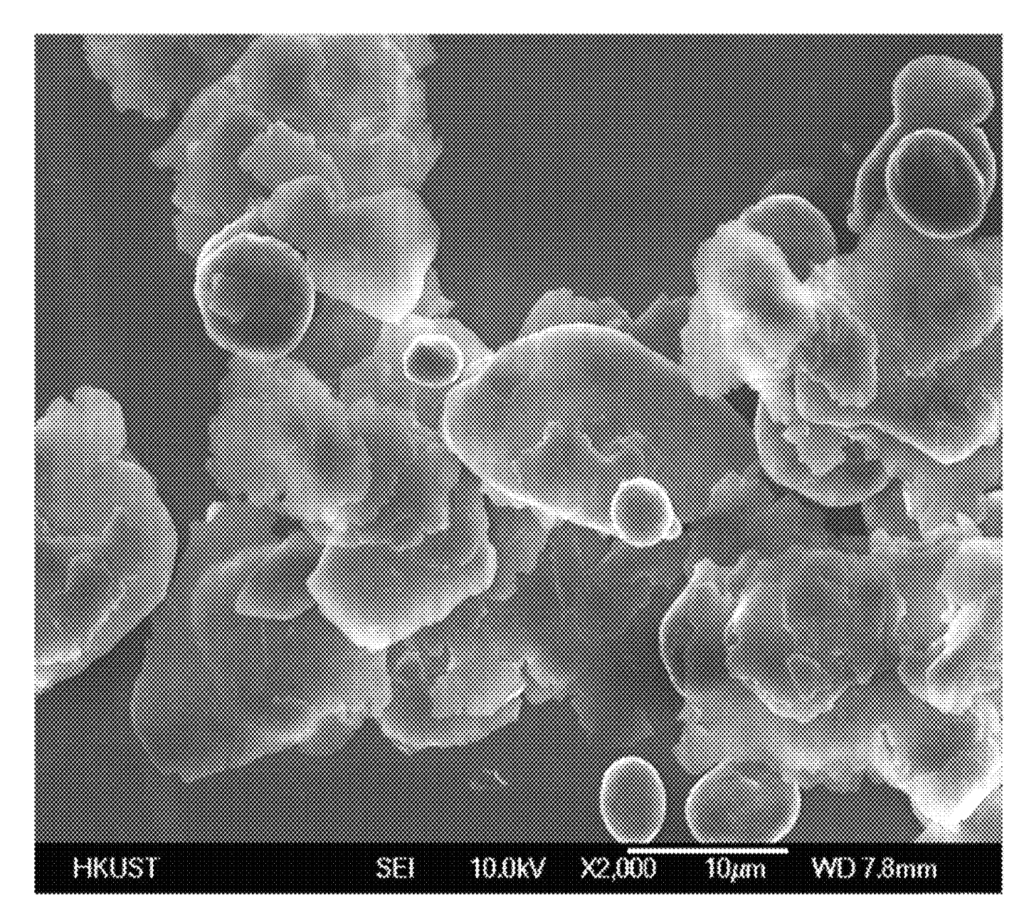
US12583197 — IN-FACILITY WASTE HANDLING METHOD — CTPS LLC (USA) — The present invention relates to the manufacturing and handling of aluminum beverage cans. Each year about 180 billion aluminum cans are manufactured worldwide and some 100 billion of these aluminum cans are manufactured in the United States. During manufacture, a certain percentage of aluminum cans are scrapped before they are used, i.e., before they are filled with a beverage, for various reasons, such as the cans may have manufacturing defects, cans may be obsolete due to changes in can labelling, overproduced cans, etc. Unfilled aluminum cans are stored and transported on pallets, each may support 7,002 aluminum 12 oz cans stacked 18 layers high with plastic sheets between the layers and are transported for recycling in semi-trailers holding some 5,000 lbs of aluminum scrap. What is needed is a more cost-effective way of handling cans to be recycled at a can manufacturing facility. Thus, a recycling apparatus for positioning within a canning facility receives pallets of damaged or otherwise unusable unfilled aluminum cans, and discharges the layers of cans within a depalletizer into a discharge chute which communicates with the hopper of a baler which compresses the cans and forms a compact bale which is then shipped to a recycled metal processor. The apparatus may be operated as a service to the canner charged on a per pound recovered basis.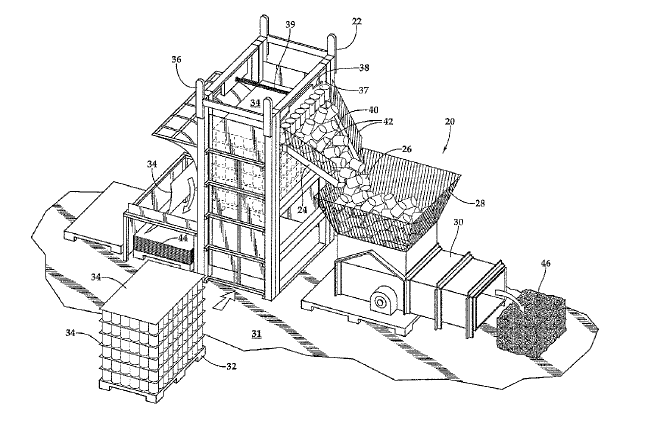
US12571078 — DIE-CASTING ALUMINUM ALLOY MATERIAL PRODUCED ENTIRELY FROM RECYCLED MATERIAL AND PREPARATION METHOD THEREOF — Huajin New Materials Research Institute (Guangzhou) Co., Ltd. And Guangdong Hongbang Aluminum Metal Industry Co., Ltd. (China) — The disclosure pertains to a high-performance, low-cost aluminum alloy material produced entirely from recycled materials and its preparation method. The alloy comprises the following components by weight percentage: Si: 10%-11%; Mg: 0.50%-0.65%; Mn: 0.01%-0.20%; Cu: 1.0%-1.2%; 0<Ni≤0.5%; Fe: 0.7%-0.9%; 0<Ti≤0.20%; Zn: 2.0%-2.5%; 0<Pb≤0.1%; 0<Sn≤0.1%; the total of the remaining impurities being controlled at less than 1%, with the balance being Al. Compared with a conventional ADC12 alloy, the raw materials are more widely available and the cost is lower, but the mechanical performance, thermal conductivity and weather resistance are all superior to the ADC12 alloy. The alloy die-casting test bar of the present disclosure has a tensile strength ≥270 Mpa, a yield strength ≥150 MPa, an elongation ≥2.5%, and a thermal conductivity ≥110W/m-k. The material is a green material that complies with circular economy.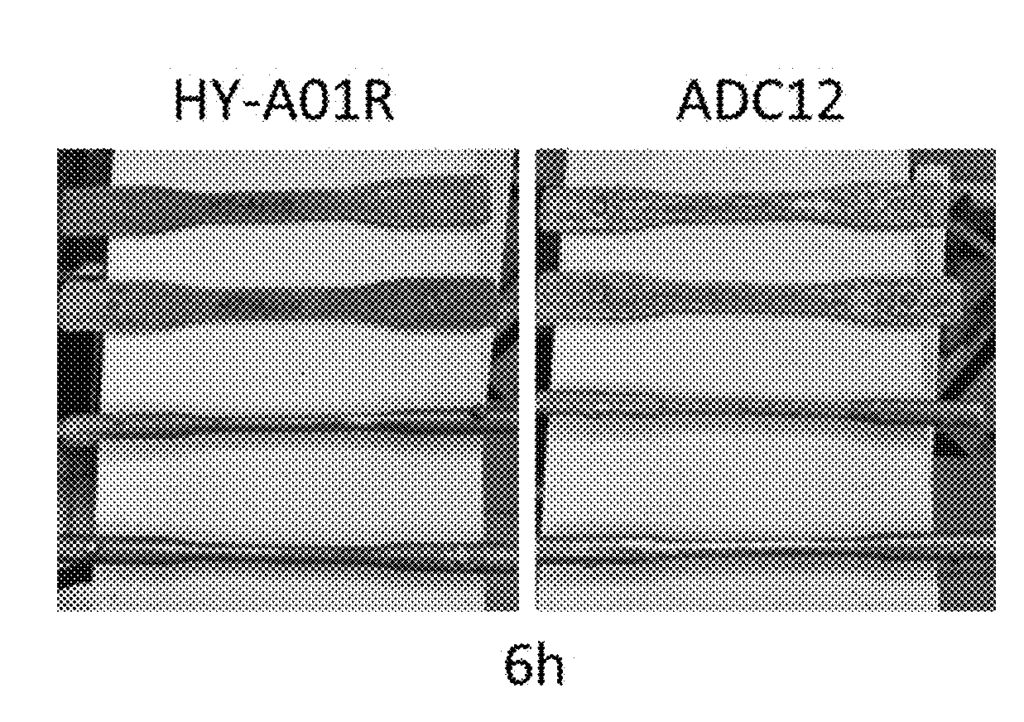
US12551929 — RECYCLING OF SCRAP — Reukema Participations B.V. (Netherlands) — Aluminum scrap metal may include a mix of cast, sheet, profiled, or wire material, e.g. venetian blinds, castings, hair wire, screen wire, food or beverage containers, radiator shells, airplane sheet, bottle caps. Some aluminum material is wrought aluminum that, e.g., includes alloys that include manganese and are suitable for reuse as aluminum for rolling, extrusion, drawing or forging processes. Another aluminum material is cast aluminum that, e.g., has a relatively high percentage of alloying elements and is suitable for casting. For purposes of recycling, it may be useful to make a class of aluminum scrap by selecting from a mix of aluminum scrap objects as mentioned above only sheet metal objects of a number of aluminum alloys. A method of recycling scrap is disclosed, comprising the steps of shredding the scrap with a shredder into shredded scrap objects, classifying the shredded scrap objects into fractions of scrap objects having different size ranges with a classifier, and sorting scrap objects while substantially maintaining interspace between the objects. Further, an arrangement for separating scrap objects is disclosed, comprising a substantially horizontally disposed feeder that extends from a receiving area for receiving scrap objects to a feed gate positioned at a top portion of a chute, as well as an ejector arrangement, comprising a conveyor with a substantially flat conveying plane and an ejector device disposed along the conveyor.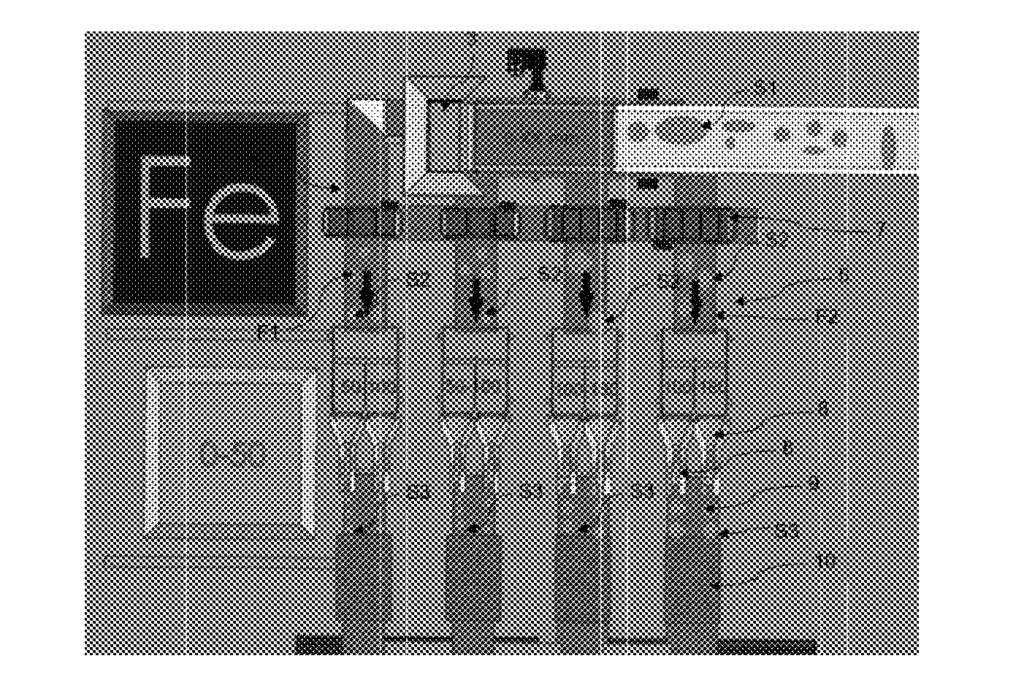
US12523206 — RECIPROCATING MOLTEN METAL PUMP — Pyrotek, Inc. (USA) — The present disclosure advantageously provides a system that can accomplish both molten metal circulation and transfer of molten metal within a furnace using a single molten metal pump. A molten metal pumping apparatus has a circulation function and a transfer function. The apparatus includes a molten metal pump having an outlet. The pump is rotatable while submerged in molten metal to provide a first position wherein the outlet is engaged with a circulation passage in a furnace assembly and a second position wherein the outlet is engaged with a transfer passage in the furnace assembly. The apparatus includes a molten metal pump having an outlet. The pump is rotatable while submerged in molten metal between a first position engaged with a circulation passage in a furnace assembly and a second position engaged with a transfer passage in the furnace assembly. It finds particular application in the recycling of aluminum and is described with reference thereto, although equipment described herein may be equally suitable for use with other molten metals (and their salts), including zinc, magnesium, tin, and lead as examples.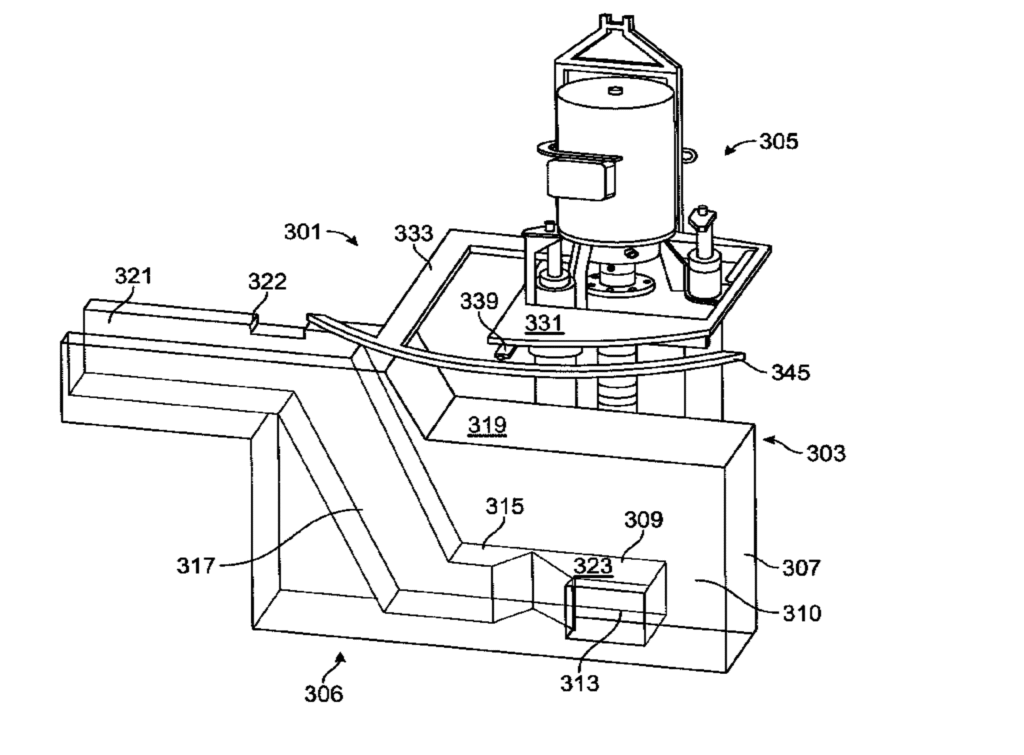
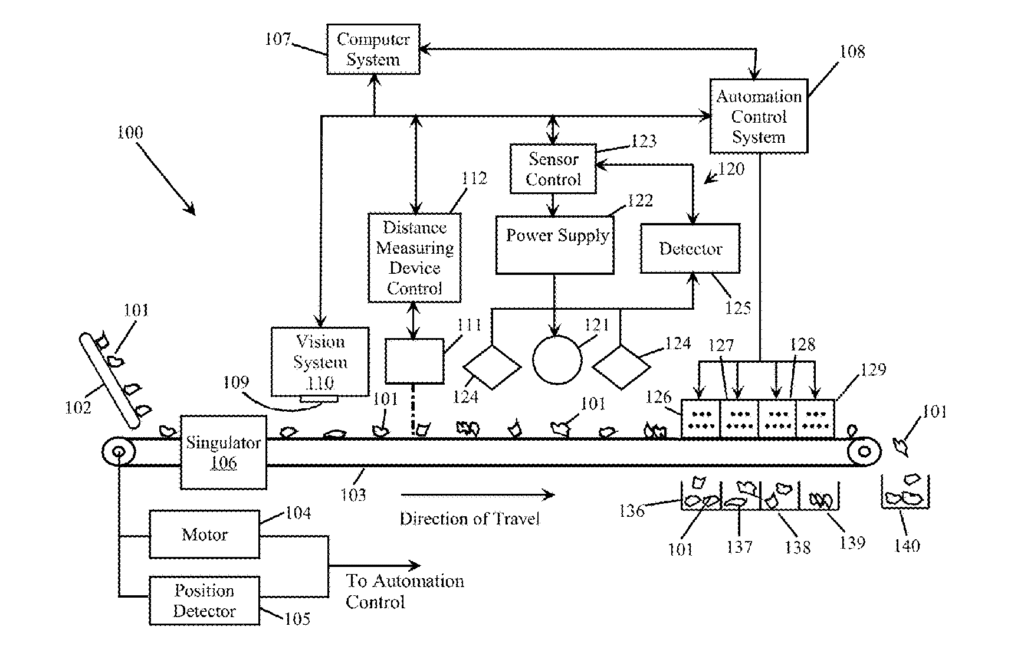
US12508628 — SORTING BETWEEN METAL ALLOYS — Sortera Technologies, Inc. (USA) — It is particularly desirable to efficiently separate aluminum scrap metals into alloy families, since mixed aluminum scrap of the same alloy family is worth much more than that of indiscriminately mixed alloys. Automotive manufacturing scrap (and metal scrap from other sources such as airplanes and commercial and household appliances) often includes a mixture of scrap pieces of wrought and cast pieces and/or two or more aluminum alloys differing substantially from each other in composition. The present disclosure relates in general to the sorting of metals, particularly, to the sorting between aluminum cast alloys, extruded aluminum alloys, and aluminum wrought alloys. This material sorting system sorts materials utilizing an x-ray fluorescence and/or a vision system that implements a machine learning system in order to identify or classify each of the materials, which are then sorted into separate groups based on such an identification or classification determining that the materials are composed of either wrought aluminum, extruded aluminum, or cast aluminum. The system is capable of sorting cast and wrought aluminum alloys.
US12503393 — COMPOSITE MINERALIZERS/FLUXES FOR THE PRODUCTION OF ALITE/CALCIUM SULFOALUMINATE CLINKERS — University of Kentucky Research Foundation (USA) — This document generally relates to the cement industry and, more particularly, to an alite/calcium sulfoaluminate (A/CSA) cement clinker incorporating a novel composite of mineralizers/fluxes incorporating calcium fluoride and iron oxide to reduce firing temperatures and increase strength. High fly ash, aluminum dross, aluminum scrap, high aluminum clays and combinations thereof may also be substituted for bauxite in the cement clinker composition. Such a cement clinker composition may include between about 10-35 wt. % of a bauxite substitute selected from a group consisting of high fly ash alumina, aluminum dross, aluminum scrap, high alumina clays and combinations thereof.
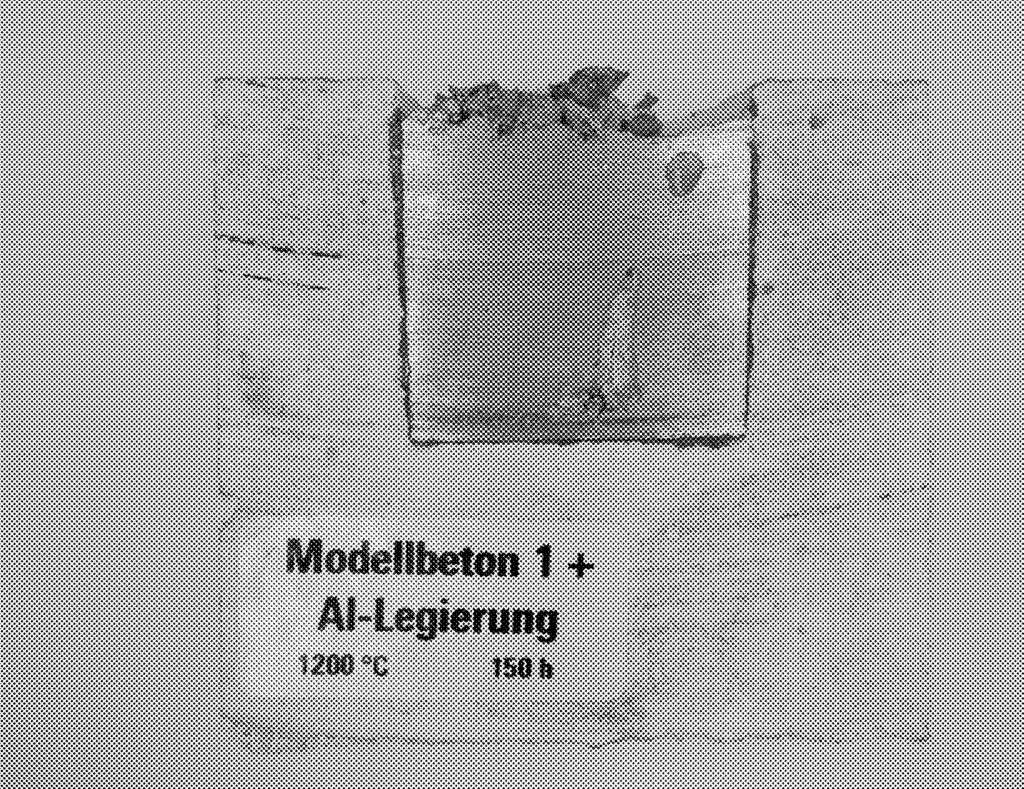
US12486201 — DRY MATERIAL MIXTURE FOR A BACKFILL, PREFERABLY A REFRACTORY CONCRETE BACKFILL, FOR PRODUCING A HEAVY-CLAY REFRACTORY NON-BASIC PRODUCT, REFRACTORY CONCRETE BACKFILL AND SUCH A PRODUCT, METHOD FOR PRODUCING SAME, LINING, AND INDUSTRIAL FURNACE, CHANNEL TRANSPORT SYSTEM OR MOBILE TRANSPORT VESSEL — Refratechnik Holding GmbH (Germany) — A dry substance mixture for a batch, preferably a refractory batch, for the production of a coarse ceramic, refractory, non-basic, shaped or unshaped product, such a refractory batch, such a product as well as a method for its production and a lining of an industrial furnace for the aluminum industry, and such an industrial furnace as well as a lining of a launder transport system or a mobile transport vessel for the aluminum industry, and such a launder transport system and such a transport vessel. The products according to the present disclosure are preferably used in furnaces of the secondary aluminum industry. Preferably, they are used as working casing in the bath area, in the ramp and in the burner fields of these furnaces. The working casing is in direct contact with liquid aluminum or aluminum alloy. In particular, they are used as follows: in smelting furnaces, e.g. recycling furnaces as a working casing in the bath area, the ramp and the burner fields; in casting furnaces as working casing in the bath area, the ramp and the burner fields; in launder systems as working casing; and in (transport) crucibles as working casing.
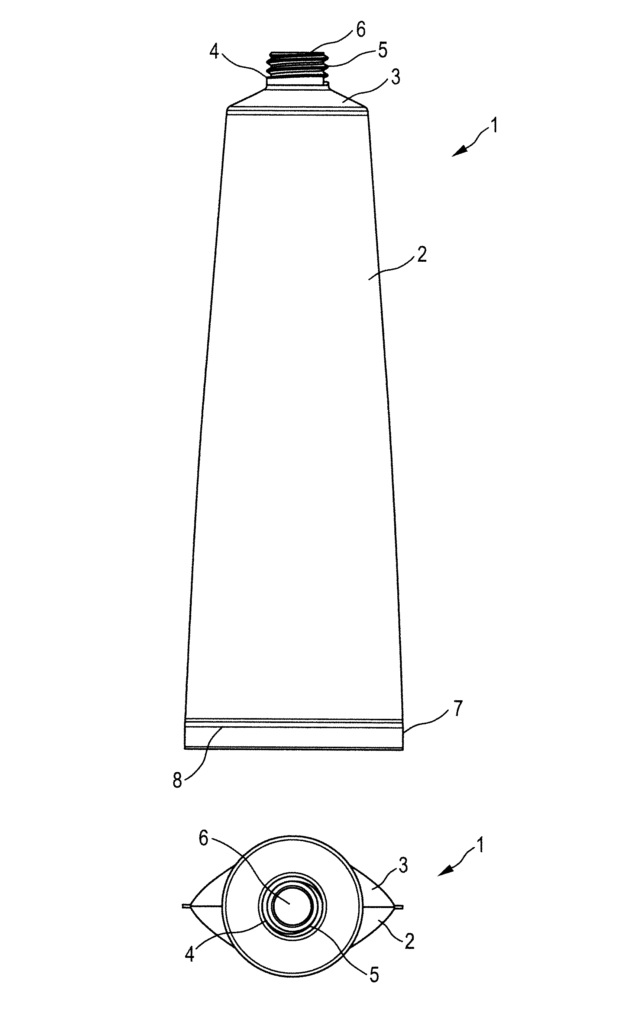
US12453995 — METHOD FOR MANUFACTURING AN ALUMINUM TUBE, A METHOD FOR MANUFACTURING AN ALUMINUM SLUG, AN ALUMINUM TUBE AND AN ALUMINUM SLUG — Tubex Tubenfabrik Wolfsberg GmbH (Austria) — A method for manufacturing an aluminum tube, including providing a slug of an aluminum alloy consisting of >98.4% by weight of Al, 0.10% by weight to 0.30% by weight of Si, 0.25% by weight to 0.45% by weight of Fe, 0.01% by weight to 0.08% by weight of Cu, 0.15% by weight to 0.40% by weight of Mn, at most 0.15% by weight of Mg, at most 0.05% by weight of Zn, at most 0.05% by weight of Cr, at most 0.05% by weight of Ni, at most 0.05% by weight of Ti and at most 0.05% by weight of other impurities, wherein the aforementioned ingredients of the aluminum alloy add to 100% by weight, and impact extrusion of the slug to form an aluminum tube having a shoulder and a neck and wherein the aluminum slug is made of >60% by weight, in particular >75% by weight, preferably >90% by weight, of post-consumer recycled aluminum scrap, based on the total weight of the aluminum slug.
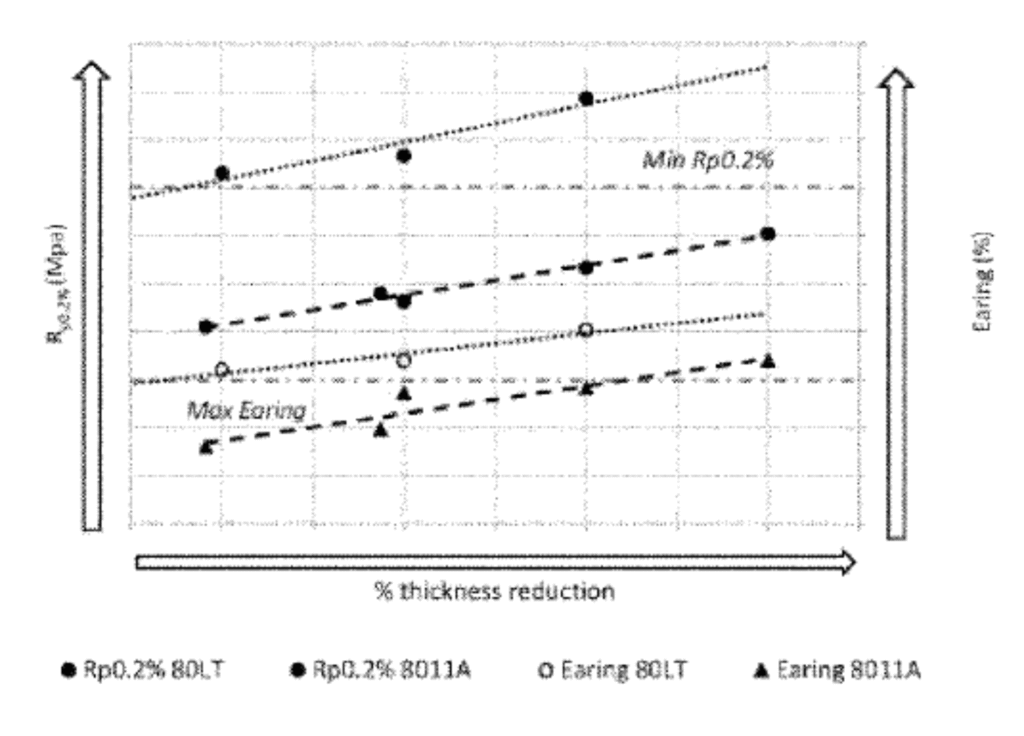
US12448667 — ALUMINUM ALLOY SHEET FOR CLOSURES AND THERMOMECHANICAL METHOD FOR PRODUCING THE SAME — Aludium Transformación De Productos, S.L.U. (Spain) — An aluminum alloy sheet includes an aluminum alloy, wherein the aluminum alloy includes: 0.15 wt. % to 0.25 wt. % of Si, 0.80 wt. % to 1.00 wt. % of Fe, 0.08 wt. % to 0.12 wt. % of Cu, 0.55 wt. % to 0.70 wt. % of Mn, 0.30 wt. % to 0.40 wt. % of Mg, equal to or less than 0.05 wt. % of each other element, and aluminum as balance. A thermomechanical method for producing such aluminum alloy sheet includes a specific scheme of heating and rolling stages; and the use of such aluminum alloy sheet for manufacturing an aluminum closure, preferably an aluminum cap, for bottles, cans or other similar containers. Aluminum scrap to be recycled may be mixed with the required amounts of pure metal, alloying elements and/or other aluminum alloys to achieve an aluminum alloy with the above desired chemical composition in the DC Casting stage. Preferably, the recycling content is equal to or higher than 75%, and any type of aluminum scrap may be used as starting material, provided that the aluminum ingot obtained comprises the aluminum alloy according to the invention.
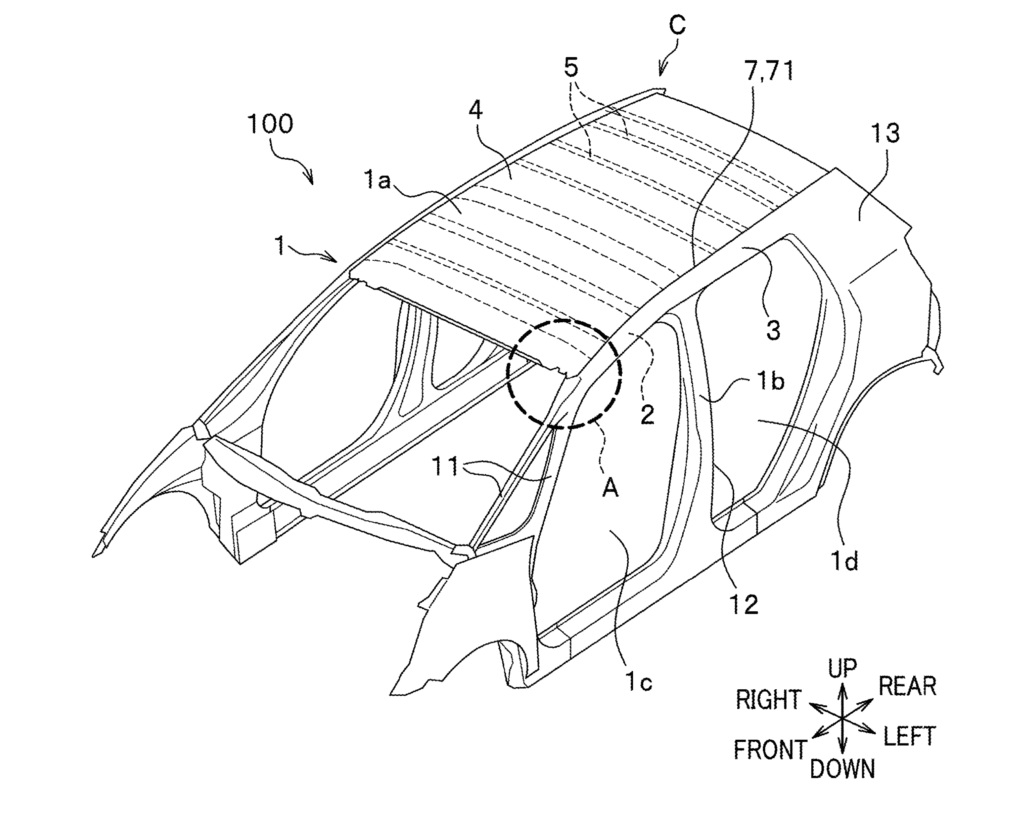
US12441407 — VEHICLE BODY UPPER STRUCTURE — Honda Motor Co., Ltd. (Japan) — In a scrapped vehicle body upper structure with a roof side rail outer and a roof side rail inner made of steel plates joined to each other and a side outer panel and a roof panel made of aluminum joined to each other, the automobile is dismantled into parts with the parts being sorted into iron, non-iron, non-metal, and the like, and the parts are used as new materials such as recycled metals. For example, to take out high-purity aluminum from the scrapped vehicle body depending on the type of material, aluminum needs to be removed before cutting with a shredder. The objective of the present invention is to provide a vehicle body upper structure that allows a roof panel to be grabbed and easily torn off from parts around the roof panel with a nibbler. Thus, a vehicle body upper structure includes roof side rails, side outer panels, and a roof panel made of a material different from the material of the roof side rails. The roof panel and the paired left- and right-side outer panels are fixed to one another by braze joining. An end portion of the roof panel in a vehicle front-rear direction includes a first coupling portion in which one of the roof side rails, the roof panel, and one of the side outer panels are coupled to one another, a notch portion that is provided on the inner side in the vehicle width direction of the first coupling portion, and a fragile portion that extends from a tip end portion of the notch portion toward a braze joining portion of the side outer panel and the roof panel.
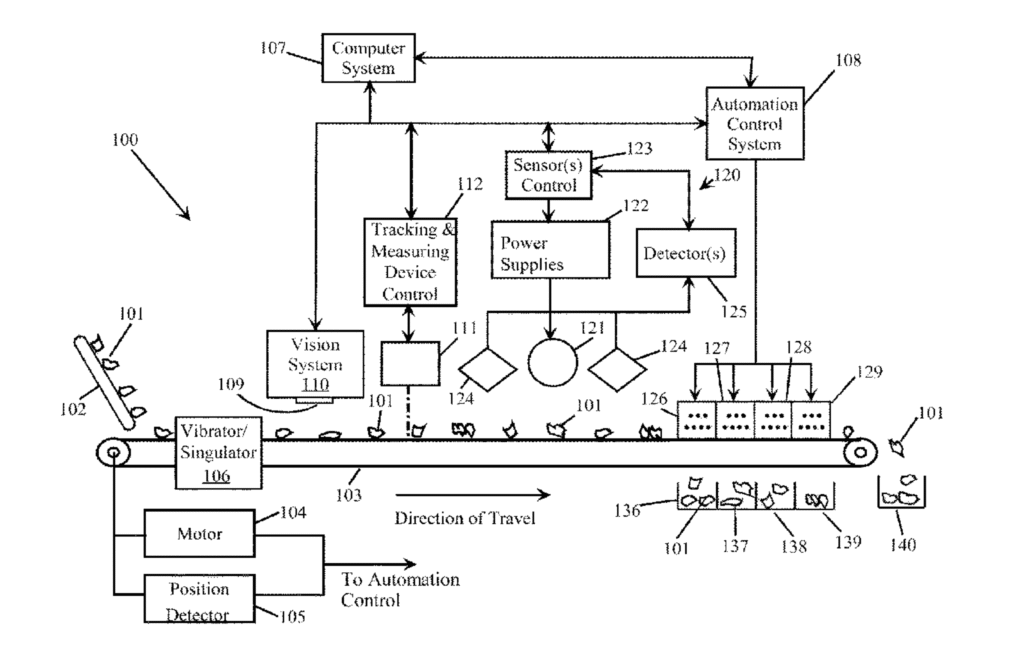
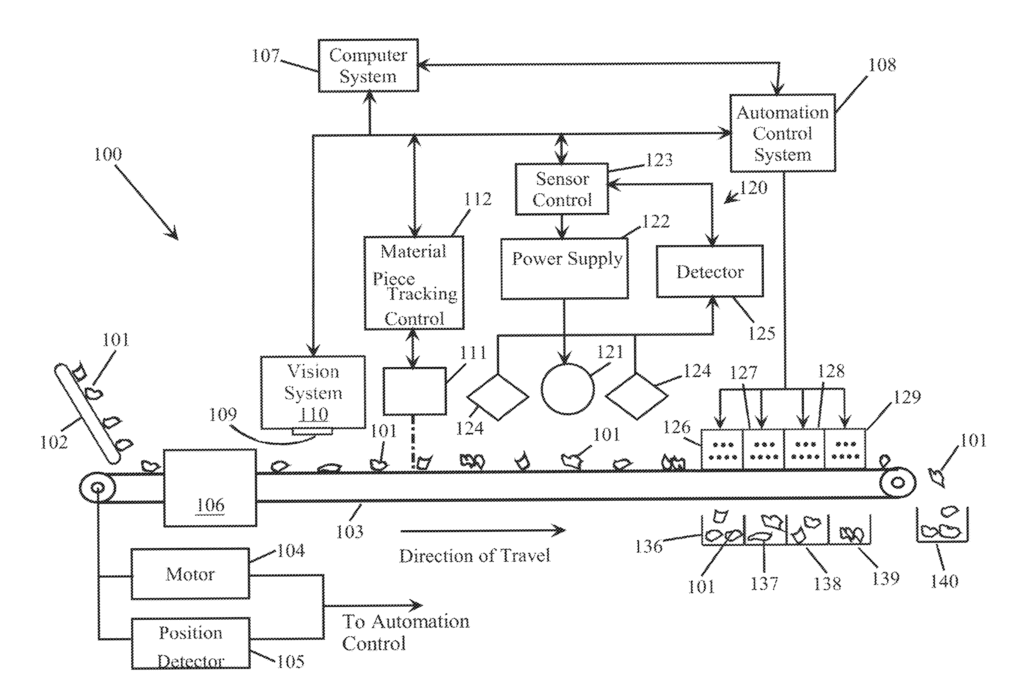
US12403505 — SORTING OF ALUMINUM ALLOYS — Sortera Technologies, Inc. (USA) — In the blending methods used to recycle aluminum, any quantity of scrap composed of similar, or the same, alloys and of consistent quality, has more value than scrap composed of mixed aluminum alloys. The present disclosure relates in general to the classification and sorting of a mixture of materials, and particularly to the classification and sorting of aluminum alloys from a mixture of non-ferrous metallic scrap composed primarily of aluminum and classified as Zorba. A material handling system of this invention sorts mixed materials utilizing a combination of a spectroscopic sensor, such as x-ray fluorescence, and a vision system that implements an artificial intelligence system to identify or classify each of the materials, which are then sorted into separate groups based on such an identification or classification. The system can sort materials typically found within Zorba, such as wrought, cast, and extrusion aluminum alloys.
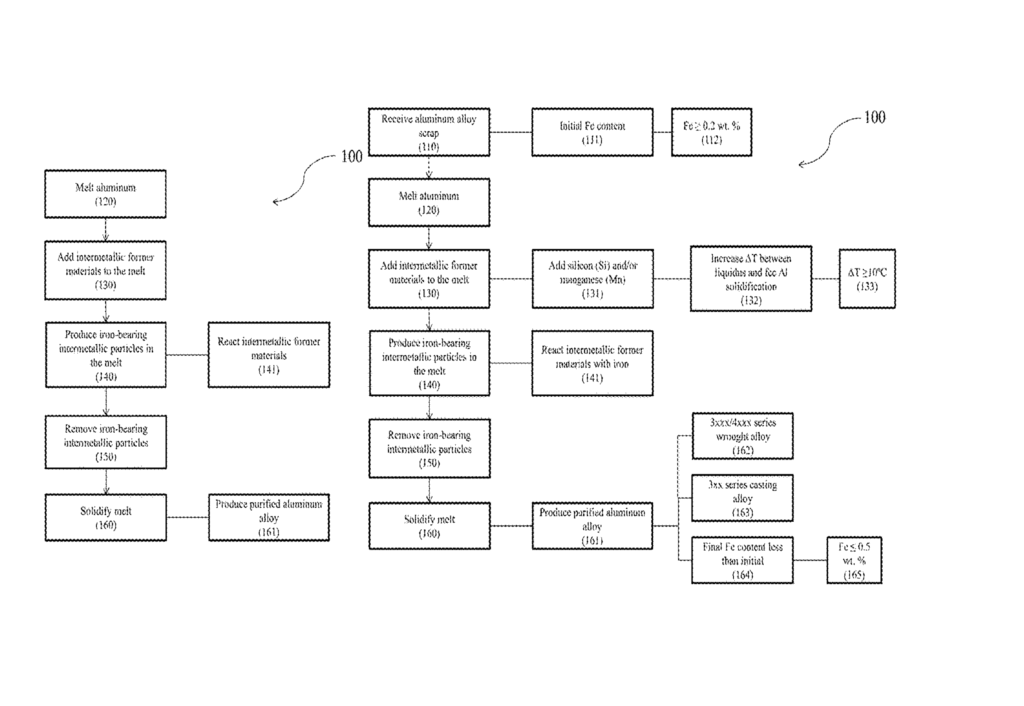
US12338507 — METHODS OF RECYCLING ALUMINUM ALLOYS AND PURIFICATION THEREOF — Alcoa USA Corp. (USA) — The present disclosure relates to methods of producing purified aluminum alloys from aluminum alloy scrap by producing a melt of the aluminum alloy scrap, adding one or more intermetallic former materials, producing iron-bearing intermetallic particles, removing the iron-bearing intermetallic particles, and solidifying the low-iron melt. In one embodiment, the produced aluminum alloy is a 3xx aluminum casting alloy. In another embodiment, the produced aluminum alloy is one of a 3xxx or a 4xxx wrought aluminum alloy. Addition of intermetallic former materials Si and/or Mn may also result in the production of an alloy having an increased amount of Si and/or Mn, resulting in the production of a 3xx aluminum casting alloy, or one of a 3xxx or a 4xxx wrought aluminum alloy. Thus, the addition of the intermetallic former materials to the melt may facilitate production of suitable end-use alloys, may facilitate the removal of iron from aluminum scrap in an industrially applicable temperature window, and may facilitate the reduction of the iron content in the aluminum alloy.
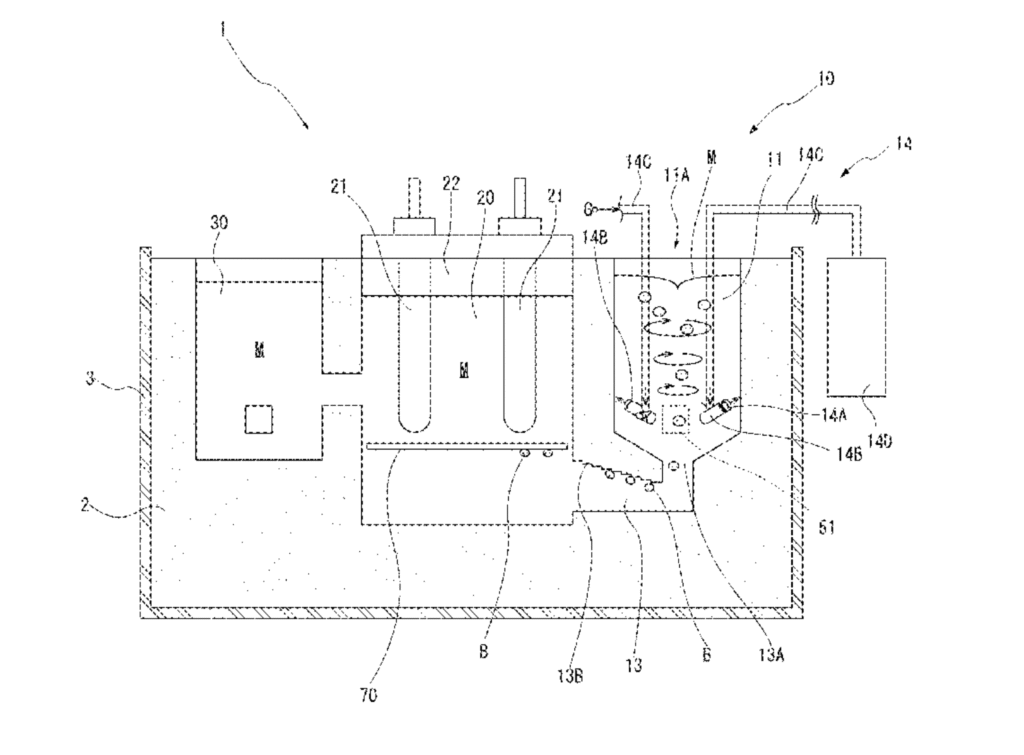
US12305919 — METAL MELTING APPARATUS, SCREEN PLATE FOR METAL MELTING, AND METHOD OF MELTING METAL — Tounetsu Co., Ltd. (Japan) — A metal melting apparatus capable of providing a clear melt with little oxides, even when either one or a mixture of scrap material and fresh material is supplied. Solution is provided by a metal melting apparatus including melting chamber to which a melt of raw material is supplied, and gas injection system for injecting gas into the melting chamber to generate a melt vortex melt in the melting chamber. A screen plate 70 for metal melting is formed of a material which may be placed submerged in the melt M, and in the form of a plate provided with a multitude of through holes 71. Preferably, the number and the size of the through holes are designed so that the unmolten raw material B passes through the holes to come up and melts before it reaches the melt surface in 2 to 3 minutes. For example, the general size of briquette material of aluminum scrap, the through holes 71 may preferably have a diameter of 20 to 50 mm.
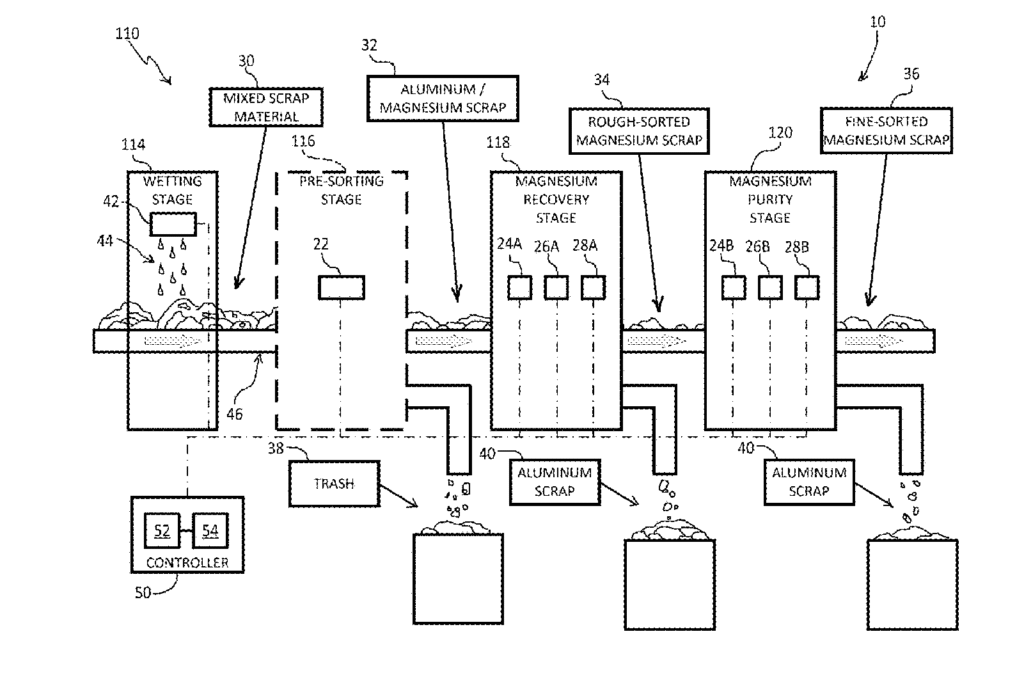
US12303942 — SYSTEM AND METHOD FOR MIXED MATERIAL MAGNESIUM SORTING — Trinity Metals, LLC (USA) — A method of sorting a mix of scrap material to separate out magnesium scrap from the mixed scrap for reuse is presented herein. The method includes using sensors to detect characteristics of the scrap material and sorting or separating the scrap material into the different types based on the detected characteristics from the sensors. The sorting system includes (1) a wetting stage during which the mix of scrap material is sprayed or wetted with water to cause the magnesium scrap in the mix to turn blue in color; (2) a pre-sorting stage during which trash or waste material in the mix of scrap material is removed using eddy-current sensors to detect the aluminum and magnesium scrap in the mix; (3) a magnesium recovery stage during which aluminum scrap in the mix of aluminum and magnesium scrap is removed using a plurality of sensors to sense/detect color, density, and shape of each of the scrap pieces and comparing the information from the sensors to a first criteria set to provide rough-sorted magnesium scrap, and (4) a magnesium purity stage during which any remaining aluminum scrap in the rough-sorted magnesium scrap is removed therefrom using the plurality of sensors to sense/detect color, density, and shape of the scrap pieces and comparing the information from the sensors to a second criteria set to provide a final product of fine-sorted magnesium scrap.
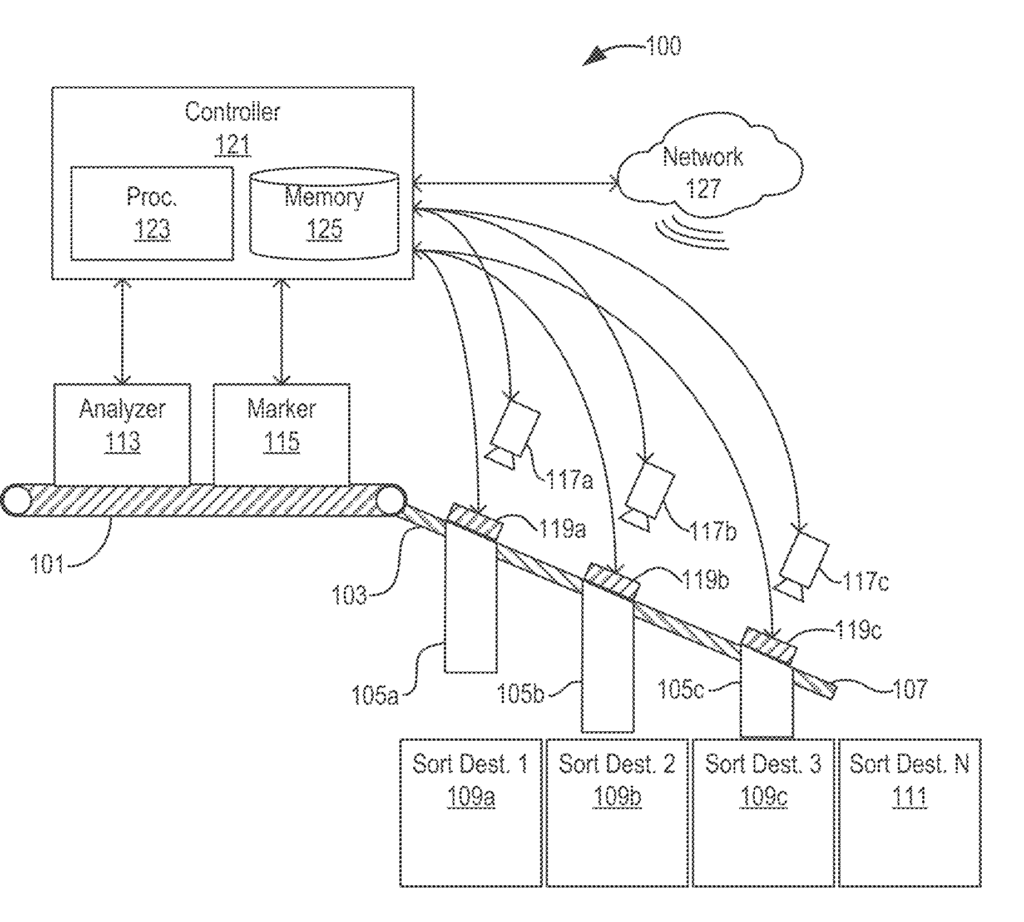
US12202011 — CONTINUOUS RAPID METAL SORTING VIA MACHINE-READABLE MARKING — Novelis Inc. (USA) — Methods and systems for sorting mixed metal scrap may first determine a sorting attribute of each article of metal scrap and subsequently mark each article with a machine-readable or visually identifiable mark according to the sorting attribute. The articles of mixed metal scrap can be sorted along a high throughput conveyance using a series of sensors to scan the articles for the machine-readable marks and rapidly sorting marked articles to appropriate sorting destinations based on detecting the machine-readable marks, and without requiring repeat identification by metal analyzers at the sorting step. The methods and systems described herein provide a more efficient means of sorting aluminum metal scrap, particularly for recycling, according to attributes that are identifiable via metal analysis but not readily identifiable by other properties like size or density. Identifying the sorting attribute associated with each article of metal scrap can be performed along the high-throughput conveyance using the marking without requiring additional analysis, and automated sorting accordingly can be conducted at much higher speeds.
US12194506 — BATTERY CELL HOUSING MADE OF AN ALUMINUM ALLOY STRIP HAVING A HIGH RECYCLING CONTENT — Speira GmbH (Germany) — According to the international specification for the aluminum alloy AA3003 used for battery cell housings is comparatively restrictive with regard to the standard alloy elements copper, magnesium, chromium, zinc and titanium. Employing this alloy therefore requires the use of high proportions of primary aluminum and thus hinders the achievement of high recycling rates. Battery cell housings of the prior art made from the aluminum alloy AA3003 therefore need to be improved in terms of sustainability. The object of providing a battery cell housing having an aluminum alloy strip or sheet which, on the one hand, makes it possible to achieve recycling rates and, on the other hand, satisfies the requirements of a battery cell housing, in particular with regard to strength, electrolyte stability, and electrical and thermal conductivity, is achieved in that the aluminum alloy strip or sheet has an aluminum alloy with the following alloy constituents in wt. %: 0.1%≤Si≤0.5%, 0.25%≤Fe≤0.8%, Cu≤0.6%, 0.6%≤Mn≤1.4%, 0.5%≤Fe≤1.5%, Cr≤0.25%, Zn≤0.4%, 0.005%≤Ti≤0.2%, the remainder being Al and unavoidable impurities, individually at most 0.05% and in total at most 0.15%.
US12157933 — ALUMINUM ALLOY, SEMI-FINISHED PRODUCT, CAN, METHOD OF PRODUCING A SLUG, METHOD OF PRODUCING A CAN, AND USE OF AN ALUMINUM ALLOY — Tubex Holding GmbH (Germany) and Neuman Aluminum Austria GmbH (Austria) — An aluminum alloy includes: 0.07% by weight to 0.17% by weight of silicon, 0.25% by weight to 0.45% by weight of iron, 0.02% by weight to 0.15% by weight of copper, 0.30% by weight to 0.50% by weight of manganese, 0.05% by weight to 0.20% by weight of chromium, 0.01% by weight to 0.04% by weight of titanium, and the balance aluminum and, optionally, additional constituents. The aluminum alloy is made from aluminum and aluminum scrap with alloying elements and is suitable for producing a can, preferably an aerosol can, having a high strength and at the same time a low can wall thickness and having good forming properties.
US12103045 — REMOVING AIRBAG MODULES FROM AUTOMOTIVE SCRAP — Sortera Technologies, Inc. (USA) — An estimated fifteen million vehicles are shredded in the U.S. each year (often referred to as end-of-life vehicles). Each vehicle may have several (e.g., 6-15) airbag modules; that is more than ninety million airbag modules that may enter the automotive recycling streams each year. An air bag module typically has three main parts enclosed within some sort of container or canister: the air bag, the inflator, and the propellant. To overcome the various technical challenges for ensuring the satisfactory removal of such airbag modules from the vehicle scrap, a system classifies materials utilizing a vision system that implements an artificial intelligence system in order to identify or classify and then remove automotive airbag modules from a scrap stream, which may have been produced from a shredding of end-of-life vehicles. The sorting process may be designed so that live airbag modules are not activated, which may harm equipment or persons.
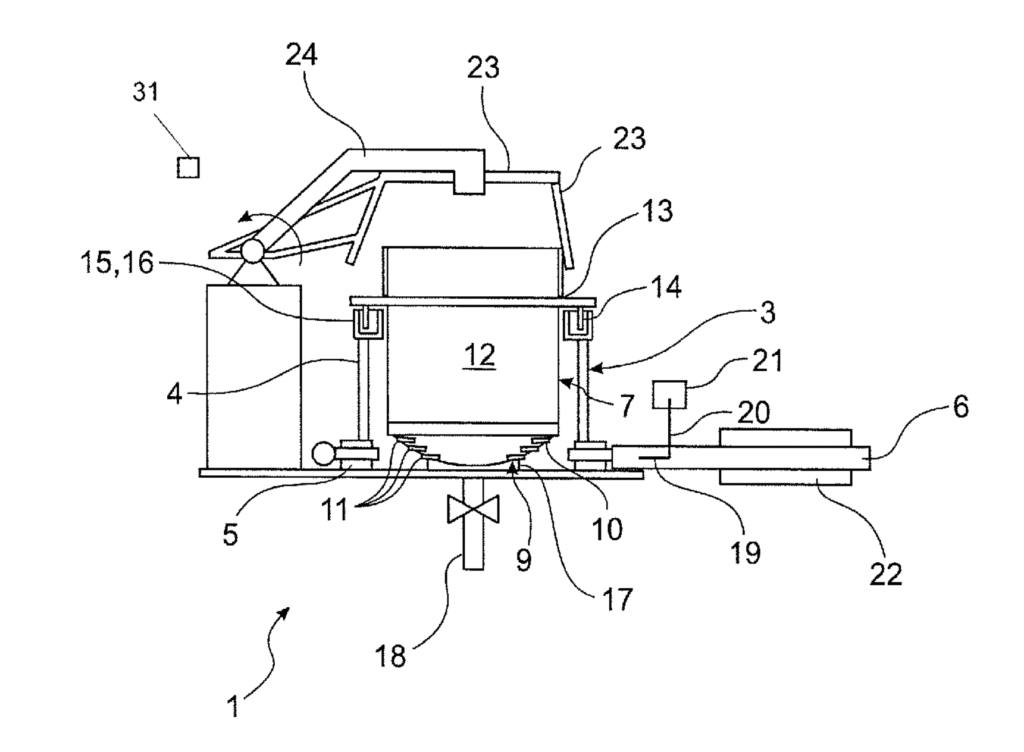
US12050060 — SCRAP DRYER AND/OR SCRAP PREHEATER — SMS group GmbH (Germany) — A device (1) for drying and/or preheating metallic and/or non-metallic materials, preferably scrap, comprises a receiving container (3) and a scrap basket (7) which is arranged in the receiving container (3) and has a gas-permeable bottom area (9). The receiving container (3) has at least one process gas inlet line (6) in its wall (4), via which a process gas with a temperature in the range from 200 to 1600° C. can be introduced into the receiving container (3), and at least an injector nozzle (19) arranged coaxially within the at least one process gas inlet line (6) via which a cooling gas can be introduced into the process gas. The present disclosure also relates to a metallurgical plant, preferably for the production of molten metallic products, including aluminum and its alloys, comprising a melting unit, a post-combustion chamber fluidically connected to the melting unit via a process gas exhaust line, and the device, which is fluidically connected to the post-combustion chamber via the process gas inlet line.
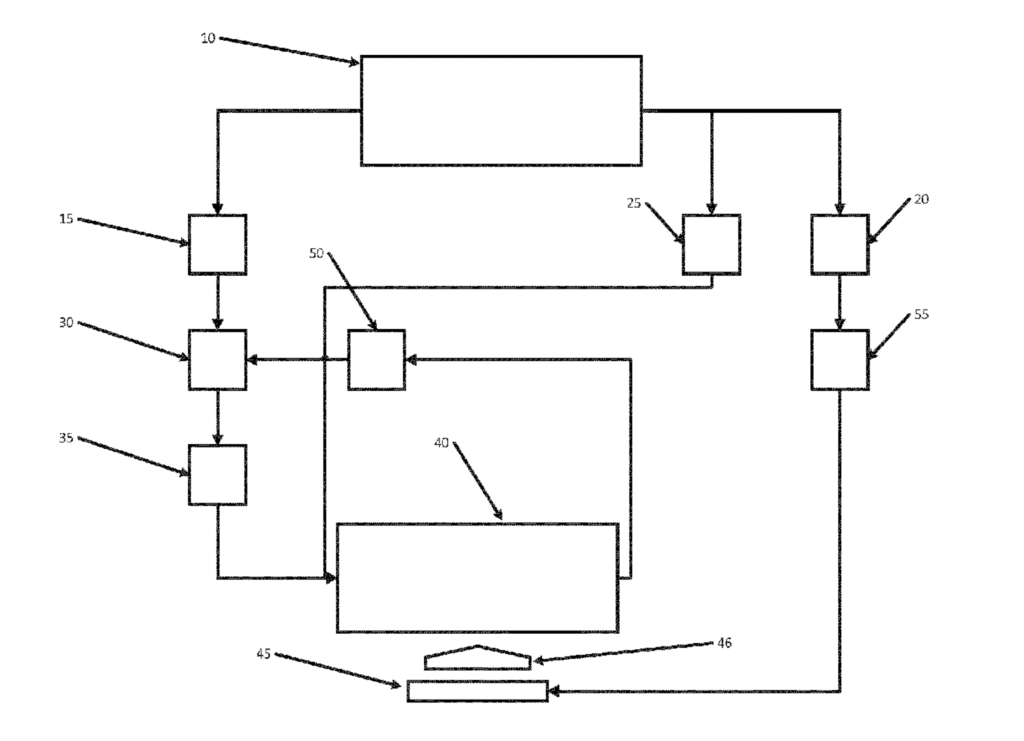
US12043880 — METHOD FOR PRODUCING THERMALLY PROCESSED MATERIAL — Norsk Hydro ASA (Norway) — The present invention relates to a method for production of secondary aluminum from scrap material by using a scrap obtained from an electrolysis cell as secondary/supplemented solid fuel for production of primary aluminum. Conventionally, the carbon-containing scrap material from the anode and/or cathode of the electrolysis cell is deposited as waste in landfill sites. Method for producing thermally processed material (50), the method comprising providing material (35) to be thermally processed, providing carbon-containing scrap material (20) from an electrolysis cell (10) for the production of primary aluminum (15), introducing the material (35) to be thermally processed into a furnace (40), processing the carbon-containing scrap material (20) to produce a scrap fuel (55), and thermally processing the material (35) to be thermally processed in the furnace (40) using energy generated by burning the scrap fuel (55) such as to produce thermally processed material (50). According to embodiments of the invention, the aluminum-containing scrap material may comprise aluminum containing dross and/or end-of-life aluminum scrap or process aluminum scrap.
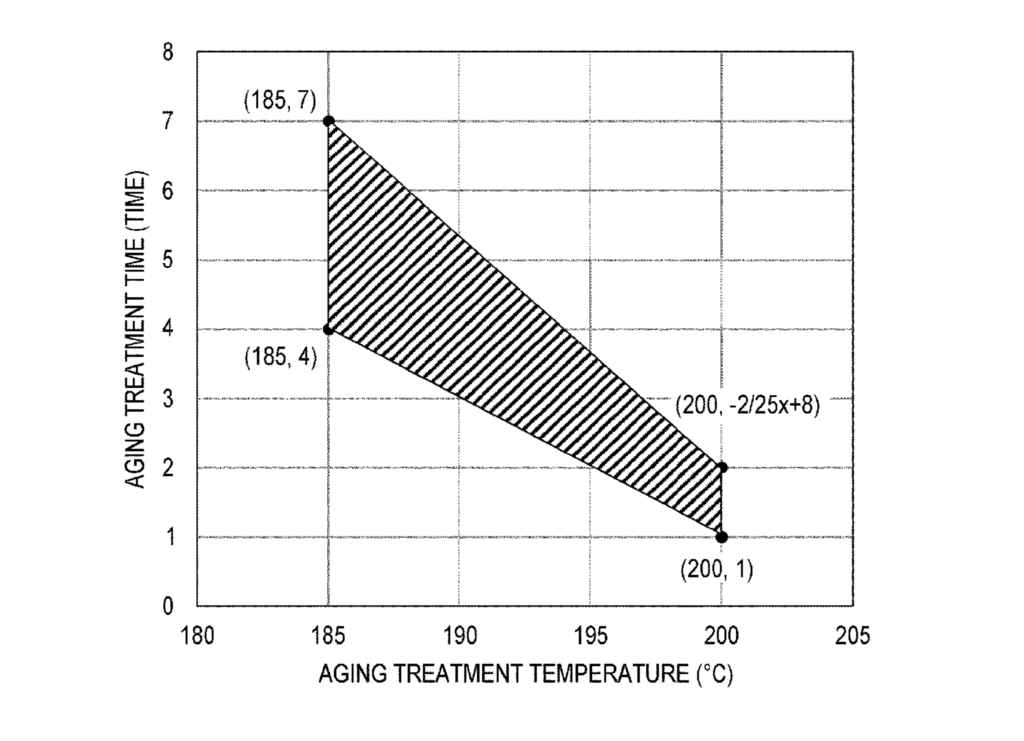
US12018355 — METHOD OF MANUFACTURING ALUMINUM ALLOY FORGED MATERIAL — Toyota Jidosha Kabushiki Kaisha (Japan) — In recent years, in a field of a vehicle, an application of an aluminum alloy forged material to an undercarriage component, such as an upper arm and a lower arm, has been expanding in order to improve steering stability and comfort of a vehicle in addition to weight reduction. Examples of the aluminum alloy forged material applied to the undercarriage component of the vehicle include an Al—Mg—Si-based aluminum alloy that is lightweight and has high strength and corrosion resistance. The present disclosure is to provide means for manufacturing an aluminum alloy forged material having high strength and corrosion resistance while reducing the amount of aluminum virgin metal and CO2 emissions. Thus, a method of manufacturing an aluminum alloy forged material from a mixture containing an aluminum scrap, an aluminum virgin metal, and an additive element includes the following steps: a heating and melting step of heating and melting the mixture, a forging step of forging the mixture after heating and melting, and an aging treatment step of performing aging treatment on a material after the forging step under a condition that an aging temperature and an aging time are as follows: (aging temperature, aging time)=within a range of a region surrounded by (185, 4), (185, 7), (200, 1), and (200, −2/25x+8).
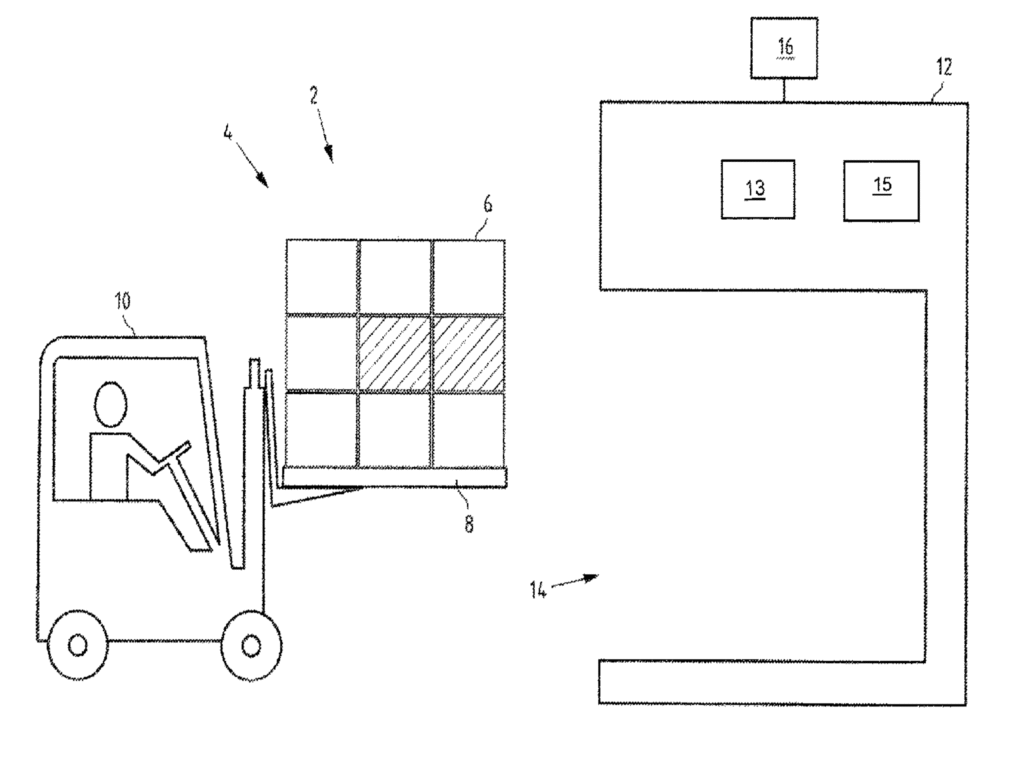
US11904362 — METHOD AND DEVICE FOR ANALYSING AND/OR SORTING SCRAP METAL — Hydro Aluminum Recycling Deutschland GmbH (Germany) — The disclosure relates to a method for the analysis and/or sorting of scrap metal, more particularly of scrap aluminum, in which a quantity of aluminum scrap, in the form of a scrap bundle or a group of scrap bundles is provided, in which method the scrap bundle or the group of scrap bundles is irradiated by at least one neutron source, the gamma radiation emitted by the scrap bundle or by the group of scrap bundles is captured by at least one detector, and composition information relating to the composition of the scrap bundle or the group of scrap bundles is determined on the basis of the gamma radiation captured by the at least one detector. The disclosure further relates to a device for analyzing and/or sorting scrap metal: the device comprising a conveyor system for conveying scrap bundles, a measuring device which has at least one neutron source for irradiating scrap bundles conveyed on the conveyor system, and at least one detector for capturing the gamma radiation emitted by the scrap bundles as a result of this neutron irradiation, and a computation device which is arranged to determine composition information about the composition of one or more scrap bundles conveyed on the conveyor system on the basis of the gamma radiation captured by the at least one detector.